
What the day feels like
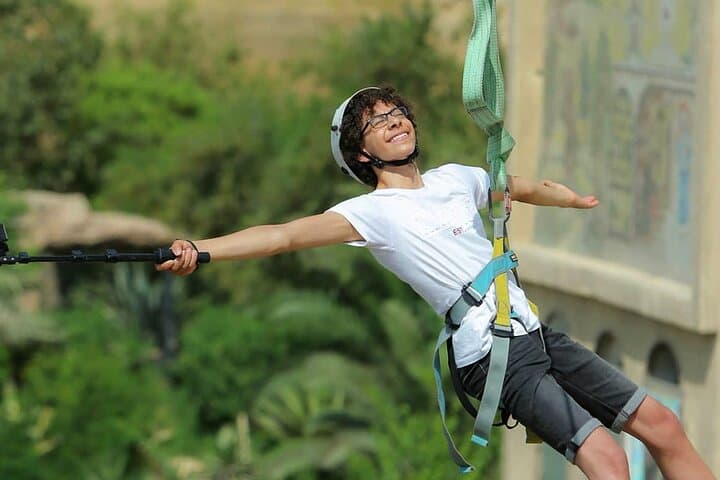
By the time you reach the courtyard of the Hanging Church, morning light has already softened the stone facades of Old Cairo. Bells ripple across a tangle of alleys, pigeons scatter off low roofs, and behind the hum of the city you can hear the clipped chatter of guides preparing harnesses. One moment you’re threading through a mosaic of wooden balconies and 1,500-year-old icons; the next you’re clipped into a zipline and looking down at a centuries-old fortress wall that remembers Romans and Arabs in equal measure. This is the strange, satisfying sleight of hand at the heart of the Coptic Cairo Adventure Day Tour: faith and history, stitched together with the thrill of a giant swing, the clack of high-ropes, and the gutsy breath you take before launching across an urban canyon.
Coptic Cairo is less a single site than a palimpsest—layers of human life pressed into one neighborhood. The area grew around the Roman fortress of Babylon (the name is still used locally), which became a focal point for Christian communities as early as the 4th century. The Hanging Church, built above the fortress gatehouse, and the nearby Church of St. Sergius and Bacchus—said to stand over a hideout where the Holy Family rested—are living museums of iconography, liturgical objects, and stonework that survived conquest and neglect. Walk the alleys and you’ll step past wooden mashrabiya screens and tiny shops that seem to exist in another era; climb to a rooftop café and the Nile’s ribbon of light cuts through modern Cairo beyond.
Geologically, Old Cairo sits on the Nile’s alluvial plain—soft sediments that made the area fertile for millennia and easy to build on. That same low-lying geology explains why you’ll find narrow lanes and stepped rooftops rather than rocky escarpments: the landscape invites construction, not ascent. The adventure elements—giant swing, zipline, high ropes—are urban interventions, playfully superimposing modern adrenaline onto medieval stones. They demand nothing technical from you beyond a willingness to be harnessed and follow instructions, but they change how you read the city: history becomes a vertical experience.
This tour doesn’t ask you to choose between sacred and silly. It respects the solemnity of worship and the material fragility of frescoes while offering regulated, professional adventure elements that give families and thrill-seekers a different lens on Old Cairo. Guides narrate the history of the Coptic community—the language, liturgy, and social continuity that mark Egypt’s Christian minority—and then lead you out of the sacristy and toward a cluster of bamboo platforms and steel cables where another kind of language takes over: the clear, practical commands of safety briefings and belay systems.
Practicalities are part of the charm here. The full-day tour runs roughly eight hours; expect moderate walking with occasional stairs inside churches and more dynamic movement on ropes and ziplines. There’s no technical climbing required—routines are run by certified staff—but a basic comfort with heights helps. Bring closed-toe shoes with good grip; you’ll be balancing on slatted courses and stepping onto platforms where your feet count. Dress modestly for the churches—shoulders and knees covered—and carry small bills for entry fees or donations.
Timing matters. Mornings are cool and quieter in the churches; afternoons bring more people and stronger light that’s great for rooftop photos. Aim for late fall through early spring if you want the most comfortable temperatures—Cairo’s summer heat is real, and you’ll appreciate the shade when you’re waiting to clip in.
Beyond the adrenaline, the tour is a practical primer in urban cultural travel. You’ll learn to read the architectural cues that signal a church or a Coptic school; you’ll practice simple courtesies—quiet and covered clothing inside places of worship—and you’ll leave with more than a few good stories: a photo with the basilica’s carved woodwork, the memory of a zipline flight over a wall built Roman-era masons, the taste of koshary from a street vendor in Khan el-Khalili when the tour winds down.
Family travelers find the mix especially satisfying: kids get physical challenge and families get a cultural backbone to the day. For solo travelers and photographers, there’s the pull of unexpected angles—light spilling across carved icons, rope-work and iron clamps against sun-washed stone. Safety protocols are standardized and explained; professional guides run each element and provide harnesses, helmets, and belays, so the risk is managed and the experience remains accessible.
If you go: practice patient curiosity. Move between the two tempos of Old Cairo—the meditative, slow attention required by holy spaces and the fast, bright pulse of adventure platforms—with equal intention. Respect conservation signs, ask before photographing worshippers, and let the city surprise you: in one day you can cross a threshold of time and taste the odd pleasure of being both spectator and participant in a place that has quietly hosted pilgrims, families, and now, an urban ropes course.
This is not pilgrimage as performance, nor is it thrill for its own sake. It’s an urban day that acknowledges the deep roots of a community and then dares you to see its skyline from a different altitude. If you want history delivered with a side of adrenaline—and a tour operator who knows how to secure both harnesses and context—this is your map.
Practical summary: Full day (about eight hours), moderate fitness, modest dress for churches, closed-toe shoes for ropes and platforms, and a camera with a wide-angle lens for alleys and a fast lens for low-light interiors. In return you’ll leave with a handful of stories, a new perspective on Cairo’s oldest quarter, and the unusual sensation of having flown, briefly, over history.
Trail wisdom
Small choices, better day.
Dress for both church and climbs
Wear modest layers for religious sites and closed-toe shoes for ropes/zipline elements.
Hydrate and guard against sun
Carry at least 1–1.5 liters of water and sun protection—Nile-side streets can get hot by midday.
Bring small cash
Many churches and small vendors accept cash only for entry fees, donations, and snacks.
Follow the guide’s safety brief
Harnesses and belays are straightforward—pay attention during the briefing and ask questions.
Local knowledge
Read the place, not just the route.
Watch for native species including Feral cats that frequent church courtyards, Common pigeons and city birds around rooftops.
Keep an eye out for wildlife during the transition between areas and habitats. Respect distance guidelines.
Many churches house fragile icons and frescoes—avoid touching artifacts, and support local conservation by following signage and guide instructions.
Follow the guide's instructions on size limits, ethical handling, and leave-no-trace practices.
Rooftop cafés overlooking the Roman Babylon walls (quiet in midweek mornings). The small lane markets near the Coptic Museum where artisans repair icons and woodwork
Locally recommended viewpoints and quiet spots known best to local operators.
Old Cairo grew around the Roman fortress of Babylon and has been a continuous center for Egypt’s Coptic Christian community since late antiquity.
Maritime roots and regional tradition shape the waterways and working coasts.
Seasonal guide
Four versions of the same landscape.
Spring
Best forMild temperatures · Photographs of blooms and softer light · Comfortable walking
ChallengesOccasional Saharan dust · More local tourists on weekends
Spring offers pleasant temperatures and good light for interiors and rooftops, though dust haze can reduce clarity occasionally.
Summer
Best forLong daylight hours · Less crowded ropes sessions in early morning
ChallengesHigh heat and strong sun · Midday closures or reduced comfort
Summer is hot—plan early starts and expect stronger midday heat; hydration and shade become priorities.
Fall
Best forCooler weather · Clear skies for photography · Comfortable rooftop cafés
ChallengesIncreased tourist volume during peak months · Slight chance of windy days
Fall is arguably the best balance of temperatures and visibility—ideal for combining walking and adventure elements.
Winter
Best forCrisp air and off-peak crowds · Comfortable full-day tours · Great low-angle light
ChallengesCool evenings · Occasional rain
Winter is cool and pleasant for full-day exploring; layers are useful for chillier mornings and evenings.
Operator details
What the booking data adds.
Included
- ✓Private Transfers: round-trip transfers from your hotel in a comfortable, air-conditioned vehicle.
- ✓Safe & Comfortable Ride: Travel in comfort and safety with all transfers taken care of for you.
- ✓Expert Tour Guide: Enjoy a personalized experience with a knowledgeable private guide
- ✓Entrance fees to all the mentioned sites.
- ✓Flexible Booking Options: Plan your adventure with flexible scheduling tailored to your needs.
- ✓All-Inclusive Convenience: All taxes and service charges are included for a stress-free experience.
- ✓Complimentary Bottled Water: Stay refreshed throughout your journey with bottled water provided.
Not included
- —Any extras not mentioned in the itinerary.
- —Tipping.
- —Beverages
Good to know
- ✓Wheelchair accessible
- ✓Specialized infant seats are available
- ✓Suitable for all physical fitness levels
Pack with intention
What to bring.
Good to know
Common questions.
The tour is approximately 8 hours in total—typically a full day that includes cultural visits and the adventure course.
Plan the edges
The details that make the day easier.
The Hanging Church (Saint Virgin Mary's) in Old Cairo sits above the gatehouse of the Roman Babylon Fortress and has existed in some form since at least the 7th century.
After the tour, head toward Khan el-Khalili for koshary and mint tea or find a small rooftop café by the Roman wall for sunset. For a classic Cairo experience, sip coffee at Naguib Mahfouz Café and browse the souks for handmade woodwork or icons.
- Closest airport
- Cairo International Airport (CAI); Driving time to Old Cairo: 20–40 minutes from central Cairo depending on traffic; Cell service: Good in urban areas but interiors may be spotty; Permits
- passes
- Church entry donations common; no special permits for ropes
Respect fragile cultural artifacts and avoid touching icons or frescoes; pack out trash, support local guides and artisans, and follow posted restrictions to help preserve Old Cairo’s historic fabric.
Explore by topic
Follow the threads.
Keep exploring
Make the story part of the trip.
Set out from Bass Harbor for a private, customizable day on Blue Hill Bay — lighthouses, puffins, seals, and the chance to feel Acadia from the water. Small groups, local captains, unforgettable views.
In four hours you can move from shaded canyon ferns to wind-scoured coastal ridgelines, guided by someone who knows where the light—and the hidden views—live. This private half-day hike on the Monterey Peninsula or Big Sur is compact, curated, and perfect for travelers who want depth without a multiday commitment.
 Related story
Beneath a sky of shifting light, Skaftafell’s ice reads like a map of time. This three-hour guided glacier hike mixes technical instruction with geology and culture: compact, safe, and unforgettable.