
What the day feels like
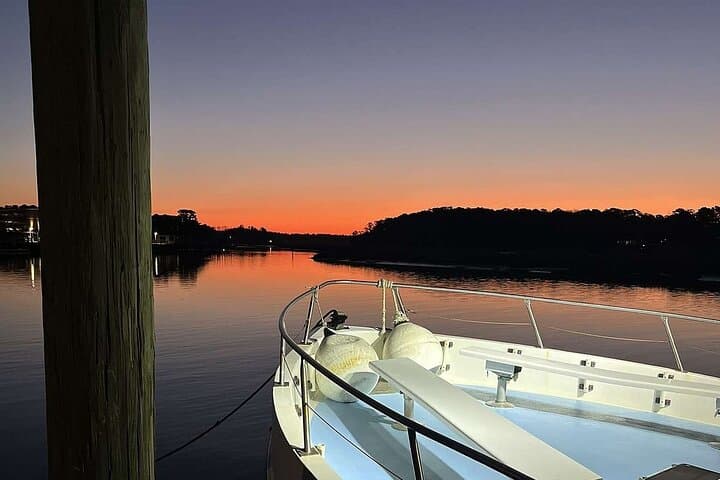
You step onto the dock as the afternoon loosens its grip—salt air already filling the space between you and the horizon. The boat hums to life, crew voices low and efficient, and the channel ahead becomes a ribbon of moving light. This is the Calabash River at sunset: a narrow, patient highway where marsh grass leans into the tide and gulls wheel like punctuation marks against a sky that will soon rewrite itself.
The 2‑hour Sunset Waterway Excursion from Calabash Fishing Fleet is the kind of evening that rearranges the ordinary. It’s not about adrenaline or altitude; it’s about deceleration. The Intracoastal Waterway here snakes behind a string of barrier islands, and for two hours you travel a stitched landscape of boat slips, oyster beds, and tidal creeks. The sun doesn’t just set—it stages a slow performance, translating blue to brass to bruised rose over sandbar and pier.
Geology and water have been shaping this coast for millennia. Barrier islands formed by the push and pull of Atlantic swells shelter a mosaic of estuaries and marshes where sediment settles and life concentrates. Fish, shrimp, and oysters thrive in this brackish interface, and a small fishing town emerged to harvest it. Calabash, carved into the borderlands of North and South Carolina, earned its reputation not for scenic cliffs but for something more edible: a style of lightly breaded, deep‑fried seafood that spread across the region—Calabash‑style cooking, a local answer to the sea’s abundance.
You’ll pass working docks where crew tend to lines and nets, and alongside you gulls and terns will stake claims on the wake. Herons stand like sentries on exposed flats, and occasionally a dolphin will decide that your wake is the evening entertainment. The water has a personality here: playful in the shallows, deliberate in the channel, and at sunset it seems to go quiet as if listening. It dares you to slow down.
There’s also human history: humble fishing boats, small seafood processors, and a community shaped by tides and seasons. The town’s modest downtown is packed with small seafood shacks and family restaurants that owe their lineage to those who learned to read the currents and tides. Today the fleet runs tours that balance hospitality with a working waterfront’s rhythm—crew know their waters and run the cruise with the easy competence of people who have spent mornings on the same lines and afternoons watching the same sunsets.
Practicalities are simple, which is part of the appeal. The excursion lasts 120 minutes, boardings are straightforward, and no special skills are required. The vessel is modern and spacious, with room to move and railings to steady yourself. For photographers, the low angle of late light flattens textures and enhances reflections; for families, the short window of time and gentle motion make it accessible for kids and elders alike. Expect a relaxed pace: the captain will aim to position the boat for best viewing without turning the evening into a stop‑and‑start spectacle.
Timing matters. The golden hour begins well before official sunset—arrive at least 20 minutes early to find a spot on deck and settle your camera settings. Winds pick up after sundown, and temperatures fall faster on the water than on land, so bring a light jacket. If you are sensitive to motion, choose a seat near the centerline and keep your gaze on the horizon; the crew can also advise on calmer sections for those who prefer less roll.
Safety and comfort are straightforward: life jackets are available, and the crew gives a brief safety rundown. Cell signal is usually solid near shore but can fade in the wider waterway—download maps or the booking info ahead of time. Expect to pay around the advertised rate per person; bookings are instant and often cancellable, but confirm the cancellation policy in advance.
What this trip offers is simple but rare: a low‑effort, high‑return encounter with coastal ecosystems and evening light. If you want to pair it with local flavor, plan dinner at one of Calabash’s many seafood spots after the cruise—freshly fried shrimp served with hush puppies and coleslaw is a local ritual. For a quieter evening, take your catch of photos and find a bench by the water to watch the last streaks of color fade.
Who should book this cruise? Anyone who wants an easy, scenic introduction to the Carolina coast without committing to a long charter. Couples celebrating a small moment, families looking for a contained outing, photographers chasing reflected skies, and wildlife enthusiasts hoping for heron, osprey, and dolphin sightings will all find this two‑hour window generous and satisfying.
In the end the water holds the last word. As the boat glides back, the town lights begin to blink awake, each one a small human insistence against the broad, tidal dark. You step off the vessel with a compact album of images in your head—colors, silhouettes, and a sense of how liminal an evening can be when you let the water do the telling. The Intracoastal has taught you something simple: twilight here isn’t an end, it’s an invitation.
Trail wisdom
Small choices, better day.
Choose Your Seat Wisely
For the steadiest ride, sit near the centerline; for photos, the aft and port/starboard rails offer unobstructed views.
Bring a Light Layer
Temperatures can drop quickly after sunset—pack a windproof jacket even on warm days.
Prepare for Reflections
Bring a polarizer to manage glare and deepen skies when shooting late light on the water.
Mitigate Seasickness
If you’re prone to motion sickness, take medication 30–60 minutes before boarding and focus on the horizon.
Local knowledge
Read the place, not just the route.
Watch for native species including Dolphin, Great Blue Heron.
Keep an eye out for wildlife during the transition between areas and habitats. Respect distance guidelines.
The estuaries here are sensitive nursery habitats—stay on designated paths, avoid disturbing rookeries, and support local operators who follow no‑wake and waste management practices.
Follow the guide's instructions on size limits, ethical handling, and leave-no-trace practices.
Explore a dockside seafood shack for fresh Calabash-style fried seafood after your cruise. Walk a short stretch of the nearby marsh boardwalks to see fiddler crabs and tidal flats up close
Locally recommended viewpoints and quiet spots known best to local operators.
Calabash began as a small fishing village where seafood processing and family-run boats shaped the community; its light, fried 'Calabash-style' seafood became a regional culinary signature.
Maritime roots and regional tradition shape the waterways and working coasts.
Seasonal guide
Four versions of the same landscape.
Spring
Best forMigratory bird watching · Mild temperatures
ChallengesUnpredictable showers · Cool evenings
Spring brings migrating shorebirds and fresh green marshes; nights can still feel cool, so dress in layers and carry a rain shell.
Summer
Best forWarm evening cruises · Longer daylight hours
ChallengesHumidity and mosquitoes · Crowded summer bookings
Summer offers warm, colorful sunsets and lots of life on the water—book early and bring insect repellent for dockside waits.
Fall
Best forClear skies for photography · Comfortable temperatures
ChallengesShortening daylight windows · Possible nor’easter season later in fall
Early fall is ideal: comfortable evenings and crisp air that sharpens light; late fall can bring storms, so check forecasts.
Winter
Best forQuiet, uncrowded cruises · Crisp, low-humidity views
ChallengesCold winds on open water · Reduced wildlife activity
Winters are quieter and can deliver clear, cold sunsets—dress warmly and expect fewer birds and dolphins.
Operator details
What the booking data adds.
Included
- ✓Onboard restroom and plenty of seating
- ✓Boat Ride
Not included
- —We kindly ask guests to consider a customary gratuity for our crew, typically between 15% and 20%
Good to know
- ✓Wheelchair accessible
- ✓Infants and small children can ride in a pram or stroller
- ✓Public transportation options are available nearby
- ✓Suitable for all physical fitness levels
- ✓Comfortable Clothing: Dress in layers for changing temps.
- ✓Non-Slip Shoes: Closed-toe shoes help keep you safe on deck.
- ✓Sun Protection: Sunscreen, sunglasses (polarized are best!), and a hat.
- ✓Rain Gear: A light jacket or windbreaker, just in case.
- ✓Snacks & Water: Bring your own or purchase onboard.
- ✓Small Cooler: Optional for drinks or snacks.
- ✓Camera or Smartphone: For amazing sunset photos!
- ✓Seasickness Medication: If needed, take it before departure.
Pack with intention
What to bring.
Good to know
Common questions.
The excursion is two hours long, including boarding and the return to the dock.
Plan the edges
The details that make the day easier.
Calabash, NC is widely credited as the birthplace of Calabash-style seafood, a lightly breaded and fried preparation that became a regional staple.
After the cruise, walk into Calabash’s waterfront for casual seafood joints serving fresh fried shrimp and oysters; for a longer evening, drive to nearby Myrtle Beach for craft breweries and live music—the coastal community prides itself on seafood, friendly service, and a relaxed pace.
- Closest airport
- Myrtle Beach International Airport (MYR) ~25–35 minutes drive; Dock
- Boarding
- Calabash Fishing Fleet marina; Driving distance from nearest major town: ~20–30 minutes from central Myrtle Beach; Cell service: Good near shore, variable in open water; Permits: None required for this public tour
This waterway supports important nursery habitat—use established operators, avoid throwing anything overboard, and respect wildlife distances to minimize disturbance.
Explore by topic
Follow the threads.
Keep exploring
Make the story part of the trip.
Set out from Bass Harbor for a private, customizable day on Blue Hill Bay — lighthouses, puffins, seals, and the chance to feel Acadia from the water. Small groups, local captains, unforgettable views.
In four hours you can move from shaded canyon ferns to wind-scoured coastal ridgelines, guided by someone who knows where the light—and the hidden views—live. This private half-day hike on the Monterey Peninsula or Big Sur is compact, curated, and perfect for travelers who want depth without a multiday commitment.
 Related story
Beneath a sky of shifting light, Skaftafell’s ice reads like a map of time. This three-hour guided glacier hike mixes technical instruction with geology and culture: compact, safe, and unforgettable.