
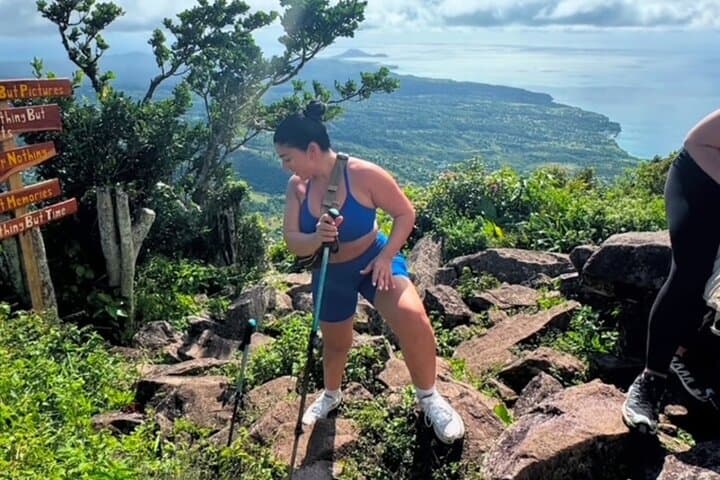
What the day feels like
You start before the island wakes: a short drive from your hotel, the sea a flat ribbon of black-blue, and the two Pitons—Gros and Petit—already cutting silhouettes into the dawn. Your guide points out landmarks as the road curls through Morn-Fortune—banana and cocoa holdings drip with dew, a fishing village yawns awake—and you feel the day contracting into one clear purpose: climb Gros Piton. The mountain doesn’t ask for subtlety. It demands steady legs and full attention, and it rewards you with a view that rewrites how you thought about small islands and big geology.
Gros Piton rises to about 771 meters (2,530 feet) from the Caribbean coast, a basalt spine that, with its twin Petit Piton, forms the spine of Soufrière Bay. The hike itself is compact and muscular: roughly 3.5–4.5 miles round-trip (5.6–7.2 km), with an elevation gain of about 750–800 meters depending on your starting point. Expect steep, scrambly sections, steps carved into rock, and narrow traverses where the ridge narrows and the ocean drops away. Parts of the trail are paved with loose rock, others packed earth and roots. There is no handrail for most of it—this is tactile mountain hiking where you feel the slope underfoot and hear the wind rearrange the palms below.
This is not only a physical exercise. The Pitons are geological history you can touch. These twin plugs are remnants of volcanic activity that shaped St. Lucia’s southwestern coast; their dramatic, near-vertical faces are the compacted cores of ancient eruptions. The slopes are dense with tropical forest—ferns, heliconia, and palms—an emerald curtain that muffles the ocean’s cadence until you break into the open near the summit. The contrast is cinematic: wet green below, island-studded sea beyond.
Culturally, Gros Piton is stitched into local life. The route up threads through farmland where cocoa and bananas still feed families, and your stops on the way—an old fishing village, a roadside cocoa press, the town of Soufrière—are reminders that this landscape supports daily life as much as weekend thrills. The entire Pitons area is a UNESCO World Heritage Site (Pitons Management Area, inscribed in 2004), a designation meant to protect both the region’s natural and cultural fabric. That patches your ascent with a sense of stewardship: you’re climbing through something local people have long relied on and now guard for the future.
Practical reality sits beside all this romance. Local guides are mandatory on Gros Piton; St. Lucia’s Forestry Department requires hikers to go with licensed guides both for safety and to manage the fragile trail. The Viator private tour option bundles the logistics: pickup from your hotel or port, a scenic drive that narrates the landscape, stops at plantations, and a guided ascent and descent. The whole outing is about 6.5–7 hours from door to door (the tour lists 405 minutes), with 3–5 hours on the trail depending on pace and stops. Bring 2–3 liters of water, a sun hat, good traction footwear, and be prepared to move deliberately: sections are steep and can be slippery in rain.
Timing matters. Dry-season mornings are best: fewer clouds, cooler air, and the islands’ clarity stretches farther. If you want golden-hour views, plan for a midday summit that lets you descend by late afternoon when clouds can gather. Rain on the Pitons can be sudden and reduces traction; guides will pause or turn you back if conditions get dangerous. On busy days, you’ll meet other guided groups at bottlenecks; the ascent isn’t remote, it’s communal.
For photographers and mindful hikers, the summit payoff is immediate. From the top, Soufrière curls below like a postcard—the bay rimmed by the Petit Piton across the channel, yachts and fishing boats scattering small silver commas on the sea, and the island of St. Lucia flattening into a patchwork of greens and settlements. Sit, catch your breath, and watch the wind move through the clouds. The summit is an excellent place for a snack and slow appreciation of what you’ve earned: the physical effort is the currency, the view the quiet dividend.
Beyond the climb, your day is textured by lowland touches: visit the Sulphur Springs and the drive-in volcano, soak at Toraille waterfall, or linger in Soufrière’s markets and cafés. Local food—saltfish and green fig, fresh ceviche, and strong coffee—feels earned after a climb. And when you return to sea level, a cold Piton beer tastes like reclamation.
Why book this? Because Gros Piton compresses an island’s geology, ecology, and culture into a single day that tests you and leaves you with a clear sense of place. In less than a morning you go from seaside calm to cloud-scraped summit and back, and you do so in company with guides who know the mountain and the community. It’s a trip that rewards preparation: show up fit, hydrated, and respectful, and Gros Piton will give you its best views and a deeper sense of St. Lucia’s volcanic heart.
Practical snapshot: the trail is challenging but non-technical—no ropes required—so it’s accessible for reasonably fit hikers. Expect steep pitches, a few hand-over-foot scrambles, and some exposed sections. Guided tours typically include transport and narration, making the logistics simple; the real commitment is to your legs and judgment. Pack light, hike steady, and leave the mountain better than you found it.
Trail wisdom
Small choices, better day.
Hire a Licensed Guide
Guides are required and know route conditions, local history, and safe turnaround points.
Bring 2–3 Liters of Water
Hydration is critical on steep tropical climbs—carry enough to avoid relying on uncertain water sources.
Wear Grippy Footwear
Trail includes loose rock and slick roots; sturdy hiking shoes with good tread reduce slip risk.
Start Early
Morning ascents offer cooler conditions and clearer summit views before afternoon clouds build.
Local knowledge
Read the place, not just the route.
Watch for native species including St. Lucia parrot (Amazona versicolor) — endemic and rare; keep quiet and look into canopy gaps, Tropical hummingbirds and bananaquits around flowering roadside shrubs.
Keep an eye out for wildlife during the transition between areas and habitats. Respect distance guidelines.
The Pitons Management Area is a UNESCO World Heritage Site—support local guides, stay on trails, and pack out trash to protect fragile ecosystems.
Follow the guide's instructions on size limits, ethical handling, and leave-no-trace practices.
Drive-in Sulphur Springs (the world’s only drive-in volcano) and the Toraille Waterfall for a post-hike dip. Small cocoa farms around Morn-Fortune where local producers ferment beans—ask your guide about visits
Locally recommended viewpoints and quiet spots known best to local operators.
Gros and Petit Piton are volcanic plugs formed by eruptions millions of years ago; the geography has long shaped local settlement and agriculture in Soufrière.
Maritime roots and regional tradition shape the waterways and working coasts.
Seasonal guide
Four versions of the same landscape.
Spring
Best forFewer crowds · Lush jungle flora
ChallengesOccasional afternoon showers · Humidity increases
Spring (Mar–May) sits in the drier window—trails are verdant and visibility is usually good, but pack a light rain shell for quick showers.
Summer
Best forWarmer sea for post-hike swims · Less busy weekdays
ChallengesHigher heat and humidity · Increased chance of tropical storms Jun–Nov
Summer months bring heat and humidity—early starts are essential; check tropical weather forecasts before booking.
Fall
Best forLower tourist numbers · Lush post-rain vegetation
ChallengesWet trails after passing storms · Shorter windows of clear weather
Fall can be green and dramatic but more rain-prone—expect slick sections and plan flexible itineraries.
Winter
Best forClear views · Dry, cooler hiking conditions
ChallengesPeak tourism season · Advance bookings required
Winter (Dec–Feb) offers the most reliable weather for clear summit panoramas—book early as guided tours fill fast.
Operator details
What the booking data adds.
Included
- ✓Private transportation
- ✓Bottled water
- ✓Soda/ Local Beer
- ✓Air-conditioned vehicle
- ✓Driver / Tour Operator
- ✓A brief island tour with historical insights and local knowledge.
Not included
- —Lunch
- —Entrance Fee- Gros Piton Hike $50
Good to know
- ✓Not recommended for travelers with spinal injuries
- ✓Not recommended for pregnant travelers
- ✓Not recommended for travelers with poor cardiovascular health
- ✓Travelers should have at least a moderate level of physical fitness
Pack with intention
What to bring.
Good to know
Common questions.
Yes—licensed local guides are mandatory for safety and conservation management; tours bundle guides and logistics.
Plan the edges
The details that make the day easier.
The Pitons Management Area—home to Gros and Petit Piton—was designated a UNESCO World Heritage Site in 2004 for its unique geology and biodiversity.
After the hike, head to Soufrière for fresh seafood and local snacks—try saltfish with green fig or grilled fish from a seaside vendor and wash it down with a cold Piton beer; for a splurge, Boucan by Hotel Chocolat offers island-inspired plates and chocolate tastings nearby.
- Closest airport
- Hewanorra International Airport (UVF) ~45–60 min drive depending on pickup location; Driving distance from Soufrière town: 10–20 minutes to trailhead depending on route; Cell service: patchy on the trail—expect signal primarily near road and village; Permits
- fees
- Guided hikes are mandatory—book a licensed guide via your tour operator or local forestry service.
The Pitons are a protected UNESCO site—respect trail closures, avoid single-use plastics, stick to established paths, and support local guiding communities who steward this landscape.
Explore by topic
Follow the threads.
Keep exploring
Make the story part of the trip.
 Related story
Less than two hours from Nairobi, Kereita Forest pairs hands-on canopy adventure with quiet montane trails and a sobering colonial history—perfect for families, teams, and curious travelers seeking a full-day pulse of nature.
Set out from Bass Harbor for a private, customizable day on Blue Hill Bay — lighthouses, puffins, seals, and the chance to feel Acadia from the water. Small groups, local captains, unforgettable views.
In four hours you can move from shaded canyon ferns to wind-scoured coastal ridgelines, guided by someone who knows where the light—and the hidden views—live. This private half-day hike on the Monterey Peninsula or Big Sur is compact, curated, and perfect for travelers who want depth without a multiday commitment.