
What the day feels like
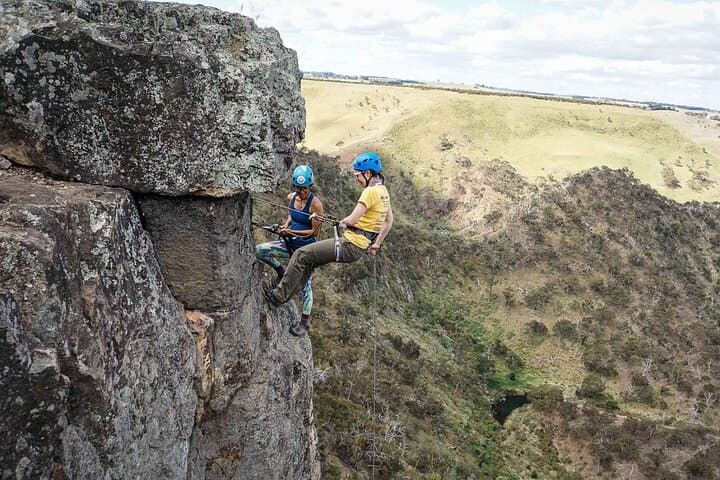
The first time you round the last stand of eucalyptus and the gorge opens up, it feels deliberate — as if the land has been waiting for you to arrive. A band of basalt and sandstone drops away into a sinuous cleft where the Werribee River once carved its patience into rock. At Falcon's Lookout, the wind arrives sharp and deliberate, teasing your hair and testing the weight of the world at your shoulders. Below, the cliff face folds into shadow and sun; above, the scrub smells faintly of wild thyme. The Abseiling Adventure at Beautiful Werribee Gorge starts here: a measured step toward a rope, a practiced knot, and then the quiet of lowering yourself into an appetite of stone.
This is not cinematic heroism so much as deliberate, tactile challenge. Abseiling here is a lived exchange with geology and time. The cliff faces at Werribee Gorge are a readable history — layers of sedimentary beds and remnants of past volcanic flows, each stratum telling a story of shifting rivers and ancient eruptions. The gorge itself is the result of the Werribee River slicing through resistant rock over hundreds of thousands of years, exposing narrow corridors where sunlight and shadow argue for territory. For modern travelers, that corridor is a chance to move through the landscape with intention: descending, pausing to listen for bird calls, and watching scrub wallabies peer from cover.
Culturally, Werribee Gorge sits on the lands of Traditional Custodians whose connection to the place long predates the tourist paths. The area’s natural contours informed movement and storytelling, seasonal food gathering and travel. Today, the gorge rides the edge between day-trip outing for Melburnians and an outback-of-the-city refuge for interstate visitors. Tour operators have layered safety systems over the rawness of the cliffs — bolted anchors, experienced guides, and gear that lets first-timers feel supported while still encountering real exposure.
You’ll spend about five hours on this outing, combining a bushwalk approach with progressive abseil lines that let you build confidence as the cliff angles change. Terrain is mixed: loose gravel on approach tracks, scrubby understory, and the rock faces themselves which alternate between coarse basalt, which gives good friction, and smoother sandstone shelves that demand more careful footwork. The wildlife is unshowy but present: wedge-tailed eagles often patrol thermals above, while echidnas and wallabies keep to the rockier ribs. Plants take advantage of narrow ledges and shallow soils, and in spring the gorge can flush with low wildflowers.
Practically, this is an accessible but physically engaging day. Guides emphasize proper footwear, hydration, and respect for the rock (no chipping anchors or creating new lines). The tour’s structure — warm-up practice abseils followed by the longer Falcon’s Lookout descent — is designed to let beginners learn rope management while giving more experienced participants options for steeper, more sustained rappels. Safety gear is provided: harnesses, helmets, and descent devices. What you bring matters: layered clothing, sturdy trail shoes, sunscreen, and at least one liter of water per person for a moderate-pace 4–6 hour outing.
Timing makes the trip different. Early spring and autumn days have crisp air and better thermal stability for birds and photographers; summer brings heat and more intense sun on exposed rock; winter can be wet and slippery and is better left to experienced groups. Photography is straightforward but rewarding: the trick is to capture scale — a person mid-descent against the curve of the gorge — and the region’s color palette, from rust-browns to the soft greens of eucalypt foliage.
If you’re the sort who likes to tinker with a travel plan, combine the abseil with a nearby loop walk along the Werribee River or an afternoon in Bacchus Marsh sampling local produce. For those used to climbing or canyoning, the gorge’s lines won’t be technically extreme, but they are honest and instructive: you will learn to read rock, manage friction, and pace a descent. For first-timers nervous about heights, the guides’ incremental approach and real-time coaching often turn trepidation into competence — and, frequently, into a grin at the bottom.
This is an outing that rewards attention. Walk slowly on the approach, notice the lichens, watch how birds use updrafts along the cliff face, and let the small competence of knot-tying and gear-checking shape the larger feeling of being capable in wild places. By the time you climb back up the final access track, boots scuffed and cheeks warmed by wind, the gorge feels less like a place you visited and more like a terrain you’ve moved through — and that subtle shift is the point.
Whether you’re seeking a new form of vertical travel, a rigorous day out of the city, or an introduction to ropes in a wild setting, the Abseiling Adventure at Beautiful Werribee Gorge delivers equal parts scenery and skill. It’s not about conquering nature; it’s about negotiating with it, respecting its edges, and returning with a clearer sense of how small rituals — a figure-eight knot, a shared belay shout — anchor us in a landscape that demands attention.
Trail wisdom
Small choices, better day.
Footwear Matters
Wear sturdy trail shoes with good grip — the approach can be loose and the rock surfaces vary between rough basalt and smooth sandstone.
Hydrate Smart
Carry at least 1–1.5 liters of water and sip regularly; the exposed sections provide little shade.
Sun Protection
Sunscreen and a brimmed hat are essential in spring and summer when sun reflects off the rock.
Listen to Your Guide
Practice ropes and knots under instruction — their protocols are built for safety and to build confidence, whether it’s your first abseil or your fiftieth.
Local knowledge
Read the place, not just the route.
Watch for native species including Wedge-tailed eagle, Rock-wallaby (or wallaby species).
Keep an eye out for wildlife during the transition between areas and habitats. Respect distance guidelines.
Stick to marked tracks and follow your guide’s advice to avoid trampling fragile vegetation on ledges; carry out all waste.
Follow the guide's instructions on size limits, ethical handling, and leave-no-trace practices.
Falcon’s Lookout side benches for quieter vantage points. Short Werribee River loops downstream that reveal different rock textures
Locally recommended viewpoints and quiet spots known best to local operators.
Werribee Gorge’s exposed strata reveal flowing river action and past volcanic events, and the area is within the Traditional Country of the region’s Indigenous peoples.
Maritime roots and regional tradition shape the waterways and working coasts.
Seasonal guide
Four versions of the same landscape.
Spring
Best forWildflowers · Mild temperatures · Birdwatching
ChallengesMud on approach after rain · Variable weather
Late September to November brings comfortable weather and wildflower displays; expect cool mornings and warm afternoons.
Summer
Best forLonger daylight · Clear skies · Post-tour swims nearby (seasonal)
ChallengesHot sun on exposed rock · Higher dehydration risk
Summer can be hot and exposed — start early and carry extra water and sun protection.
Fall
Best forCrisp air · Stable weather · Photogenic light
ChallengesCooler mornings · Shorter daylight
Autumn is often the quietest time with stable weather and golden light that flatters the gorge walls.
Winter
Best forDramatic skies · Fewer crowds
ChallengesWet and slippery conditions · Cold temperatures
Winter brings a raw edge; only experienced groups should attempt abseils in wet or windy conditions.
Operator details
What the booking data adds.
Included
- ✓Bottled water
- ✓Snacks
- ✓Use of Abseiling equipment
Not included
- —Lunch
Good to know
- ✓Travelers should have at least a moderate level of physical fitness
Pack with intention
What to bring.
Good to know
Common questions.
No — the trip is designed to teach basic abseiling skills with guided instruction, though comfort with heights helps.
Plan the edges
The details that make the day easier.
Werribee Gorge reveals both sedimentary and volcanic geology — the river’s erosion has exposed rock layers that record millions of years of geological change.
After the gorge, head into Bacchus Marsh for seasonal produce and hearty pub fare; weekend markets sell local stonefruit and pies — a simple, satisfying way to refuel after a day of ropes and rock.
- Closest airport
- Melbourne (Tullamarine) ~70 km; Driving from Bacchus Marsh: 15–25 minutes to the trailhead; Cell service: intermittent in the gorge; Permits: none required for day visits but abseiling with a commercial operator is recommended and bookings are required.
Stay on established paths, pack out all trash, and avoid bolting new anchors — existing routes are maintained to minimize erosion and protect native plants.
Explore by topic
Follow the threads.
Keep exploring
Make the story part of the trip.
Set out from Bass Harbor for a private, customizable day on Blue Hill Bay — lighthouses, puffins, seals, and the chance to feel Acadia from the water. Small groups, local captains, unforgettable views.
In four hours you can move from shaded canyon ferns to wind-scoured coastal ridgelines, guided by someone who knows where the light—and the hidden views—live. This private half-day hike on the Monterey Peninsula or Big Sur is compact, curated, and perfect for travelers who want depth without a multiday commitment.
 Related story
Beneath a sky of shifting light, Skaftafell’s ice reads like a map of time. This three-hour guided glacier hike mixes technical instruction with geology and culture: compact, safe, and unforgettable.