
What the day feels like
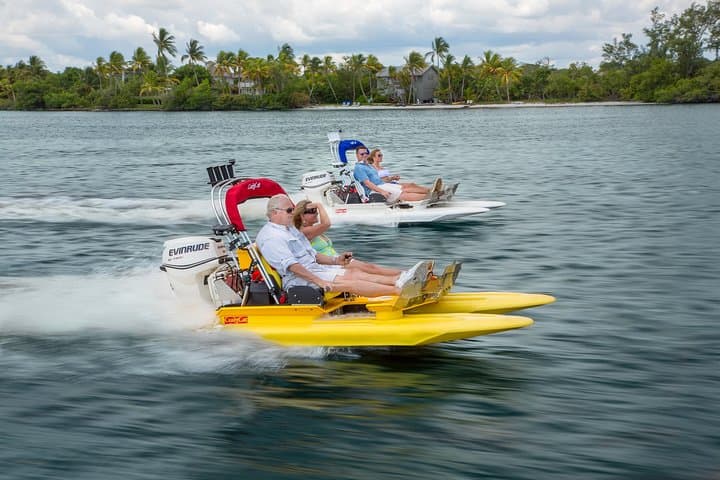
You push off from a low dock as morning unfurls over mangrove crowns—green knives against a pale sky. The CraigCat turns like a living thing, small and nimble, two hulls slicing tidal mirrors. Up close, the 10,000 Islands are not an endless chain of emerald landmasses but a stitched-together estuary of channels, shell-strewn keys, and mangrove tunnels where sunlight comes down in flecks. You’re at the throttle of a two-person catamaran, not a passive passenger; the water asks for attention, not reverence. It rewards you with proximity: dolphins threading the boat’s wake, herons frozen on exposed mudflats, and the occasional slow-rising puff of a manatee’s breath.
This is a backwater trip with a simple premise and complicated rewards. Operated for more than a decade by Backwater Adventure, the CraigCat tours hand you the helm for 90–150 minutes (most excursions land around two hours), and for from about $130, you’re zipped into an ecosystem where geology, culture, and contemporary conservation meet. It’s less about reaching a single summit and more about learning to read a living map—tides, channels, and birds all give you directions if you’re looking.
Geologically the 10,000 Islands are a patchwork of oolitic limestone and once-contiguous coastal plains carved by rising seas and relentless tidal exchange. The edgeland between freshwater Everglades and the Gulf of Mexico is where estuary dynamics flourish: nutrients cycle fast, shells accumulate into middens, and mangroves hold sediment like a sieve. This region was home to the Calusa people for centuries; their shell mounds—some of which still pepper the larger keys—are human-made landmarks of a time when coastal abundance supported complex societies. Today the islands sit largely undeveloped and function as nursery habitat for fish, sea turtles, and an astonishing array of birds.
Culture here is low-key but present. You’re likely to hear stories from your crew—local fishers and guides who grew up reading the water the way others read street maps. They’ll point out old net marks, abandoned crab traps, and the modest cabins of families that still check traps by season. The boat is small and the experience intimate: this is Florida outdoors without the trappings of big-boat tourism. Part of the pleasure is moving at the right speed for wildlife—fast enough to reach remote keys, slow enough to watch a juvenile osprey learn to fish.
Practical context: you don’t need a captain’s license to handle a CraigCat, but you do need some focus. These are lightweight catamarans designed for two people—one steers, the other assists with lines, cameras, and binoculars. Guides brief you before departure, and the craft’s shallow draft lets you explore channels that bigger boats can’t. Tidal timing matters: low tide exposes mudflats and wrack lines—excellent for birding—but certain passages are only navigable on higher tides. Weather and sea state decide how far you go; a flat Gulf opens a dozen routes, chop keeps you near the mangrove maze.
Wildlife is the headline: bottlenose dolphins often ride the bow, manatees surface like grey boulders, and wading birds—egrets, herons, roseate spoonbills—thread the shallows. Keep a respectful distance and let the animals choose their proximity; the guides enforce it. Photography is a constant reward. A 200–400mm lens gets you great shots of birds without crossing the line.
For planning: book early, particularly in winter and spring when U.S. travelers chase mild weather and wildlife activity peaks. Expect a two-hour window of hands-on cruising; bring sun protection, waterproof bags for phones, and a sense of curiosity rather than a rigid itinerary. The tour’s price is roughly $130 per person and includes a safety briefing and basic instruction; check the provider’s site for current rates and cancellation policies (the tour offers free cancellation within specified limits).
This is an ideal outing for couples, small groups who want a hands-on marine experience, photographers seeking low-angle shots, and anyone who likes the idea of piloting their own small boat through a fragile, complex estuary. It’s less ideal for people who need complete protection from the elements—there’s sun and spray—and for those who prefer to remain on land. But for the rest, there’s an intimate thrill in learning how tidal funnels, oyster bars, and mangrove roots shape both navigation and life.
At day’s end, the islands fold back into the mainland’s rhythm: coastal diners, wood-smoked seafood, and small-town stories. The CraigCat leaves you wet, sun-worn, and quietly satisfied—the kind of fatigue that says you learned something by doing. And if you come with good timing, you’ll carry away a line of photos and a sharper sense of how delicate, and how vital, this piece of Florida truly is.
Trail wisdom
Small choices, better day.
Time your tide
Higher tides open more channels and make for smoother cruising; low tide reveals mudflats good for birding but restricts navigation.
Sun protection is non-negotiable
Bring SPF 30+ sunscreen, a wide-brim hat, and UV-blocking sunglasses—there’s little shade on open water.
Secure your tech
Use a dry bag or waterproof phone case; spray and sudden waves are common when you’re skimming channels.
Respect wildlife distances
Let dolphins and manatees choose how close they’ll come—no chasing or loud approaches to sensitive animals.
Local knowledge
Read the place, not just the route.
Watch for native species including Bottlenose dolphin, West Indian manatee.
Keep an eye out for wildlife during the transition between areas and habitats. Respect distance guidelines.
The islands are part of a fragile estuarine system—follow guide instructions, avoid dislodging mangroves, and pack out all trash to reduce impact.
Follow the guide's instructions on size limits, ethical handling, and leave-no-trace practices.
Mangrove tunnels and shallow back channels that only small catamarans can access. Small shell-key beaches that show Calusa shell middens at low tide
Locally recommended viewpoints and quiet spots known best to local operators.
The 10,000 Islands area was long used by the Calusa people, who built shell middens and relied on rich estuarine resources for centuries.
Maritime roots and regional tradition shape the waterways and working coasts.
Seasonal guide
Four versions of the same landscape.
Spring
Best forMigratory shorebirds · Warm days without peak heat
ChallengesQuickly changing weather · Higher mosquito activity near mangroves
Spring brings active bird migrations and warm, comfortable days—great for photography and wildlife viewing, though occasional squalls pop up.
Summer
Best forLush mangrove growth · Long daylight hours
ChallengesHeat, humidity, afternoon thunderstorms
Summer offers long days but brings high heat and regular thunderstorms; early departures and sun protection are essential.
Fall
Best forCalmer seas after summer storms · Fewer crowds
ChallengesHurricane season overlaps early fall · Variable water clarity after storms
Fall can be quietly beautiful—fewer visitors and comfortable seas—but keep an eye on tropical weather forecasts during hurricane season.
Winter
Best forMild temperatures · Peak wildlife viewing
ChallengesHigher demand—book early · Cooler mornings
Winter is prime: mild weather and concentrated wildlife activity make for excellent conditions, but tours fill up fast.
Operator details
What the booking data adds.
Included
- ✓Knowledgeable Tour Guide
- ✓Safety and Instruction Briefing prior to departure
- ✓All USCG Required Equipment
- ✓Complimentary Cooler With Bottled Water and Ice
Not included
- —Required to drive! Boaters Certificate if born after Jan 1, 1988. It is not required if born before!
Good to know
- ✓Public transportation options are available nearby
- ✓Not recommended for pregnant travelers
- ✓Suitable for all physical fitness levels
- ✓Must be 5 years of age or older to be a passenger. Must be 18 years of age or older with a valid drivers license to operate.
- ✓It is required that there is 2 people on each craft (excluding the guide boat). One person must ride with the guide for groups with an odd number of participants
- ✓Weight Limit is 250lbs per person (2 persons per boat) with no exceptions. This is not our policy but the weight capacity for the vessel. No refunds will be given to those who show up for their tour not meeting the vessel weight requirements.
Pack with intention
What to bring.
Good to know
Common questions.
No prior experience is required; guides provide a safety briefing and basic handling instruction before you depart, though steady hands and attention help.
Plan the edges
The details that make the day easier.
The 10,000 Islands are part of a dynamic Everglades estuary; the name is an early-market phrase—the area contains hundreds of islands and keys created by sea-level changes and shell deposition.
After your trip, head to Everglades City or Naples for stone-crab rolls (seasonal Oct–May), fresh gulf seafood, and small waterfront bars that pour cold beer—Triad Seafood in Everglades City and The Dock at Crayton Cove in Naples are local favorites.
- Closest airport
- RSW (Southwest Florida Intl, Fort Myers); Typical launch
- meeting point
- Naples
- Marco Island area docks; Driving distance
- 20–40 minutes from central Naples depending on launch site; Cell service: patchy—expect coverage near mainland but intermittent among islands; Permits: none required for recreational tours, but follow local wildlife zone rules
The mangroves and seagrass beds here are essential carbon sinks and nurseries; avoid trampling shorelines, don’t feed wildlife, and take all trash with you.
Explore by topic
Follow the threads.
Keep exploring
Make the story part of the trip.
Set out from Bass Harbor for a private, customizable day on Blue Hill Bay — lighthouses, puffins, seals, and the chance to feel Acadia from the water. Small groups, local captains, unforgettable views.
In four hours you can move from shaded canyon ferns to wind-scoured coastal ridgelines, guided by someone who knows where the light—and the hidden views—live. This private half-day hike on the Monterey Peninsula or Big Sur is compact, curated, and perfect for travelers who want depth without a multiday commitment.
 Related story
Beneath a sky of shifting light, Skaftafell’s ice reads like a map of time. This three-hour guided glacier hike mixes technical instruction with geology and culture: compact, safe, and unforgettable.