
What the day feels like
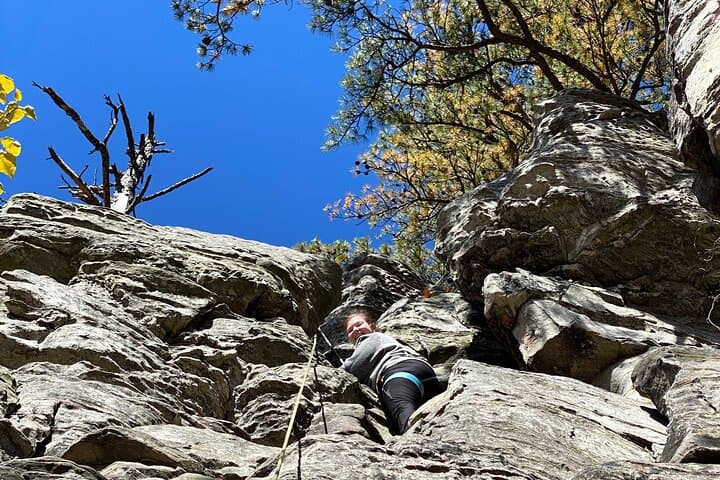
The knob appears on the horizon like a punctuation mark—an abrupt, stoic silhouette against the Piedmont sky. Approach Pilot Mountain on a cool, clear morning and the formation seems to watch you back: a blunt quartzite head rising from rolling hardwood hills, its vertical faces catching early light. At the base, your certified guide checks rope systems and harnesses with calm authority; the sound of car doors closing, the whisper of a wind that has learned to funnel through narrow chutes, the distant caw of crows. You tie in, step onto rock, and find that the mountain’s voice is not only geological—it’s kinetic: grainy holds that resist the skin, tiny crystals that glint like a promise, and a panorama that widens with each foot of exposure earned.
Pilot Mountain State Park sits in north-central North Carolina, a sentinel left behind by geologic forces that sculpted the region hundreds of millions of years ago. The knob—locally called Big Pinnacle—is an isolated quartzite outcrop, an erosion-resistant remnant of an ancient mountain range. Long before modern climbers, the formation served as a navigational landmark for Indigenous peoples and early settlers; its name and profile are woven into local stories and maps. Today the knob draws a mix of sport and traditional climbers who come for single-pitch routes that maximize headroom and drama without demanding multi-pitch experience.
The rock is honest. Quartzite’s texture offers friction; its features are straightforward but not easy. Routes at Pilot Mountain are typically single-pitch climbs of 50–150 feet, with lines that range from slabby balance sequences to steep, jutting faces that reward technical footwork and careful route-reading. An AMGA Single Pitch Instructor shapes the day: setting anchors, teaching clean and efficient rope work, and building confidence. With guided coaching, a day on Pilot becomes less about ‘getting to the top’ and more about learning how to move, breathe, and think on rock.
Culturally, Pilot Mountain sits in the foothills of Appalachia, within a region that values its rural character and music heritage. The nearby town of Mount Airy (famous as the inspiration for Mayberry) offers a down-home contrast to the exposed, austere knob. After a climb, hikers trade chalked hands and salty snacks for a pork chop sandwich at a diner, or a can of local beer while watching the sky change across the valley. The park itself is managed to balance public access with habitat protection—trails are maintained to reduce erosion and climbers are asked to follow low-impact practices to preserve the fragile flora that grips the fissures.
Practically, the experience is compact and satisfying. The tour runs about five hours, typically including a short approach hike, gear fitting, instruction time, and multiple climbs suited to your comfort and skill level. Climbs are single-pitch, which suits newcomers and intermediates: you’ll get multiple opportunities to lead or second with the safety net of an expert guide. Expect modest walking—approaches are usually under a mile—and sustained vertical time depending on group size and how much technique work the guide incorporates.
Why would a curious traveler choose this climb? It’s efficient: one morning or afternoon delivers exposure, technique coaching, and a striking view without the logistics of a long alpine ascent. It’s social and customizable: guided groups are often small and private, so the pace tailors to your goals—whether you want to conquer fear of heights, learn solid belaying skills, or simply savor a vertical view. And it’s instructive: an AMGA-certified instructor doesn’t just get you up; they teach you how to keep yourself and partners safe afterward.
For planning: go early in the day for stable weather and fewer crowds, bring sturdy approach shoes and climbing shoes if you have them (guides often provide rental shoes and harnesses), and hydrate—climbing takes core strength and mental focus more than most assume. Be prepared for wind and sun at the top: the knob throws light and shade rapidly. Photography is rewarding—wide-angle shots from belays capture the valley unfurling below—but leave heavy tripods in the car; you’ll want both hands for the rock.
Pilot Mountain climbing days are not an extreme test of wilderness endurance, but they are exacting in technique and attention. Expect to practice knots, learn anchor inspection, and be coached on foot placements—skills that pay dividends not just on quartzite, but on any crag. Finished with the summit, slide back into town for a local meal, or follow a short drive to scenic overlooks where the ridgelines of the Sauratown and Blue Ridge forests blur into late-afternoon haze. The day’s real takeaway is quieter: a new vocabulary of movement on rock, a handful of practical rope skills, and the memory of standing on a knob that has held watch over these foothills for longer than most of us can imagine.
Trail wisdom
Small choices, better day.
Arrive Early
Morning starts bring stable weather, fewer climbers on popular routes, and cooler rock temperatures.
Wear Approach Shoes
Expect short hikes over rocky trail; sticky-soled shoes on the approach protect your climbing shoes and give better traction.
Know Basic Knots
Learn a figure-eight follow-through and a clove hitch beforehand to get the most coaching time on the rock.
Hydrate and Fuel
Bring 1–2 liters of water and calorie-dense snacks—climbing uses steady energy and breaks can be long.
Local knowledge
Read the place, not just the route.
Watch for native species including Red-tailed hawk, White-tailed deer.
Keep an eye out for wildlife during the transition between areas and habitats. Respect distance guidelines.
Pilot Mountain is managed by North Carolina State Parks; follow Leave No Trace, stick to established trails, and avoid placing gear on fragile vegetation that clings to rock faces.
Follow the guide's instructions on size limits, ethical handling, and leave-no-trace practices.
Morganton Overlook—short drive for a different angle on the knob. Pilot Mountain Creek runs with small cascades worth exploring after a climb
Locally recommended viewpoints and quiet spots known best to local operators.
The knob has long been a navigational and cultural landmark; European settlers and local Indigenous communities used it as a reference point across the Piedmont.
Maritime roots and regional tradition shape the waterways and working coasts.
Seasonal guide
Four versions of the same landscape.
Spring
Best forCool climbing temperatures · Wildflower displays nearby · Less sun exposure on slabs
ChallengesOccasional muddy approaches · Unpredictable spring storms
Spring offers crisp, comfortable climbing temps and green hills, but be ready for wet approaches and sudden showers.
Summer
Best forLong daylight hours · Evening climbs after heat wanes · Vibrant park activity
ChallengesHot afternoons, sun exposure · Higher humidity affecting grip
Summer is busiest—start early to avoid heat and bring sun protection and plenty of water.
Fall
Best forPeak foliage views · Cool, stable weather · Comfortable climbing conditions
ChallengesEarly sunsets in late fall · Occasional brisk winds
Fall is optimal: crisp air, vivid colors, and excellent friction on the rock make for memorable climbs.
Winter
Best forSolitude and quiet trails · Clear visibility on cold days
ChallengesCold, icy patches on shaded faces · Limited daylight and lower temps
Winter can be beautiful but check conditions—ice or frost can make quartzite dangerously slick.
Operator details
What the booking data adds.
Included
- ✓Chalk
- ✓Helmet
- ✓Harness
- ✓All necessary gear for climbing.
Not included
- —Climbing shoes
Good to know
- ✓Service animals allowed
- ✓Public transportation options are available nearby
- ✓Not recommended for travelers with spinal injuries
- ✓Not recommended for pregnant travelers
- ✓Travelers should have at least a moderate level of physical fitness
- ✓Participants can choose to only spectate
- ✓Indoor bathrooms at parking lot
- ✓Pregnant women must have written doctors approval to climb.
Pack with intention
What to bring.
Good to know
Common questions.
No—this guided experience is designed for beginners and intermediates; the AMGA instructor teaches rope skills and technique on single-pitch routes.
Plan the edges
The details that make the day easier.
Pilot Mountain’s distinct knob is an erosion-resistant quartzite monadnock and has been used as a landmark by Indigenous peoples and early settlers for centuries.
After a climb, head to nearby Mount Airy for a bite—try a classic diner plate at Snappy Lunch and explore local breweries and vinyl shops in downtown Mayberry-style streets.
- Closest airport
- Piedmont Triad International (GSO) ~45–60 minutes; Driving from Mount Airy: ~20 minutes; Cell service: patchy near summit; Permits
- passes
- guided tours typically include park access—confirm parking fees or state park passes with operator.
Pilot Mountain is part of North Carolina State Parks—pack out all trash, avoid chalking holds excessively, and stay on established trails to protect native vegetation.
Explore by topic
Follow the threads.
Keep exploring
Make the story part of the trip.
Set out from Bass Harbor for a private, customizable day on Blue Hill Bay — lighthouses, puffins, seals, and the chance to feel Acadia from the water. Small groups, local captains, unforgettable views.
In four hours you can move from shaded canyon ferns to wind-scoured coastal ridgelines, guided by someone who knows where the light—and the hidden views—live. This private half-day hike on the Monterey Peninsula or Big Sur is compact, curated, and perfect for travelers who want depth without a multiday commitment.
 Related story
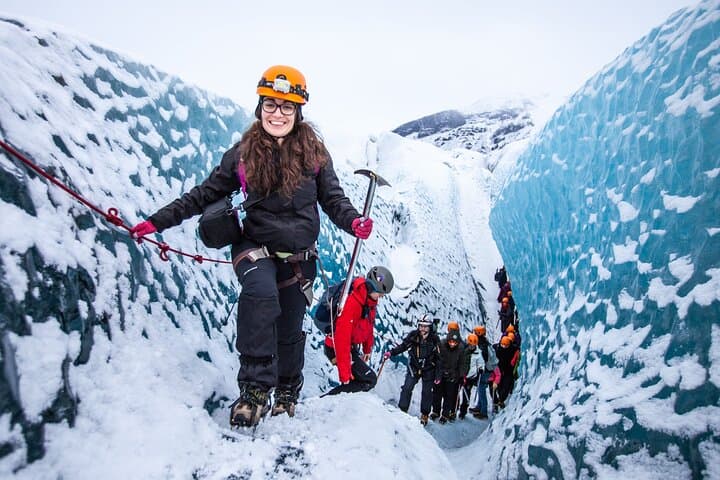
Beneath a sky of shifting light, Skaftafell’s ice reads like a map of time. This three-hour guided glacier hike mixes technical instruction with geology and culture: compact, safe, and unforgettable.