
What the day feels like
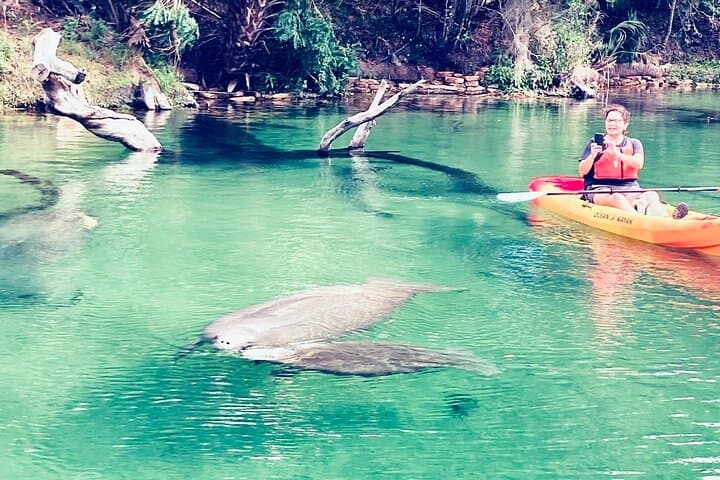
The river moves like a promise. At dawn the spring boil is a pale, electric blue that pushes through tannin-dark channels and dares you to follow it. You step onto a paddleboard and the world refocuses: the creak of your board underfoot, the whisper of sawgrass along the bank, the warm breath of the water rising where it meets the cool morning air. On some days, a rounded back and a slow, deliberate exhale break the surface—a Florida manatee has come up for air. For two hours with the Orlando Manatee and Natural Spring Adventure Tour at Blue Springs you aren’t just an observer; you’re a moving vantage point, gliding into a landscape that’s equal parts biology lesson, geology lab, and quiet theater.
Blue Spring sits where limestone gives up cold, mineral-rich water from the Floridan Aquifer, creating a year-round outflow that’s markedly cooler than the surrounding river. That temperature contrast is why West Indian manatees gather here in winter: the spring functions as a thermal refuge when coastal waters dip. The ecology is simple on paper, intricate in practice—eelgrass beds, submerged roots, and a braided shoreline that supports wading birds, turtles, and the occasional otter. Humans have been interacting with this place for centuries, from Indigenous peoples who used springs as seasonal camps to later settlers who mined the springs' tourism value. Today, the boat wakes and resort developments are further downstream; at Blue Spring the current reads like an older, slower script.
The tour itself is designed around accessibility. Guides meet groups, brief newcomers on balance and body position, and hand out high-quality stand-up paddleboards or single- and tandem-kayaks. Most guests are novices; the instruction is calm and incremental, oriented toward getting you comfortable enough to pause, pivot, and simply watch. Guides are part naturalist and part safety officer—identifying submerged channels, pointing out manatee-friendly zones, and explaining local rules that keep wildlife safe. Along the way you’ll get plain-language context on the springs' hydrology: how the aquifer feeds the boil, why the water stays clear, and how land use upriver affects the clarity and temperature below.
This is also a story about scale. The Blue Spring boil may look like a local curiosity, but it’s a feature of the much larger Floridan karst system—sinkholes, caves, and a vast subterranean drainage network carved out of limestone. That geology shapes not only scenery but life cycles: the cool spring water stabilizes river temperatures and creates habitat pockets for species otherwise pushed south. It also creates a management tension. The same crystalline water that draws manatees draws visitors, and the challenge for guides and park staff is balancing access with protection.
Why go? Because this is a rare, low-effort way to feel proximate to something enormous without having to hike or plan a full expedition. Blue Spring makes wildlife accessible. The manatee encounters are never guaranteed, but the odds are best in colder months when animals concentrate in the springs. Beyond fauna, the paddle itself is restorative: a motion that resets whatever city-rush or travel-fatigue you carried in. For photographers, the light over the boil is mercilessly good in the hour after sunrise; for families, the steady lesson in stewardship is as important as any postcard view.
Practicalities matter. The trip is a two-hour, guided paddle intended for mixed experience levels. Boards are stable, guides are trained, and the operator provides instruction, life jackets, and often a dry bag for a phone. Still, water-safety fundamentals apply: wear a life jacket, keep your phone in a dry bag, and follow the guide’s distancing rules from manatees. Park rules and manatee-protection laws prohibit chasing, touching, or encircling wildlife. If your goal is manatee viewing, plan for early winter months when they’re concentrated; if you want clearer water and warmer weather, late spring and summer are fine—just expect more bugs and more swimmers.
Timing and gear make the difference between a comfortable outing and a soggy one. Aim for a morning slot for light and fewer crowds. Dress for immersion—quick-dry layers, water shoes, and reef-safe sunscreen—and bring a lightweight wind layer if the forecast hints at an onshore breeze. Hydration is essential; even in mild temperatures the sun is persistent. Finally, remember that supporting responsible operators means choosing tours that brief guests on leave-no-trace practices and manatee etiquette. The river rewards the quiet visitor.
For travelers based in Orlando or Daytona Beach, this two-hour paddle compresses a lot of what Central Florida does best: accessible wildness, layered natural history, and an easy sense of discovery. It’s not about conquering a peak or beating a time; it’s about slowing to the pace of the water and letting something larger—a gentle river, a lumbering manatee, an ancient spring—set the rhythm.
Trail wisdom
Small choices, better day.
Go early for best light
Morning launches reduce wind, cut crowds, and offer the clearest chances to see manatees near the spring boil.
Wear a PFD
Life jackets are provided but should be worn at all times—currents can be deceptively strong near the boil.
Use reef-safe sunscreen
Protect your skin and the spring’s water quality by choosing a mineral-based sunscreen.
Keep your distance
Federal and state rules prohibit approaching or touching manatees; follow your guide’s instructions to avoid fines and stress to wildlife.
Local knowledge
Read the place, not just the route.
Watch for native species including Florida manatee, Great blue heron.
Keep an eye out for wildlife during the transition between areas and habitats. Respect distance guidelines.
The spring is managed to protect manatee habitat—visitors are asked to maintain distance, avoid touching wildlife, and use reef-safe products to protect water quality.
Follow the guide's instructions on size limits, ethical handling, and leave-no-trace practices.
The boardwalk at Blue Spring provides a quiet vantage for non-paddlers. Historic downtown DeLand offers cafés and craft breweries within a short drive
Locally recommended viewpoints and quiet spots known best to local operators.
Blue Spring has long been used as a seasonal gathering place; its modern protection began when the state designated it a park to safeguard wintering manatees.
Maritime roots and regional tradition shape the waterways and working coasts.
Seasonal guide
Four versions of the same landscape.
Spring
Best forclear water visibility · wildflowers and migrating birds
Challengeshigher temperatures · more recreational boaters downstream
Spring brings warming water and good visibility; expect more human activity on the river but excellent birdwatching and comfortable paddling.
Summer
Best forwarm water paddles · family-friendly outings
Challengesafternoon storms · increased insect activity
Summer provides warm, gentle paddles but watch for daily storms and bring insect repellent—early mornings are still best.
Fall
Best forcalmer water · fewer crowds
Challengesvariable temperatures · reduced manatee sightings
Fall cools off the region and thins crowds; manatees may be less concentrated but paddling conditions are often pleasant.
Winter
Best formanatee viewing · crisp mornings and low humidity
Challengescolder air temps · park entry restrictions during high visitation
Winter is prime manatee season—colder coastal waters push animals into springs, making sightings most likely early in the day.
Operator details
What the booking data adds.
Included
- ✓Paddle board or kayak, paddles and life vest
Not included
- —Gratuity
Good to know
- ✓Service animals allowed
- ✓Public transportation options are available nearby
- ✓Suitable for all physical fitness levels
Pack with intention
What to bring.
Good to know
Common questions.
No—guides provide a step-by-step introduction and use stable boards suitable for beginners; kayaks are available for those who prefer to sit.
Plan the edges
The details that make the day easier.
Blue Spring State Park is one of Florida’s most important winter refuges for West Indian manatees, attracting hundreds during cold snaps.
After your paddle head to nearby DeLand for farm-to-table cafés and a local brewery, or stop in historic Sanford for waterfront dining and craft beer—both towns offer a relaxed, Floridian post-adventure scene.
- Closest airport
- Orlando International Airport (MCO); Closest trailhead
- launch
- Blue Spring State Park parking area; Driving distance from Orlando: ~30–40 miles; Cell service: intermittent near the boil; Permits
- passes
- Florida State Park entry fee and manatee protection rules apply
This spring is a critical manatee refuge—keep distance from wildlife, pack out all trash, use reef-safe sunscreen, and follow guide instructions to minimize disturbance.
Explore by topic
Follow the threads.
Keep exploring
Make the story part of the trip.
Set out from Bass Harbor for a private, customizable day on Blue Hill Bay — lighthouses, puffins, seals, and the chance to feel Acadia from the water. Small groups, local captains, unforgettable views.
In four hours you can move from shaded canyon ferns to wind-scoured coastal ridgelines, guided by someone who knows where the light—and the hidden views—live. This private half-day hike on the Monterey Peninsula or Big Sur is compact, curated, and perfect for travelers who want depth without a multiday commitment.
 Related story
Beneath a sky of shifting light, Skaftafell’s ice reads like a map of time. This three-hour guided glacier hike mixes technical instruction with geology and culture: compact, safe, and unforgettable.