
What the day feels like
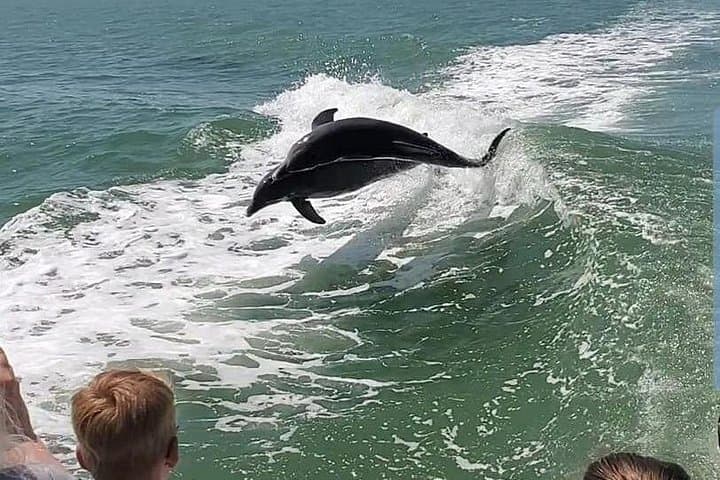
You feel the hull lift and the salt arrive first — a clean, mineral tang that promises movement. The Sea Racer’s bow slices the Intracoastal Waterway, and the shoreline folds into a low-slung collage of marsh, wooden piers and the occasional pastel condo. Above the engine’s steady hum, a naturalist’s voice begins the tour narration, but the real chorus comes from the water: a slick back, an arcing spray, a pod deciding to show off. That first flash of a bottlenose dolphin is equal parts surprise and relief — proof that the chase you signed up for will pay out in wonder.
This is not a languid sightseeing ferry; Sea Racer is built for a quick, exhilarating run. The boat marries the acceleration of a speed craft with the stability and comfort of a larger tour vessel — restroom on board, plenty of deck room, and seats that catch the sun just right. Over two hours you’ll thread the Intracoastal Waterway, slip by the Little River inlet and meet the dynamic edge where estuary meets Atlantic. Along the way the guide narrates local marine life, historical notes about the inlet’s role in coastal trade, and practical pointers on how the dolphins use currents and tidal exits to hunt.
The coast here reads like a layered history. Geologically, the Grand Strand is a living shoreline — sand pushed and replenished by longshore drift, barrier islands in motion, and inlets that act as the lungs for tidal marshes. The Little River inlet has long been a seam between sea and sound; its shifting sandbars made it important to fishermen, smugglers and early settlers. Today, the human history is quieter but still present: wooden fishing shacks turned seafood grills, family-owned marinas at work, and Barefoot Landing’s boardwalk commerce keeping company with tidal marsh.
Culturally, this stretch of South Carolina is a patchwork of small coastal towns with a hospitality-first mentality. Locals tune their schedules to the tides — the rhythm that also governs dolphin behavior. The Atlantic bottlenose dolphin is a familiar face here: curious, social and often visible from shore. That visibility has made dolphin cruises a bridge between wildlife awareness and coastal recreation, giving guests a chance to observe animals in the wild while learning about the delicate estuary systems they depend on.
For travelers, the appeal is simple and immediate: it’s easy to get excited about an accessible wildlife encounter that’s family friendly, fast-paced, and not physically demanding. But good outings are also about timing and respect. Dolphins are not props; encounters work best when boats keep a mindful distance and follow local guidelines. On this cruise you’re not zoning in on a single predictable spot — you’re following behavior. Naturalists on board will explain why pods gather near the inlet during tidal exchange, how younger dolphins ride bow waves and what signs mean the animals are stressed and should be left alone.
Practicalities matter, and they’re straightforward here. The experience is a two-hour, narrated tour — a compact window for families, photographers and anyone who wants a wildlife hit without committing a full day. Dress in layers: mornings and evenings on the water can be breezy even when the land is warm. Sun protection matters; the reflection off the water intensifies exposure. Bring motion-sickness remedies if you’re sensitive; the Sea Racer is stable, but it is a speedboat and open-water conditions change.
If you care about timing, aim for early morning or late afternoon departures. These windows often produce calmer water and more active dolphins as they follow baitfish into tidal channels. And if you want a quieter experience, travel shoulder season — late spring or early fall — when the beaches thin out but water remains warm.
The tour is an efficient introduction to the Grand Strand’s coastal ecology and a good primer if you plan to paddle estuaries, fish, or explore the barrier islands afterward. It’s also a nice complement to land-based activities: follow the cruise with fresh-caught seafood at a Little River dockside restaurant, a sunset beach walk, or a cold local beer at a Barefoot Landing taproom.
Respect is the unglamorous but essential element of a good wildlife outing. Watch the guide, keep voices low during sightings, and let the dolphins set the terms of the encounter. Picture windows happen naturally; persistent pursuit does not. Leave the feeding and approaching to the imagination and the cameras.
In short: the Sea Racer dolphin cruise gives you speed, sightlines and solid interpretation in a tidy two-hour package. It’s a coastal sprint that still leaves room for contemplation — and if the day is kind, a handful of close, joyous moments with some of the Atlantic’s most charismatic residents. Book a morning slot, bring sunscreen and a lightweight jacket, and come ready to let the tide define the route. The dolphins will do the rest.
Learn more about booking and departure options on the Sea Racer dolphin cruise here: <a href="https://app.advcollective.com/local-experts/sea-racer-dolphin-cruise-from-myrtle-beach-fast-dolphin-tours-on-the-intracoastal">Sea Racer Dolphin Cruise from Myrtle Beach</a>. For schedule details and instant confirmation, visit the tour page: <a href="https://app.advcollective.com/local-experts/sea-racer-dolphin-cruise-from-myrtle-beach-fast-dolphin-tours-on-the-intracoastal">book a Myrtle Beach dolphin cruise</a>. If you want a preview of what to expect before stepping on deck, read the operator’s overview here: <a href="https://app.advcollective.com/local-experts/sea-racer-dolphin-cruise-from-myrtle-beach-fast-dolphin-tours-on-the-intracoastal">Sea Racer tours and highlights</a>.
Trail wisdom
Small choices, better day.
Time your trip around tides
Early morning and late afternoon departures often yield calmer water and more active dolphin behavior near the inlet.
Bring layered sun protection
UV exposure increases on open water; wear sunscreen, a hat, and a lightweight wind layer for cooler breezes.
Stabilize your camera
Use a strap, set a fast shutter speed, and anticipate the shot — dolphins surface fast and unpredictably.
Respect wildlife distance
Follow the guide’s instructions and never attempt to feed or touch dolphins; let them approach on their terms.
Local knowledge
Read the place, not just the route.
Watch for native species including Bottlenose dolphins, Wading shorebirds like herons and egrets.
Keep an eye out for wildlife during the transition between areas and habitats. Respect distance guidelines.
Operators follow regional guidelines to minimize disturbance to marine mammals; avoid feeding wildlife and reduce plastic use to protect estuary habitats.
Follow the guide's instructions on size limits, ethical handling, and leave-no-trace practices.
Barefoot Landing boardwalk for dockside restaurants and craft breweries. Little River fishing piers for sunset views and local anglers
Locally recommended viewpoints and quiet spots known best to local operators.
Little River inlet has long been a working seam of the Grand Strand, historically important for local fisheries and small-scale maritime trade.
Maritime roots and regional tradition shape the waterways and working coasts.
Seasonal guide
Four versions of the same landscape.
Spring
Best forMigratory birdwatching · Moderate seas for smooth rides
ChallengesOccasional onshore winds · Variable temperatures
Spring brings warming waters and active shorebird migrations; expect mild days but pack a wind layer for breezy mornings.
Summer
Best forWarm water dolphin activity · Family-friendly outings
ChallengesHigher crowds on beaches · Stronger midday sun
Summer is peak season for dolphin sightings and comfortable sea temperatures; grab early or late tours to avoid the hottest part of the day.
Fall
Best forFewer crowds · Pleasant water temps
ChallengesOccasional tropical storm activity · Shortening daylight
Fall offers quieter marinas and steady wildlife activity, though stay aware of seasonal storm systems and possible schedule changes.
Winter
Best forCrisp air and clear visibility · Lower prices
ChallengesCooler temperatures · Less predictable dolphin activity
Winter cruises are quieter and can have excellent visibility, but dress warmly and check schedules as operators reduce runs in the off-season.
Operator details
What the booking data adds.
Included
- ✓All Fees and Taxes
Not included
- —Bottled water
Good to know
- ✓Infants and small children can ride in a pram or stroller
- ✓Service animals allowed
- ✓Public transportation options are available nearby
- ✓Infants are required to sit on an adult’s lap
- ✓Not recommended for travelers with spinal injuries
- ✓Not recommended for pregnant travelers
- ✓Not recommended for travelers with poor cardiovascular health
- ✓Suitable for all physical fitness levels
- ✓Wheel Chair Assistance is available onsite
Pack with intention
What to bring.
Good to know
Common questions.
The tour runs approximately two hours with narrated interpretation and multiple dolphin-search legs along the Intracoastal and the Little River inlet.
Plan the edges
The details that make the day easier.
Bottlenose dolphins are common along the South Carolina coast and are protected under the Marine Mammal Protection Act, which makes harassment or feeding illegal.
After the cruise, head to Barefoot Landing for seafood classics like shrimp and she-crab soup, or grab a local craft beer at a waterfront taproom; Little River’s dockside eateries serve fresh-caught fare and let you extend the coastal experience ashore.
- Closest airport
- Myrtle Beach International Airport (MYR)
- Typical drive to dock
- 20–30 minutes from central Myrtle Beach
- Cell service
- generally reliable near marinas but may drop briefly on open water
- Permits
- none required for passengers
This operator follows marine mammal viewing guidelines — keep a safe distance, never feed wildlife, and take all trash off the boat to protect fragile estuary habitats.
Explore by topic
Follow the threads.
Keep exploring
Make the story part of the trip.
Set out from Bass Harbor for a private, customizable day on Blue Hill Bay — lighthouses, puffins, seals, and the chance to feel Acadia from the water. Small groups, local captains, unforgettable views.
In four hours you can move from shaded canyon ferns to wind-scoured coastal ridgelines, guided by someone who knows where the light—and the hidden views—live. This private half-day hike on the Monterey Peninsula or Big Sur is compact, curated, and perfect for travelers who want depth without a multiday commitment.
 Related story
Beneath a sky of shifting light, Skaftafell’s ice reads like a map of time. This three-hour guided glacier hike mixes technical instruction with geology and culture: compact, safe, and unforgettable.