
What the day feels like
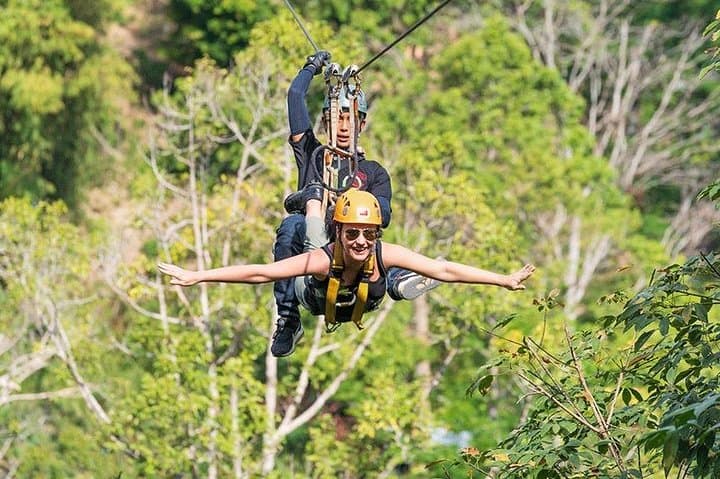
On the first run you feel the trees move before you do. The canopy closes around you in blocks of green—banyan roots, towering dipterocarps, the glint of lianas—and then the world opens into a corridor of wind. The harness bites in at the hips, the guide counts down, and you launch. For a dozen heartbeats you’re a small thing thrown between trunks, suspended over a forest floor that smells of damp earth and crushed fronds. The longest line that day sends you skimming for nearly half a kilometer; above, the jungle spreads like a living chart of ridges and valleys, below, a hint of the Andaman Sea on the horizon.
This is Phuket without the postcards: not beach vendors and sunset bars but an old-growth pocket of tropical rainforest where engineers and naturalists have collaborated to turn thrill into minimal-impact access. The Zipline 32 Platform Adventure is built into the island’s interior, threading 13 ziplines through 32 wooden platforms custom-fitted around mature trees. It’s a compact, concentrated version of canopy travel—three long runs (200m, 400m, and a stomach-loosening 500m), a 40-meter abseil, a “flying skateboard” and honeymoon sling for two, three sky bridges, a net bridge, and a sequence of spiral staircases that feel like tree trunks you can climb.
Phuket’s story is layered. Geologically young coral and limestone uplifted over millennia, the island’s central ridgeline supports one of the last substantial rainforest fragments on the Andaman coast. Historically, Phuket was a tin-mining boomtown in the 19th century—waves of labor migration shaped the island’s culture and architecture—and the old-growth pockets that remain are now prized. Local guides will point out trees with scars from old tapping and explain how careful platform placement reduces root and trunk damage: it’s ziplining engineered with a conservation eye.
Culturally, the experience arrives with ease: hotel pickup is included, instructions are given in English, and safety briefings are thorough. That accessibility—combined with a 60-minute activity window and a price that starts in the mid-hundreds of USD—makes this a popular day trip for families and independent travelers based in Phuket Town, Patong, or Kata. It’s adrenaline that doesn’t require adventure credentials, but it does require attention: harness up, clip the carabiners where instructed, and listen to the team. The guides are as much traffic managers as interpreters of the forest, pointing out a hornbill or a monitor lizard between runs.
Practicalities anchor the romance. The course includes a 20-minute wilderness walk and multiple staging platforms that reduce long queues while giving you time to breathe between runs. The three head-turning ziplines offer different sensations: a short technical line that requires a controlled landing, a mid-length sweep that gives you the time to watch the canopy move beneath you, and the 500-meter “let-go” that feels like flight—face forward or lean back for a different view. The abseil warns your legs the right way; the net bridge asks you to slow down and notice the forest from a stillness you don’t usually get on a holiday island.
If you’re planning the trip, timing is everything. The island’s cool season (roughly November–February) delivers clearer skies and lower humidity; the monsoon months bring heavy rain and the possibility of course closures. Bring closed-toe shoes with good tread, a light shell, and a small daypack. Cameras are welcome but tether them: many guides require wrist straps or used carabiners to secure devices. The course is beginner-friendly but expect some physical demand—there are stairs and moderate walking between platforms.
Beyond the mechanics, this tour is an invitation to rethink Phuket’s terrain. After a few runs you stop being an observer and start acting as a component of the place: the wind negotiates your trajectory, the guide times rope catches to limit sway, and the forest’s sounds—wingbeats, a falling twig, a distant river—reassert their rhythms. There’s a kind of kinetic literacy that comes with canopy travel; you learn to read a zipline the way you read a river: entry angle, speed, landing zone. It’s fast to learn and oddly calming once you stop fighting it.
For photographers, the course offers a sequence of framed perspectives: trunk-anchored platforms that make foregrounds, sky bridges for layered depth, and long runs that compress distance for wide panoramas. For families, the honeymoon sling and tandem options turn the experience into a shared memory rather than a solo brag. And for anyone concerned about impact, the operators emphasize non-invasive construction and guided education about local flora and fauna.
A final, practical note: the whole experience moves quickly. With hotel transfer included and instant confirmation, it’s easy to slot this into a fuller island itinerary—hit the course in the morning and finish the day in Phuket Town’s Old Quarter for roti and coffee, or on a western beach at sunset. The adrenaline is immediate; the sense of having touched a different layer of Phuket’s landscape lingers.
If you go, don’t treat this as just another attraction. Let the lines do the storytelling: feel the canopy’s pulse, listen for birds you can’t see, and pause long enough on a sky bridge to notice how the island’s green interior can change the senses. This is ziplining as translation—fast, safe, and oddly elegant—turning raw flight into a way to understand an island that’s more than sand and sea.
Trail wisdom
Small choices, better day.
Wear closed-toe shoes
Secure, grippy shoes are required for stairs, platforms, and safe landings—no sandals or flip-flops.
Use a tether for cameras
Bring a wrist strap or secure mount—loose gear is at risk on long ziplines and may be restricted by guides.
Hydrate before you go
The humid climate and physical exertion mean you should drink water beforehand; refill stations are limited.
Listen to guides closely
Safety briefings cover braking technique and clip procedures—follow instructions to avoid gear mishaps.
Local knowledge
Read the place, not just the route.
Watch for native species including Long-tailed macaque, Oriental pied hornbill.
Keep an eye out for wildlife during the transition between areas and habitats. Respect distance guidelines.
Operators emphasize tree-friendly platform construction and encourage visitors to avoid single-use plastics and stay on designated paths to protect root zones.
Follow the guide's instructions on size limits, ethical handling, and leave-no-trace practices.
Kathu Waterfall – a nearby shaded pool for a post-course dip. Phuket Old Town – historic Sino-Portuguese streets and coffee shops
Locally recommended viewpoints and quiet spots known best to local operators.
Phuket was a major tin-mining center in the 19th century; pockets of rainforest survived the mining era and are now preserved as natural attractions.
Maritime roots and regional tradition shape the waterways and working coasts.
Seasonal guide
Four versions of the same landscape.
Spring
Best forFewer crowds than high season · Warm, sunny flights · Early-morning runs before heat
ChallengesHotter midday temperatures · Increased humidity · Occasional short showers late season
March–April brings rising heat and clear skies; morning slots are comfortable, but bring sun protection and water.
Summer
Best forLush rainforest imagery · Lower off-peak prices · Fewer international tourists
ChallengesMonsoon rains and possible closures · Slippery platforms after rain · Higher humidity
May–October is wetter and greener; check for rain-related cancellations and expect muddy approaches.
Fall
Best forTransition to drier weather · Vibrant foliage and water levels · Comfortable temperatures
ChallengesUnpredictable early storms · Variable humidity · Short-lived rain showers
September–November moves from wet to dry; ideal late-season windows offer clear air and active wildlife.
Winter
Best forCooler, drier conditions · Clear coastal views · Peak visibility for long ziplines
ChallengesHigher visitor numbers in high season · Book early for morning slots · Slightly cooler mornings
November–February is the most pleasant time—lower humidity and stable weather make for reliable runs.
Operator details
What the booking data adds.
Included
- ✓Drinking water
- ✓Accident Insurance for rider & passenger (ATV damages not covered)
- ✓First Aid Kit
- ✓Join in ATV experience
- ✓Safety equipments
- ✓Round trip transfer from Patong, Kata, Karon, Rawai or Chalong
- ✓Tour Guide
- ✓Raincoat (on rainy days)
Not included
- —Extra Transfer: 300 THB/person (roundtrip) – Phuket Town, Ao Yon, or Panwa.
- —Extra Transfer: 1,400 THB/car (roundtrip) – Kamala, Kathu, Siray Bay, or Leam Hin Pier.
- —Extra Transfer: 1,600 THB/car (roundtrip) – Pakok, Cape Yamu, Surin Beach, or Bangtao Beach.
- —Extra Transfer: 1,600 THB/car (roundtrip) – Cherng Thalay, or Thalang.
- —Extra Transfer: 1,800 THB/car (roundtrip) – Nai Yang, Airport Area, Nai Thon Beach, or Layan Beach
- —Extra Transfer: 2,000 THB/car (roundtrip) – Maikhao Beach Area
Good to know
- ✓Not recommended for travelers with spinal injuries
- ✓Not recommended for travelers with poor cardiovascular health
- ✓Not recommended for pregnant travelers
- ✓Public transportation options are available nearby
- ✓Suitable for all physical fitness levels
- ✓Child ticket age between 4-11 years or less than 130cm in height (proved may be required)
- ✓The trip is not recommended for a person with more than 120 kg., pregnant women, a child under 4 years old and people with a surgical history of fewer than 6 months or with hypertension, asthma, infectious diseases, diabetes, epilepsy, and any mental health condition
- ✓During the tour, riders are asked to strictly follow the tour guide/instructor. The tour operator has the right to stop any risky riding with no refund
- ✓On the rare occasion that we should be required to cancel a tour, we will inform you in advance and offer a different tour date, an alternative tour or provide a full refund
Pack with intention
What to bring.
Good to know
Common questions.
No—this course is designed for beginners and first-timers, with full safety briefings and guided assistance.
Plan the edges
The details that make the day easier.
Phuket is Thailand’s largest island and was historically an important tin-mining center in the 19th century.
After the course, head to Phuket Town for roti, fresh seafood stalls, and an espresso at a restored Sino-Portuguese shop; evening markets are great for grilled fish, mango sticky rice, and local beers.
- Closest airport
- Phuket International Airport (HKT)
- Typical drive from Patong or Phuket Town
- 20–45 minutes depending on location
- Cell service
- Generally OK near clearings but intermittent under dense canopy
- Permits
- None required, safety briefing mandatory
The course was designed to minimize tree damage through custom platform installation and limited ground impact—pack out all rubbish and follow guide instructions to protect root zones and understory plants.
Explore by topic
Follow the threads.
Keep exploring
Make the story part of the trip.
Set out from Bass Harbor for a private, customizable day on Blue Hill Bay — lighthouses, puffins, seals, and the chance to feel Acadia from the water. Small groups, local captains, unforgettable views.
In four hours you can move from shaded canyon ferns to wind-scoured coastal ridgelines, guided by someone who knows where the light—and the hidden views—live. This private half-day hike on the Monterey Peninsula or Big Sur is compact, curated, and perfect for travelers who want depth without a multiday commitment.
 Related story
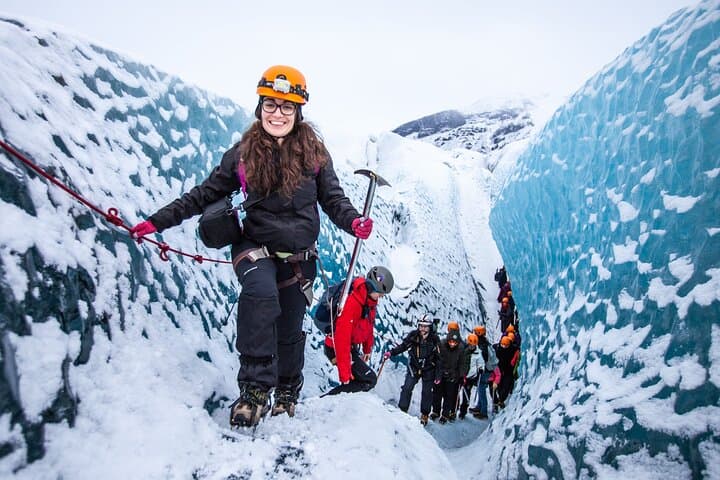
Beneath a sky of shifting light, Skaftafell’s ice reads like a map of time. This three-hour guided glacier hike mixes technical instruction with geology and culture: compact, safe, and unforgettable.