
What the day feels like
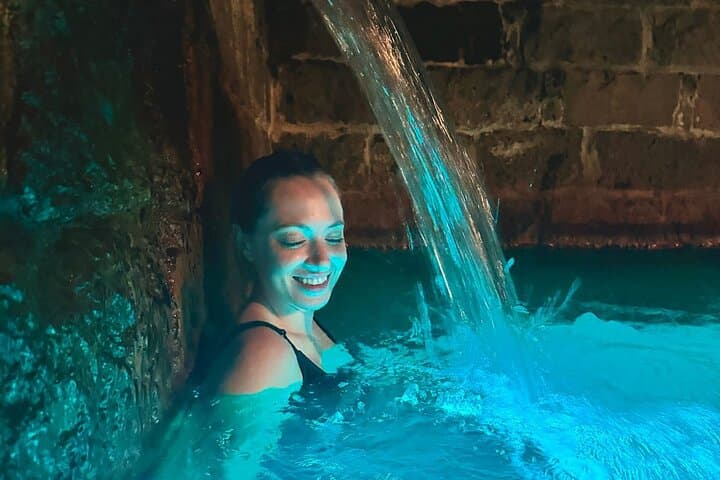
The steam rises in slow, tactile sheets from the dark water—an almost deliberate curtain drawn across the valley. It smells faintly of metal and earth, like a kettle that’s been left on the stove too long. You step into the pool and the heat takes one measured second to settle into your joints, then another to loosen the day's travel out of your shoulders. Around you, the Furnas valley exhales: fumaroles hiss in the distance, the lake is a sigh of black glass, and an orange evening light throws the volcanic slopes into hard relief. For four hours on São Miguel, the island’s geothermal heart becomes a private theater of water and stone.
This tour begins with a short drive up the island’s south coast, carving through narrow villages and laurel-forested ridges until the road unfurls into the caldera that holds Furnas. Your first stop, Pico do Ferro, is the kind of viewpoint that feels like a geological footnote turned scenic climax—an open mouth to a volcanic depression, the lake at its base, steam vents into the air like punctuation. From there the schedule turns intimate: a guided walk through pockets of fumaroles, a short descent to the thermal pools at Poça da Beija, and an evening soak in water warmed by magma still busy below the surface.
Geology here is unapologetically visible. Furnas is a caldera—essentially a collapsed volcanic bowl—where groundwater meets heat and chemistry does the rest. The result is a landscape stitched with hot springs, boiling mud pots, and steam vents; these are not mere curios but working systems that have shaped life on São Miguel for centuries. The locals learned to harness geothermal energy not only for warmth but for food: cozido das Furnas, a stew slow-cooked in iron pots buried in the ground and steamed by volcanic heat, is as much demonstration as dinner.
Culture and care are integral to the experience. Many of the tour guides here are islanders who grew up with the hiss of vents as background noise and who can recite which plot of earth will make the best stew and which spring carries the cleanest mineral fragrance. The visit to the thermal baths is often paired in local life with a stop at Terra Nostra Park—the garden’s ochre thermal pool framed by centuries-old tree canopies—or a detour to the tea plantations of Gorreana and Porto Formoso that slope toward the sea, one of the few places in Europe to grow tea commercially.
The evening timing lends the whole experience a quiet gravity. Fewer visitors, softer light, and the physics of cooling air against hot water make the steam more theatrical. But practicality underpins that theater. Even in late summer, nights can be cool; you’ll want a warm layer to throw on after the soak. The pool floors can be uneven and slick with algae—water shoes help. Hydration is non-negotiable: thermal water accelerates dehydration even as your body relaxes.
For travelers this tour strikes a rare balance: it’s both restorative and revealing. You’ll float, soak, and feel the peculiar, slightly medicinal lift of geothermal water under your skin, but you’ll also leave with a clearer read on São Miguel’s story—how volcanic forces sculpted a culture that cooks with steam and gardens in the ash. Practicalities are simple: the experience runs roughly four hours, includes local guiding and transportation from hotels along the south coast, and can be tailored for privacy or added stops. Expect a bit of walking on uneven ground and a chance to snap dramatic photos at Pico do Ferro before the sun drifts.
Bring a swimsuit, a quick-dry towel, waterproof sandals, and a small bottle of water. If you want warmth after the pool, pack a light fleece or wool layer. Wear shoes you can step into and out of quickly; the sulfur scent that lingers on clothing is part of the place and best embraced rather than fought. On the subject of scent: remember this is an active volcanic system—avoid submerging your head, and follow all posted guidance at thermal sites.
Beyond the pools, plan an evening meal around local specialties. Furnas is synonymous with the cozido—book a table at a restaurant that specializes in the dish and watch the lids come off the pots—steam rising like a miniature Furnas escarpment. If time permits, the Terra Nostra Garden’s evening-lit pool and the small cafés in Furnas village offer a gentle transition back to island life.
This is not a flashy adrenaline outing; it’s an elemental one. The reward is quiet and cumulative: warmed muscles, a clearer backstory to São Miguel’s landscape, and the simple theatricality of steam against twilight. For travelers who like their adventures to deliver sensory payoff and cultural context in equal measure, an evening in Furnas’ thermal baths is a precise, effective prescription.
Trail wisdom
Small choices, better day.
Bring Water and Rehydrate
Thermal water and warm air can accelerate dehydration—sip frequently before and after your soak.
Wear Water Shoes
Pool floors and paths near vents are often uneven and slippery—rubber-soled sandals improve footing.
Mind the Steam
Stand back from fumaroles and follow guide instructions—high-temperature vents can scald.
Layer Up Afterward
Evenings cool quickly after you leave the warm pools—bring a warm, quick layer to avoid post-soak chills.
Local knowledge
Read the place, not just the route.
Watch for native species including Common snipe and other wetland birds near Furnas Lake, Azorean bullfinch in surrounding laurel forests.
Keep an eye out for wildlife during the transition between areas and habitats. Respect distance guidelines.
The Furnas area is managed to protect hydrothermal features—stay on boardwalks, avoid touching delicate microbial crusts, and pack out trash to limit human impact.
Follow the guide's instructions on size limits, ethical handling, and leave-no-trace practices.
Poça da Beija (a smaller, less-crowded pool for evening soaks). Terra Nostra’s botanical paths away from the main pool provide quiet microclimates and old-growth specimens
Locally recommended viewpoints and quiet spots known best to local operators.
Furnas developed around geothermal sites used for bathing and cooking since the 18th century; the practice of burying pots for the cozido became a local culinary tradition.
Maritime roots and regional tradition shape the waterways and working coasts.
Seasonal guide
Four versions of the same landscape.
Spring
Best forfewer crowds · wildflower displays · milder temperatures
Challengesintermittent rain · cooler evenings
Spring brings green valleys and fewer tourists; water is pleasant but evenings can still be chilly—bring a warm layer.
Summer
Best forwarm evenings · long daylight · full garden blooms
Challengeshighest visitor numbers · limited late bookings
Summer is ideal for balmy evening soaks and pairing visits with tea plantations and botanical gardens—book in advance.
Fall
Best forquieter trails · clear light for photography · crisp nights
Challengescooler water temperatures at night · occasional storms
Autumn offers dramatic light and fewer visitors; the contrast between cool air and hot pools is most pronounced.
Winter
Best forthermal contrast · lower prices · intimate experiences
Challengesshorter daylight · risk of rain or high winds
Winter intensifies steam drama and solitude—but dress warmly and expect the possibility of canceled sections in stormy weather.
Operator details
What the booking data adds.
Included
- ✓Pick-up and drop off at your accommodation
- ✓Thermal Baths Tickets (Schedule time may chgange depending on availability)
- ✓All Fees and Taxes
- ✓Air-conditioned vehicle
- ✓Premium SUV Transportation (Skoda KODIAQ)
- ✓Guide Certified by the Government of the Azores
Good to know
- ✓Infants and small children can ride in a pram or stroller
- ✓Service animals allowed
- ✓Public transportation options are available nearby
- ✓Specialized infant seats are available
- ✓Suitable for all physical fitness levels
- ✓Suitable for almost all ages, families, and friends.
- ✓USB charge
- ✓Vehicle is sanitized before and after each excursion
- ✓Visitors can order towels at the reception of their accommodation.
- ✓Preferably dark swimsuits
Pack with intention
What to bring.
Good to know
Common questions.
Most pools are family-friendly but water temperature and the walk to pools vary—check with the operator about mobility needs and keep children supervised.
Plan the edges
The details that make the day easier.
Cozido das Furnas is traditionally cooked by burying pots in the heated ground and letting geothermal steam slowly cook the stew—an age-old practice still served across Furnas.
After your soak, try a cozy dinner of cozido in Furnas village, visit Terra Nostra Garden for a stroll or dip in its historic thermal pool, and sample Azorean tea at Gorreana—pair the thermal experience with these local flavors to complete the visit.
- Closest airport
- João Paulo II Airport (PDL) in Ponta Delgada; Driving time: ~45 minutes from Ponta Delgada to Furnas; Cell service: generally available but can be spotty in valley low points; Permits
- fees
- no permits required, but some parks and gardens charge entrance fees; Tour length: ~4 hours; Hotel pickup: commonly available on the south coast.
Furnas’ geothermal features are fragile—stay on marked paths, avoid applying soaps or lotions in natural pools, support local guides and restaurants, and pack out any waste.
Explore by topic
Follow the threads.
Keep exploring
Make the story part of the trip.
Set out from Bass Harbor for a private, customizable day on Blue Hill Bay — lighthouses, puffins, seals, and the chance to feel Acadia from the water. Small groups, local captains, unforgettable views.
In four hours you can move from shaded canyon ferns to wind-scoured coastal ridgelines, guided by someone who knows where the light—and the hidden views—live. This private half-day hike on the Monterey Peninsula or Big Sur is compact, curated, and perfect for travelers who want depth without a multiday commitment.
 Related story
Beneath a sky of shifting light, Skaftafell’s ice reads like a map of time. This three-hour guided glacier hike mixes technical instruction with geology and culture: compact, safe, and unforgettable.