
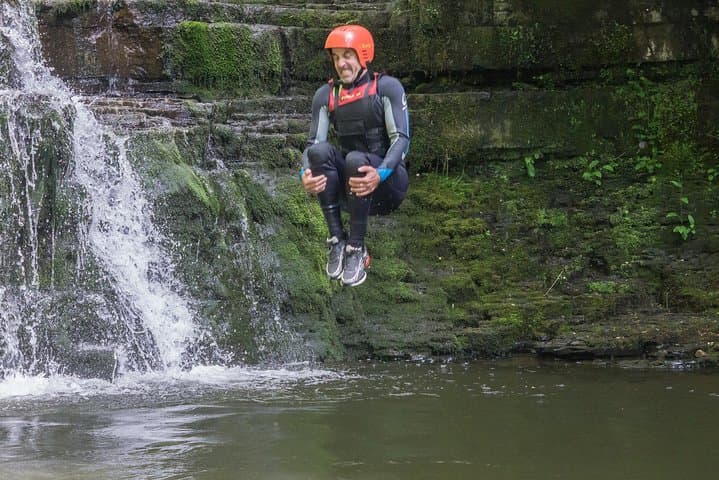
What the day feels like
You step into the seam between rock and water and the gorge rearranges your senses. Cold, bright water pulls at your calves; a limestone wall leans in with a muffled roar. Ahead, a natural chute narrows to a slick slide, daring you to let gravity do the work. For three hours on Endless Adventure North East’s Gorge Walking trip, the river becomes both playground and teacher — it tests footing, tempers fear with laughter, and rewards every small risk with a pool that feels bottomless.
This is not a leisurely riverside stroll. Gorge walking is a sequence of intimate moments with the landscape: climbing slippery boulders, threading into shadowed river caves, sliding down rock faces smoothed by centuries of flow, and launching off ledges into deep plunge pools. You move up the gorge, not downstream, so each jump and scramble feels like buying a return ticket on adrenaline. The operator’s promise — top-of-the-range kit, mobile changing facilities, and waterproof photos taken during the trip — is part of the reason this specific Lake District outing has earned near-perfect reviews from adventurous visitors.
Geology does much of the heavy lifting here. The Lake District’s gorges are carved in layers of ancient Ordovician and Silurian rock, then polished and widened by glacial meltwater during the last Ice Age. That history shows in the sculpted channels, potholes, and plunge basins that make gorge walking possible. Human history threads alongside: old mining scars and remnants of mills and packhorse routes hint at how locals once harnessed these rivers for industry while living with their force.
Culturally, the Lake District has long attracted people who want to be close to elemental landscapes — poets, fell runners, climbers, and now gorge walkers. The activity marries the region’s tradition of outdoor challenge with contemporary adventure tourism. Locals respect the water here; guide outfits operate with safety-first procedures and an eye toward minimizing impact. If you join a commercial trip, expect to be outfitted with a wetsuit, helmet, buoyancy aid, and harness as needed — the heavy lifting of technical gear is handled so you can focus on movement and fun.
Practically, the trip is tailor-made for people who can handle moderate cardio and a head for heights. The experience runs roughly 3–4 hours (the operator lists a fixed duration of 210 minutes), and is best scheduled in the warmer months for more comfortable water temperatures. Guides walk you through technique — how to read a flow, how to make a controlled slide, how to pick a safe jump — so prior canyoning experience isn’t mandatory, but basic swimming ability and comfortable scrambling on wet rock will make it more enjoyable.
Safety and logistics are straightforward: the operator provides professional supervision and instruction, and mobile changing facilities make the post-dip transition painless. Groups of six or more can request private bookings with transfers included. Prices start from about $88.45 USD per person, making this an accessible way to add a high-adrenaline half-day to a Lake District itinerary.
If you go: choose footwear with good grip, prepare to get wet, and plan the rest of your day around drying out and warming up. Cell service can be patchy inside narrow gorges, so assume your group’s photos will come from the operator’s waterproof cameras unless you bring a secure action camera. Above all, move at the pace you’re comfortable with — the guides will encourage incremental progress, and the best parts of gorge walking are the shared laughs and quiet moments sitting on a rock while water erases the noise of the outside world.
Why travelers should do this now: gorge walking offers a compact, high-reward outdoor challenge that’s different from the region’s better-known hikes and lake cruises. It’s social, tactile, and location-specific in a way that gives you both a physical story and a handful of spectacular images. For families with teenage kids who want something more adventurous than a hill walk, this can be a perfect fit; for seasoned outdoor athletes, the combination of route-finding and exposed water moves provides just enough complexity to keep things interesting.
The Lake District is a busy place in summer, so book ahead, arrive prepared to sit in wet clothes on the drive home or bring a change of warm layers, and respect the river. The gorge will gladly play host, but it asks for careful feet and humble attitudes in return.
Trail wisdom
Small choices, better day.
Footwear matters
Wear closed-toe water shoes or old trail runners with good tread — slick rock punishes flimsy soles.
Trust the guides
Follow guide instructions for jumps and slides; they pick the safest lines and monitor flow conditions.
Layer up for after
Bring a warm, quick-dry midlayer and a waterproof shell for post-activity comfort.
Secure small electronics
Use a waterproof action camera or leave phones in a dry bag — the operator typically provides waterproof photos.
Local knowledge
Read the place, not just the route.
Watch for native species including Dipper (river bird).
Keep an eye out for wildlife during the transition between areas and habitats. Respect distance guidelines.
Operators often follow Leave No Trace principles — stick to group routes, avoid trampling riparian vegetation, and pack out any litter to protect these sensitive river habitats.
Follow the guide's instructions on size limits, ethical handling, and leave-no-trace practices.
A shallow riverside ledge upstream where guides often stop for a quiet tea break. A short off-route viewpoint just above the gorge that frames the main drop and is great for landscape shots
Locally recommended viewpoints and quiet spots known best to local operators.
Many Lake District gorges were shaped by glacial meltwater and later used by small-scale mills and miners; remnants of this industrial past can still be seen near some river reaches.
Maritime roots and regional tradition shape the waterways and working coasts.
Seasonal guide
Four versions of the same landscape.
Spring
Best forFresher flows and dramatic water levels · Wildflower views at gorge edges
ChallengesColder water temperatures · Unpredictable spring storms
Spring brings high, dramatic flows perfect for spectacle but colder swims — wetsuits are essential and some elements may be scaled back.
Summer
Best forWarmer water and longer days · Family-friendly bookings
ChallengesHigher visitor numbers · Less dramatic water levels in dry spells
Summer is the optimal season for comfortable water temperatures and consistent operating schedules, though popular dates fill fast.
Fall
Best forCrisp air and fewer crowds · Rich autumn colors around the gorge
ChallengesCooling water temps · Shorter daylight hours
Autumn offers quieter runs and scenic color but requires warmer layers pre- and post-activity as temperatures drop.
Winter
Best forOff-season solitude for the confident · Learning serious water-rescue techniques (special courses)
ChallengesVery cold water and hypothermia risk · Operator may restrict runs in icy conditions
Winter trips are rare and colder; only experienced, well-equipped groups should consider winter gorge work and must check operator availability.
Operator details
What the booking data adds.
Included
- ✓Use of wetsuit, wetsuit socks, buoyancy aid and helmet
Not included
- —We do not provide footwear, towel or swimwear. Please note, trainers must lace up and have a sturdy sole; beach shoes and sandals are not suitable.
Good to know
- ✓Travelers should have at least a moderate level of physical fitness
Pack with intention
What to bring.
Good to know
Common questions.
No — guides provide instruction for every element; however, basic swimming ability and comfort with heights and cold water make the experience more enjoyable.
Plan the edges
The details that make the day easier.
The Lake District was designated a UNESCO World Heritage Site in 2017 for its cultural landscape, celebrating the interaction of people and the rugged terrain.
After a gorge run, head into Keswick for a warming meal and a local ale — the town’s cafés and pubs focus on hearty dishes like Cumberland sausage and stews perfect for restoring body heat.
- Closest airport
- Manchester (about 2 hours by car); Meeting point: provided by operator at booking; Driving distance from Keswick: typically within 30–60 minutes depending on exact gorge; Cell service: patchy in narrow gorges; Permits: none for guided commercial trips.
This activity runs in sensitive river ecosystems — choose operators who follow Leave No Trace, avoid contaminating water with soaps/sunscreen, and keep groups to manageable sizes.
Explore by topic
Follow the threads.
Keep exploring
Make the story part of the trip.
Set out from Bass Harbor for a private, customizable day on Blue Hill Bay — lighthouses, puffins, seals, and the chance to feel Acadia from the water. Small groups, local captains, unforgettable views.
In four hours you can move from shaded canyon ferns to wind-scoured coastal ridgelines, guided by someone who knows where the light—and the hidden views—live. This private half-day hike on the Monterey Peninsula or Big Sur is compact, curated, and perfect for travelers who want depth without a multiday commitment.
 Related story
Beneath a sky of shifting light, Skaftafell’s ice reads like a map of time. This three-hour guided glacier hike mixes technical instruction with geology and culture: compact, safe, and unforgettable.