
What the day feels like
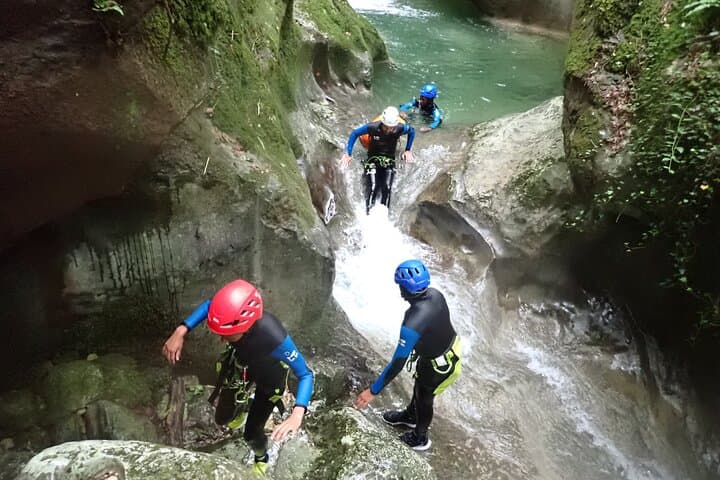
By the time you step off the minivan and the valley air clamps down around you, the canyon has already set its terms. Limestone walls, polished by centuries of water, close in like pages of a book. The Furon river—clear, cold, relentless—threads a narrow ribbon through those pages, daring you to follow. For the next half day, your world reduces to one line of route: a green-black pool, a slick ledge, a natural slide, a rope that disappears down a pocket of shadow. This is canyoning in the Vercors, and it moves fast.
The Furon gorges sit between Villard‑de‑Lans and Grenoble, a stone’s throw from the plateau of the Vercors Regional Natural Park. Geologically, the canyon is classic karst country—limestone and dolomite shaped by dissolution and the patient incision of streams. The result is a narrow, sculpted corridor where water has both softened and sharpened the rock: bowl-like basins, polished runnels, and abrupt drops. Sunlight filters through in thin bands, and the air tastes like iron and pine.
Culturally the Vercors reads like two stories stacked on top of one another: pastoral alpine life and deep resistance. The high plateaus were a refuge for shepherds and a stronghold for the French Resistance during World War II; those layers of human history shadow the landscape and give a certain gravity to outdoor pursuits here. Today, small towns such as Villard‑de‑Lans keep that mountain culture alive—cheese huts, simple cafés, and trail maps tacked to noticeboards—while Grenoble lies down in the valley as the practical anchor for getting here.
What canyoning the Furon offers is immediate and practical adventure. The operator-led experience runs roughly four hours and costs from about $65.70 per person, a compact window of adrenaline and technique. Guided groups move through a sequence of natural features—short swims, slides that feel built for human bodies, and rope-assisted descents where a helmet and harness become intimate tools. It’s technical enough to feel purposeful, but approachable; you won’t spend the day hanging on rope unless you want to.
The mood changes constantly. One moment you’re negotiating a shallow swim and feeling the current’s push, the next you’re standing in a bright pool beneath an overhang where the canyon whispers. Guides here emphasize technique and safety: proper body position, how to use the rope for balance rather than brute strength, and where to step on wet rock. If you’re new to canyoning, that guidance is the difference between thrill and hazard.
Practical logistics are straightforward. Operators typically provide wetsuits, helmets, and basic canyoning hardware; wear a swimsuit underneath, bring a sturdy pair of canyon shoes or sticky-soled approach shoes, and expect the water to be cold even on warm days. Book morning slots to take advantage of fresher water levels and to avoid afternoon heat that can push traffic on parking roads. Most participants finish damp, tired, and ready for a long lunch.
Safety is a function of preparation. Hydration matters—your body cools faster in water and shivers can sap coordination. Protect exposed skin with biodegradable sunscreen; leave jewelry and loose items behind; and follow your guide’s signals. Weather influences the route: heavy rain upriver can turn a friendly pool into something far less predictable, and operators will cancel or reroute if conditions demand it.
This canyon works for a broad range of adventurers: confident swimmers who want natural slides and short rappels, hikers who want to add a technical twist to a day in the Vercors, and travelers who like half-day outings that still leave room for a market visit or mountain café afterward. The Vercors itself is a blend of accessible alpine scenery and a network of outdoors businesses that help you layer experiences—mountain biking on the plateau, via ferrata routes higher up, and easy alpine strolls if you want to keep things mellow.
The payoff is not only the adrenaline but the craftsmanship of the landscape. You come out of the canyon smelling like stone and river, with hands pruned and a clearer sense of how water carves a place. For photographers, the canyon rewards a patient eye: reflective pools that mirror canyon walls, a shaft of light slicing down a chute, droplets caught midair against black rock.
If you have one afternoon in the Vercors, this is a useful way to experience something elemental—cold water, steep rock, and the muscle memory of a short rope descent. For planning: bring layers for after the water, arrange transport back to Villard‑de‑Lans or Grenoble, and leave a morning or afternoon free to sample local food—cheese, cured meats, and a good mountain stew. Canyoning here is efficient in its thrills: concentrated, clean, and deeply tied to the limestone spine of the Alps.
In short: the Furon gorges are not about enduring a day of discomfort to say you did it. They are about crisp moments—slides that end in laughter, silent pools that demand respect, guided moves that teach you to move differently through water and stone. If you like your adventures compact, precise, and about the terrain as much as the technique, this canyon delivers.
Trail wisdom
Small choices, better day.
Book a morning slot
Water levels and temperatures are often more stable in the morning; mornings also avoid afternoon traffic to and from the plateau.
Wear a swimsuit and thermal base
Put a swimsuit under your wetsuit and bring a lightweight insulating layer for after the canyon to prevent chill.
Shoes with sticky soles
Use canyoning shoes or approach shoes with good grip—wet limestone is deceptively slick.
Listen to your guide
Guides set safety lines and signals for a reason—follow their instructions on jumps, slides, and rope procedures.
Local knowledge
Read the place, not just the route.
Watch for native species including Chamois, Golden eagle.
Keep an eye out for wildlife during the transition between areas and habitats. Respect distance guidelines.
The Furon lies within the ecological influence of the Parc naturel régional du Vercors—stick to marked approaches, pack out waste, and avoid disturbing aquatic life.
Follow the guide's instructions on size limits, ethical handling, and leave-no-trace practices.
Quiet viewpoints on the Sassenage escarpment overlooking the gorges. Short alpine meadows on the Plateau de Vercors for easy post-activity walks
Locally recommended viewpoints and quiet spots known best to local operators.
The Vercors plateau was an important center of French Resistance during World War II and retains small memorials and museum exhibits in nearby towns.
Maritime roots and regional tradition shape the waterways and working coasts.
Seasonal guide
Four versions of the same landscape.
Spring
Best forWarmer days after thaw · Fresher green valley scenery
ChallengesHigher snowmelt raises water flow · Colder water temperatures
Spring brings increased flows from snowmelt—good for adventurous groups but expect colder water and occasional route changes.
Summer
Best forWarm air, refreshing swims · Stable booking windows
ChallengesHigher visitor numbers · Occasional afternoon storms
Summer is optimal for canyoning here: warm air temperatures make cold pools bracing instead of numbing, though afternoons can see brief storms.
Fall
Best forFewer crowds · Alpine light and color
ChallengesCooling temperatures · Shorter daylight hours
Fall delivers crisp light and quieter canyons; bring extra thermal layers as water and air cool quickly.
Winter
Best forWatching the frozen landscape from the plateau · Planning future trips
ChallengesCanyoning generally closed · Access and parking often limited by snow
Canyoning is typically not offered in winter—use the season to explore Vercors hikes and plan a summer return.
Operator details
What the booking data adds.
Included
- ✓pictures
- ✓supervision by an experienced guide
- ✓harness, helmet, neoprene suits
Not included
- —shoes
Good to know
- ✓Public transportation options are available nearby
- ✓Not recommended for travelers with spinal injuries
- ✓Not recommended for pregnant travelers
- ✓Not recommended for travelers with poor cardiovascular health
- ✓Travelers should have at least a moderate level of physical fitness
Pack with intention
What to bring.
Good to know
Common questions.
Yes—operators run guided half-day trips designed for people with no prior canyoning experience, focusing on safety coaching and manageable obstacles.
Plan the edges
The details that make the day easier.
The Vercors was a major center of the French Resistance in WWII and the Parc naturel régional du Vercors was officially established in 1970 to protect its unique landscapes.
After the canyon, warm up with Savoyard cuisine in Villard‑de‑Lans—think tartiflette, raclette, and local cheeses. Grenoble’s historic center has lively bars and regional markets where you can sample Chartreuse liqueur, cured meats and alpine breads.
- Closest airport
- Grenoble Alpes–Isère (GNB) or Lyon Saint‑Exupéry (LYS); Driving: Grenoble to Villard‑de‑Lans ~35–45 minutes; Trailhead
- meeting point
- operator will confirm meeting location near the Furon gorges; Cell service: intermittent inside narrow gorges; Permits: none required for recreational canyoning but guided bookings are recommended.
The Furon runs through ecologically sensitive karst terrain inside the Vercors regional park—pack out all trash, avoid trampling riparian vegetation, and use biodegradable sunscreen to protect aquatic life.
Explore by topic
Follow the threads.
Keep exploring
Make the story part of the trip.
 Related story
Less than two hours from Nairobi, Kereita Forest pairs hands-on canopy adventure with quiet montane trails and a sobering colonial history—perfect for families, teams, and curious travelers seeking a full-day pulse of nature.
Set out from Bass Harbor for a private, customizable day on Blue Hill Bay — lighthouses, puffins, seals, and the chance to feel Acadia from the water. Small groups, local captains, unforgettable views.
In four hours you can move from shaded canyon ferns to wind-scoured coastal ridgelines, guided by someone who knows where the light—and the hidden views—live. This private half-day hike on the Monterey Peninsula or Big Sur is compact, curated, and perfect for travelers who want depth without a multiday commitment.