
What the day feels like
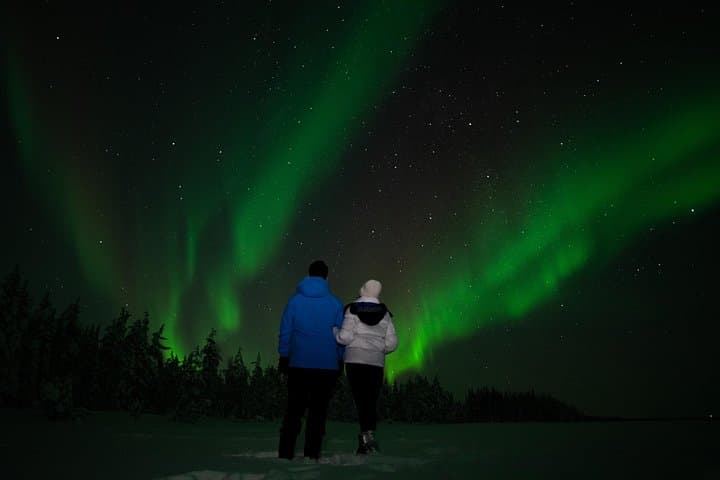
The sleigh nose parts the dark like a quiet question. Snow exhales in clouds under your boots, and a low thud marks the steady procession of hooves—the reindeer are unhurried, their breath visible in the cold lap of Lapland night. Above, the sky stirs. Long green fingers unfurl and fold again, a slow marine tide of light that dares you to stop talking, to simply watch. For roughly twenty minutes you sit wrapped against the cold, pulled through a silence that feels as old as the trees, while the aurora performs without a script. This is the heart of the Northern lights Reindeer Sledge Ride: a short, intimate slice of Arctic life that stitches wildlife, culture, and sky together in three crisp hours. Practical, small-group, and guided from Rovaniemi, the tour begins with pick-up and winter overalls supplied to keep the chill at bay. The drive to the reindeer farm is part of the setting; you leave town lights behind and enter a landscape of spruce and open tundu-ra, where the scale shifts and the stars feel closer. Local herders welcome you, introduce the animals, and share the rudimentary etiquette of a reindeer sledge: how the animals respond to voice, where to sit, and why these animals are central to Sami culture. Then the ride itself, about 20 minutes, moves at a meditative pace. Afterward you warm up with a hot beverage while listening to stories about reindeer husbandry, migration, and the rhythms of a life lived under long Arctic nights. The experience is equal parts wildlife encounter and cultural exchange, made vivid by the intimacy of small groups and the direct access to people who still work with reindeer daily. Geologically, this corner of Finnish Lapland is shaped by the last Ice Age: low rounded hills, peatlands, and a network of rivers carved by glacial melt that now lie under snow and ice. Culturally, reindeer herding is not a tourist accessory but a living tradition tied to the Sami people. Many farms welcome visitors, and this tour frames that exchange with a respectful introduction by the herders, though travelers should be aware that the commercial side of Arctic tourism has grown and experiences vary in authenticity. The practical facts are simple. The tour runs about three hours door-to-door from Rovaniemi, includes thermal overalls and transport, and the sleigh ride itself lasts about 20 minutes. Expect a small-group atmosphere, a hot drink, and a short interpretive talk from the herders. Price starts from roughly USD 130 and confirmation is instant; the listing notes free cancellation and that the trip is likely to sell out during peak winter months, so book early. For photographers and aurora chasers there are trade-offs. The reindeer ride is short and moving, which limits tripod work, but the farm setting allows for stationary portrait opportunities with animals and long exposures during any clear spell of sky. Bring a bright headlamp, spare batteries, and a camera you can set to manual exposures. Timing matters: the Northern Lights are a probabilistic event, best seen during long, clear nights in mid-winter and often around local geomagnetic peaks. The tour offers a chance, not a guarantee. Practical preparation is straightforward yet essential. Layer for Arctic cold with a windproof outer shell, insulated mid-layer, wool base, warm boots, mittens, and hand warmers. The company supplies overalls but not bulk insulation or high-end boots. Drive time from Rovaniemi is short, but roads can be icy and dark. The deepest rewards of this experience are the small, human moments: an elder herder explaining the seasonal movements of reindeer, a childlike fascination at a calf taking its first tentative steps, the sudden drop in ambient noise when a bank of aurora blooms overhead. These are the kinds of memories that outlast the post-card images. Who should book this tour? Travelers who want a compact, low-effort winter experience that combines wildlife and culture; families who want something accessible; photographers looking for atmospheric portrait and night-sky opportunities without an all-night aurora chase. It is not a wilderness trek or a guaranteed aurora safari, so adventurous expectations should be balanced with the tour's short duration and cultural focus. Sustainable travel matters here: choose operators that emphasize animal welfare, support local economies, and limit visitor impact on pasturelands. Ask questions about how the animals are cared for, how the farm compensates herders, and whether proceeds support local communities. In short, the Northern lights Reindeer Sledge Ride is an efficient, evocative winter excursion: three hours of Arctic storytelling by motion, conversation, and sky. It won’t replace an all-night aurora hunt or a multi-day cultural immersion, but it will deliver a quiet, memorable collision of human and natural histories—a chance to feel the slow pull of reindeer, and to watch the heavens answer.
Trail wisdom
Small choices, better day.
Dress in layers
Thermal base layers, insulated mid-layers, and a windproof outer shell keep you comfortable during the sleigh ride and while standing outside photographing the aurora.
Bring spare batteries
Cold drains batteries quickly—carry extras for cameras and headlamps in interior pockets close to your body.
Mind the animals
Follow herder instructions, avoid sudden movements, and never feed reindeer without permission to protect animal health.
Plan for limited shoot time
The ride is short; set camera exposures and white balance at the farm before you depart to maximize photo opportunities.
Local knowledge
Read the place, not just the route.
Watch for native species including Reindeer, Arctic hare.
Keep an eye out for wildlife during the transition between areas and habitats. Respect distance guidelines.
Respect pasturelands by staying on designated paths, avoid feeding animals, and choose operators that support local herding communities.
Follow the guide's instructions on size limits, ethical handling, and leave-no-trace practices.
Early evening visit to a small lakeside clearing for unobstructed sky views. Short walk behind some farms where footprints reveal local wildlife activity
Locally recommended viewpoints and quiet spots known best to local operators.
Reindeer herding is central to Sami culture, practiced for centuries as a semi-nomadic livelihood across northern Fennoscandia.
Maritime roots and regional tradition shape the waterways and working coasts.
Seasonal guide
Four versions of the same landscape.
Spring
Best forCalmer daylight · Transitional landscapes
ChallengesUnpredictable thaw · Shorter nights for aurora
Late winter into spring sees longer days and milder temperatures, making it better for daylight activities but less reliable for strong aurora displays.
Summer
Best forMidnight sun sightseeing · Lush tundra walks
ChallengesNo aurora · reindeer are on summer pastures
Summer is unsuitable for Northern Lights but excellent for learning about summer reindeer life; note that sleigh rides are not offered then.
Fall
Best forAutumn colors · Quieter season
ChallengesVariable weather · Early snow may be thin
Autumn brings shifting weather and fewer tourists; early snow can alter logistics but also creates atmospheric conditions for early aurora nights.
Winter
Best forAurora viewing · Classic sleigh experience
ChallengesExtreme cold · Icy roads
High winter is the optimal time for aurora and sleigh rides, with long nights and reliable snow cover but very cold temperatures—dress accordingly.
Operator details
What the booking data adds.
Included
- ✓Hot juice and cookies
- ✓Insight to life of Reindeer herding
- ✓Winter overalls, shoes and gloves
- ✓20-minutes Reindeer sledge ride
Not included
- —Hotel pick up / Drop off
Good to know
- ✓Infants and small children can ride in a pram or stroller
- ✓Service animals allowed
- ✓Public transportation options are available nearby
- ✓Specialized infant seats are available
- ✓Suitable for all physical fitness levels
- ✓Tour operator won't cancel the activity according to the weather conditions. Please check the weather forecast couple of days before the activity start.
- ✓Northern lights are related to weather conditions, so they are not guaranteed.
Pack with intention
What to bring.
Good to know
Common questions.
The sleigh portion is approximately 20 minutes; the full experience, including transport and a hot drink, lasts about 3 hours.
Plan the edges
The details that make the day easier.
Rovaniemi sits on the Arctic Circle and is internationally known as the official hometown of Santa Claus, formally designated in the 20th century.
After the ride head back to Rovaniemi for Lappish dishes like sautéed reindeer or Arctic char at local restaurants; try cloudberry jam with dessert and sample regional beers or berry schnapps in a cozy tavern.
- Closest airport
- Rovaniemi Airport (RVN); Driving distance: typically 20–45 minutes from central Rovaniemi depending on farm; Cell service: generally available but can be spotty away from town; Permits: none required for this commercial activity
Choose operators that emphasize animal welfare and local economic benefit; avoid disturbing pastureland and never feed reindeer without permission.
Explore by topic
Follow the threads.
Keep exploring
Make the story part of the trip.
Set out from Bass Harbor for a private, customizable day on Blue Hill Bay — lighthouses, puffins, seals, and the chance to feel Acadia from the water. Small groups, local captains, unforgettable views.
In four hours you can move from shaded canyon ferns to wind-scoured coastal ridgelines, guided by someone who knows where the light—and the hidden views—live. This private half-day hike on the Monterey Peninsula or Big Sur is compact, curated, and perfect for travelers who want depth without a multiday commitment.
 Related story
Beneath a sky of shifting light, Skaftafell’s ice reads like a map of time. This three-hour guided glacier hike mixes technical instruction with geology and culture: compact, safe, and unforgettable.