
What the day feels like
The propeller blurs into a silver halo as the Piper Cherokee noses toward the runway at DeKalb–Peachtree Airport. The wind nudges the wing—impatient, insistent—urging you skyward. Then the wheels lift, the city slips its grip, and Atlanta unfurls below in neat geometry: tree-lined streets, the meander of the Chattahoochee, the glassy stack of the Midtown skyline catching sunlight like a prism. Within minutes, the ground becomes storybook small. The Cherokee settles into its stride, steady and enclosed, a comfortable capsule for three as it banks north toward water.
Lake Lanier doesn’t arrive all at once. It builds—coves curving in from the shoreline, marinas stitched with white masts, little peninsulas reaching like fingers into blue. Seen from the air, Lanier is part lake, part labyrinth, 692 miles of shoreline threaded through Georgia’s foothills. The lake beckons with texture: ripples shaving silver in a crosswind, wakes tracing tidy commas behind fishing boats, sunlight the original cartographer mapping every contour in light and shadow. On a clear day, the Cherokee glides a patient arc over it all, letting you linger on details you’d never catch from the shore.
This is a semi-custom flight with a practical soul and an adventurous heart—the kind of experience that understands travelers want both a breathtaking view and a say in the route. Book the <a href="https://app.advcollective.com/local-experts/50-minute-lake-lanier-flight-piper-cherokee">50 Minute Lake Lanier Flight in a Piper Cherokee</a>, and you can choose your focus: circle Lanier and read the water’s mood, tack south to sweep past Stone Mountain’s granite monolith, or pair both with a broadside pass of the Downtown Atlanta skyline. Live in the northern suburbs? The pilot may even thread a safe pass near your neighborhood, giving you a rare chance to see your world from the vantage point of birds and weather.
Over Lanier, the landscape tells its own layered story. The lake is a mid-century creation, impounded in the 1950s by the U.S. Army Corps of Engineers at Buford Dam to manage floods, generate power, and supply a thirsty region. What was once farmland and forest is now a sprawling recreational oasis. From the air, history hides in plain sight—tree lines that follow old fence rows, sudden drop-offs where the land sinks to the river’s buried channel. In fall, color pools along the coves—oaks burnishing copper, hickories flaring gold—while in winter the air turns sharp and crystalline, granting visibility that seems to remove the horizon’s glass. The lake breathes with seasons, and in the Cherokee’s cabin you feel that pulse without fighting crowds or trail dust.
Even the rock here has a voice. Stone Mountain, a pluton of quartz monzonite dating back some 300 million years, rises like a quiet sentinel just east of the city. From above, its summit is a pale lens doming above the treetops, etched with footpaths and the subtle geometry of erosion. The granite shoulder holds the last heat of the day; thermals spring from it—playful, a bit mischievous—reminding you the sky is a living place. The Cherokee reads that energy with calm, a solid-winged handshake between human and atmosphere.
Then there is Atlanta itself, a city that knows how to stage a skyline. On the flight’s southern leg, the towers assemble and lean into your window: Bank of America Plaza’s spire like a metronome, the mirrored faces of Midtown reflecting a sky that won’t sit still, the meridians of interstates scribing loops around the urban heart. The airspace is busy, and you sense it—routes layered, altitudes choreographed—but the Cherokee is a poised participant. You sit at the edge of a grand ballet that most travelers never get to watch.
Practical matters elevate the experience rather than intrude on it. The enclosed-cabin Piper Cherokee balances comfort and nimble handling, making it a smart platform for photography and for travelers who prefer a quieter ride than an open-cockpit biplane. Flights run about 50 minutes—enough to savor the scenery and still leave time for lunch on Buford Highway afterward. Seating accommodates up to three; if your group is smaller, you simply enjoy more elbow room and more sky. Have a special request? Ask. The route is semi-custom, set with safety as the first rule and the weather as the final editor. For specifics on availability, route options, and current policies, see the operator’s details when you book through <a href="https://app.advcollective.com/local-experts/50-minute-lake-lanier-flight-piper-cherokee">The Adventure Collective’s listing</a>.
Timing matters in the sky. Mornings tend to be smoother, the air still waking up; afternoons can bring heat shimmer and pop-up storms in summer. Fall is the connoisseur’s season—cool, often glassy air and ridge lines stitched with color. Winter trades warmth for clarity; on those days, the Cherokee feels like it’s sliding through polished crystal. Regardless of season, plan layers, sunglasses, and a camera strategy. Pressing a rubber lens hood to the window banishes reflections; set a fast shutter to freeze the world’s motion. The lake will do the rest.
There’s a sense of permission baked into this flight. The wind points the way, the currents of air pull you forward. The lake dares you to look closer. The city offers its best angle. From 2,000 feet, the everyday becomes extraordinary—the familiar takes on a new script. And when the Cherokee glides back down, wheels kissing the runway, you carry something that isn’t just a souvenir. It’s a map of your place in this landscape, redrawn in sky and light.
If you’re ready to trade road miles for air miles and see Atlanta’s north country with clarity and calm, book the <a href="https://app.advcollective.com/local-experts/50-minute-lake-lanier-flight-piper-cherokee">50 Minute Lake Lanier Flight in a Piper Cherokee</a>. It’s the sweet spot between adventure and ease—a reminder that the best view is sometimes the smoothest one.
Trail wisdom
Small choices, better day.
Dress in dark, non-reflective layers
Dark clothing helps reduce window glare in your photos, and layers keep you comfortable in the cabin’s variable temperatures.
Aim for morning light
Morning flights often offer smoother air and cleaner visibility, ideal for photographers and first-time flyers prone to motion sensitivity.
Plan your route with purpose
Before departure, share must-see targets (Lake Lanier, Stone Mountain, your neighborhood) so the pilot can plan an efficient, safe loop.
Use a rubber lens hood
Pressing a rubber lens hood to the window virtually eliminates reflections and improves image contrast through acrylic.
Local knowledge
Read the place, not just the route.
Watch for native species including Osprey hunting coves around Lanier, Great blue herons stalking shoreline shallows.
Keep an eye out for wildlife during the transition between areas and habitats. Respect distance guidelines.
Noise abatement and responsible routing help reduce impacts over neighborhoods and wildlife. Consider voluntarily offsetting your carbon and keep ground visits Leave No Trace.
Follow the guide's instructions on size limits, ethical handling, and leave-no-trace practices.
Don Carter State Park (northeast corner of Lanier) for a quiet shoreline perspective after your flight. Buford Dam Overlook for a ground-level view of the dam and the Chattahoochee tailwater
Locally recommended viewpoints and quiet spots known best to local operators.
Lake Lanier was created in the 1950s by the U.S. Army Corps of Engineers with the construction of Buford Dam, reshaping communities and recreation across North Georgia.
Maritime roots and regional tradition shape the waterways and working coasts.
Seasonal guide
Four versions of the same landscape.
Spring
Best forWildflower-fringed shorelines · Cooler, smoother morning flights
ChallengesChangeable weather fronts · Pollen haze on breezy days
Spring brings crisp greens around Lanier and generally mild air. Mornings are often smooth; afternoons can be breezy.
Summer
Best forBlue-on-blue lake scenes · Boat activity and vibrant marinas
ChallengesHeat haze reducing visibility · Afternoon thunderstorms
Summer skies can be hazy but lively. Book early flights to dodge heat and typical late-day storm cells.
Fall
Best forFall foliage color around coves · Stable, clear air
ChallengesCold snaps and occasional gusts
Autumn is prime for visibility and color—expect glassy air on calm days and dramatic contrast around the shoreline.
Winter
Best forMaximum clarity and long sightlines · Smooth, cool air
ChallengesChilly cabin temperatures · Occasional fronts and low ceilings
Winter delivers the sharpest views. Dress warmly and keep an eye on forecasted fronts that can impact flight windows.
Pack with intention
What to bring.
Good to know
Common questions.
Yes—this is a semi-custom flight. Share your north-Atlanta address and priorities at check-in; the pilot will confirm feasibility and design a safe route.
Plan the edges
The details that make the day easier.
Lake Lanier has roughly 692 miles of shoreline at full pool and was formed by impounding the Chattahoochee River with Buford Dam, completed in 1956 by the U.S. Army Corps of Engineers.
After you touch down, aim straight for Buford Highway’s international food corridor, minutes from the airport—dumplings, pho, tacos, and Korean barbecue line the strip. For a post-flight pint, Hopstix in Chamblee pairs house-brewed beer with Asian-inspired bites. If you routed by Lanier, consider a shoreside bite in Gainesville before looping back to the city.
- Closest airport
- DeKalb–Peachtree (PDK). Departure: Meet at the operator’s designated FBO—details provided upon booking. Driving time: ~20–30 minutes from Midtown Atlanta (traffic dependent). Cell service: Strong at PDK; variable over rural stretches but adequate. Requirements: Bring a government-issued ID; weight
General aviation flights share the sky with neighborhoods and wildlife. Fly during noise-friendly hours, support operators who follow noise abatement, and consider purchasing a carbon offset to balance your footprint. Keep shore visits clean and stick to established viewpoints around Lanier.
Explore by topic
Follow the threads.
Keep exploring
Make the story part of the trip.
In four hours you can move from shaded canyon ferns to wind-scoured coastal ridgelines, guided by someone who knows where the light—and the hidden views—live. This private half-day hike on the Monterey Peninsula or Big Sur is compact, curated, and perfect for travelers who want depth without a multiday commitment.
 Related story
Beneath a sky of shifting light, Skaftafell’s ice reads like a map of time. This three-hour guided glacier hike mixes technical instruction with geology and culture: compact, safe, and unforgettable.
 Related story
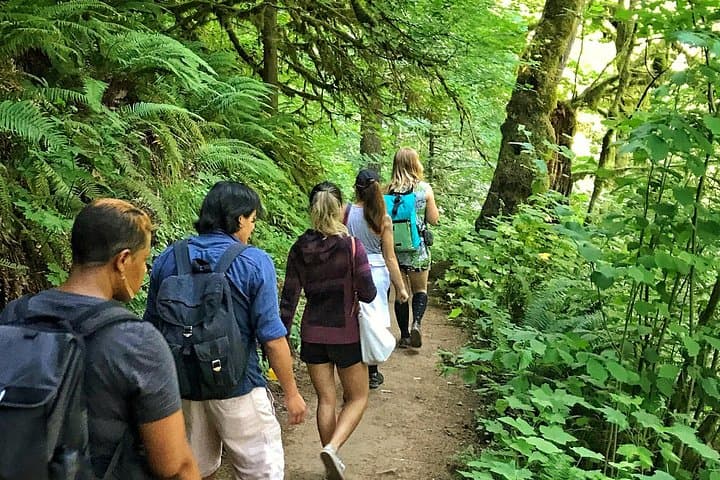
Lose the city for a few hours without leaving it: this 5-mile, 900-foot-gain Forest Park loop threads old-growth pockets, city viewpoints, and cultural landmarks for a compact taste of Portland’s wild side. Expect moss, roots, and stories.