
What the day feels like
You lift over a quilt of Appalachian ridgelines and patchwork farms, the helicopter’s rotor wash humming like an excited animal below you. At 1,500 feet the French Broad River is a silver braid threading through the valley, Douglas Dam a hard-edged interruption in the landscape that hums with history and human purpose. That first, quiet hour — the one suspended between sky and river — is the promise of the Sky River Rush: an “Air to Water Combo” that hands you two very different vantage points on East Tennessee in a single, compact adventure.
The trip begins where the air smells like oil and pine, at the Scenic Helicopter Tours pad. A private 12-mile flight traces the river’s course, sweeping over Douglas Lake and the hydroelectric spillways that transformed the basin during WWII. Below, the river’s floodplain narrows into whitewater seams and shoreline marsh where bald eagles perch; above, the Smokies recede into a blue haze. That aerial hour is not just spectacle — it’s context. From the chopper you see how rivers, roads, and dams negotiated this land long before recreational trails and Insta-friendly overlooks existed.
On touch-down the tempo changes. You drive a short way to the boarding dock where the Smoky Mountain Jet Boat crew exchanges goggles and stories with you, and the river invites you to a more immediate relationship. The jet boat section of the trip — 20 to 25 minutes of guided passage — trades the helicopter’s broad sweep for a close-up: the slap of water against aluminum, the eddy that dares you to lean forward to see what’s next, and the guide’s running commentary about flora, fauna, and human history written into riverbanks.
There’s an interesting historical seam here. Douglas Dam, completed by the Tennessee Valley Authority in 1943, reshaped both ecology and economy: flood control and hydroelectric power eased the demands of wartime industry, but also transformed old river channels into lake shoreline and new habitats. The French Broad itself is one of North America’s oldest rivers, running toward the Atlantic rather than the Gulf, and its corridor has been an arterial landscape for millennia.
Geology tucks into the narrative too. From the air you can pick out the folded ridges and the softer pockets where the river carved its bends — a reminder that the Smokies are ancient, eroded mountains, and the valley below them keeps the record. Cultural notes arrive on the jet boat: riverside farms, small historic bridges, and clusters of community where river access once meant life and commerce.
Practical things make the experience accessible: the helicopter lift is private, seating is small and intimate, and the jet boat ride is family friendly — but it’s still a sensory punch. Expect wind, sun on the skin, and a few quick turns on the water that wake your inner adventurer. Guides from both operators are local, informed, and practiced at balancing thrills with safety, and the combined itinerary is intentionally compact: it’s a 30–35 minute package that delivers maximum perspective with minimal time commitment.
Why do this trip? Because it reorders how you perceive landscape. The helicopter teases the big picture — watersheds, peaks, and how Douglas Dam sits in the greater hydrology — while the jet boat delivers texture: the current, the birds that call the river corridor home, and the feel of water moving under hull and oar. It’s the sort of combo that satisfies two kinds of travelers in one outing: those who want a cinematic orbital view and those who prefer tactile, river-level engagement.
If you’re planning it, timing matters. Morning flights often deliver the clearest air and calmer winds; late afternoon rides can hit slick golden light along the shoreline. Dress layers, bring a lightweight wind jacket, and keep cameras secure — the jet boat’s pace will test your grip. And remember the ecological courtesy: keep distance from nesting raptors and follow guide instructions when exploring shoreline views.
Local operators make booking straightforward; both Scenic Helicopter Tours and Smoky Mountain Jet Boat work together to keep transfers smooth, and you’ll find their combined offering — marketed as the Sky River Rush — easy to slot into a half-day of exploring Sevier County. Whether you’re passing through the Smokies, splitting time between Pigeon Forge and Gatlinburg, or simply want a concentrated taste of East Tennessee’s aerial and riverine beauty, this compact, layered adventure delivers.
Book it for the contrast — sky and water, panorama and close-up — and for the clarity it offers about a place where human engineering, old rivers, and mountain geology meet. Learn the coordinates of the views, ask your guide where eagle nests concentrate, and leave enough time afterward to sit on dry land with a cold beer and a map. There’s a different kind of perspective that comes with knowing you’ve seen a place from both above and within; that’s the core promise of the Sky River Rush.
For reservations and more details visit the local operator page: <a href="https://app.advcollective.com/local-experts/water-activities-sky-river-rush-east-tennessee">Sky River Rush experience</a>.
Trail wisdom
Small choices, better day.
Book Morning Windows
Early flights tend to have calmer winds and clearer visibility for both heli and river segments.
Secure Your Gear
Use wrist straps for cameras and keep phones in a zippered pocket during the jet boat ride to avoid loss.
Layer Up
Temperatures can change quickly between 1,500 ft and the river; bring a windproof layer.
Listen to Your Guide
Guides know where wildlife congregates and when to slow the boat for viewing—follow instructions to protect habitats.
Local knowledge
Read the place, not just the route.
Watch for native species including Bald Eagle, River Otter.
Keep an eye out for wildlife during the transition between areas and habitats. Respect distance guidelines.
The French Broad supports sensitive riparian habitats; operators ask guests to give wildlife distance, avoid feeding animals, and pack out trash to protect shoreline ecosystems.
Follow the guide's instructions on size limits, ethical handling, and leave-no-trace practices.
Douglas Lake overlooks that reveal long shoreline panoramas. Small roadside orchards near Sevierville offering local preserves
Locally recommended viewpoints and quiet spots known best to local operators.
Douglas Dam, completed in 1943 by the TVA, reshaped this river corridor for flood control and power during WWII.
Maritime roots and regional tradition shape the waterways and working coasts.
Seasonal guide
Four versions of the same landscape.
Spring
Best forMigratory bird watching · Wildflower blooms
ChallengesVariable river levels · Cool mornings
Spring brings nesting birds and lush banks, though runoff can change river speed—check conditions before booking.
Summer
Best forWarm-water cruising · Family outings
ChallengesHigher heat and humidity · Livelier boat traffic
Summer offers warm weather and long days; plan for sun protection and hydrate against humidity.
Fall
Best forAutumn foliage views · Crisp aerial visibility
ChallengesShorter daylight hours · Popular season — book early
Fall combines clear skies for helicopter views with dramatic leaf color along the French Broad—this is peak time for visuals.
Winter
Best forBald eagle sightings · Quieter river runs
ChallengesCold temps, potential icing on helipads · Limited wildlife activity
Winter can be ideal for eagle spotting and solitude, though dress warmly and expect brisk conditions.
Pack with intention
What to bring.
Good to know
Common questions.
The Sky River Rush runs about 30–35 minutes total: roughly a 12-mile helicopter flight followed by a 20–25 minute jet boat tour.
Plan the edges
The details that make the day easier.
Douglas Dam was completed in 1943 by the Tennessee Valley Authority to provide hydroelectric power and flood control during World War II—creating Douglas Lake and reshaping the French Broad River corridor.
After the ride head to Pigeon Forge or Sevierville for classic Appalachian comfort food—The Old Mill Restaurant offers local grits and country-fried fare, while nearby breweries in Pigeon Forge and Sevierville pour local craft beers. Pick up seasonal preserves at roadside stands for a taste of the valley to take home.
- Closest airport
- McGhee Tyson (TYS) — ~35–50 minute drive; Closest trailhead
- launch
- Smoky Mountain Jet Boat dock in Sevierville; Driving distance from nearest town: within 15–30 minutes of Sevierville
- Pigeon Forge; Cell service
- generally good near towns, intermittent near some river bends; Permits: None for the commercial tour, but follow operator safety rules.
Operators emphasize leaving no trace along shorelines; the French Broad’s riparian zones are ecologically sensitive—pack out trash, minimize noise near nesting areas, and follow guide instructions to avoid disturbing habitats.
Explore by topic
Follow the threads.
Keep exploring
Make the story part of the trip.
In four hours you can move from shaded canyon ferns to wind-scoured coastal ridgelines, guided by someone who knows where the light—and the hidden views—live. This private half-day hike on the Monterey Peninsula or Big Sur is compact, curated, and perfect for travelers who want depth without a multiday commitment.
 Related story
Beneath a sky of shifting light, Skaftafell’s ice reads like a map of time. This three-hour guided glacier hike mixes technical instruction with geology and culture: compact, safe, and unforgettable.
 Related story
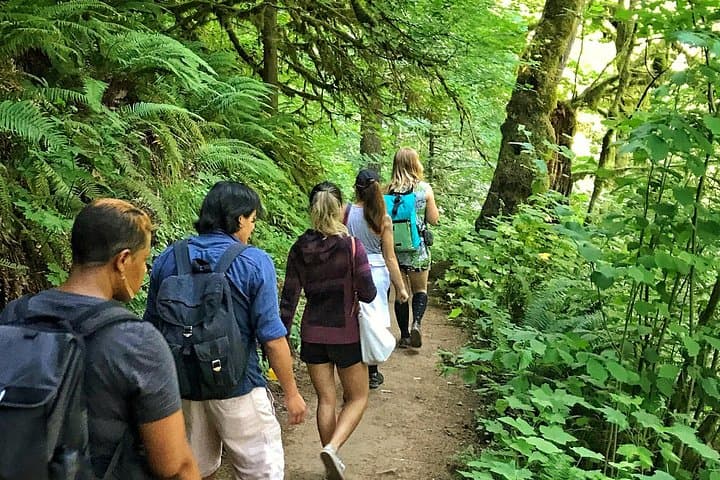
Lose the city for a few hours without leaving it: this 5-mile, 900-foot-gain Forest Park loop threads old-growth pockets, city viewpoints, and cultural landmarks for a compact taste of Portland’s wild side. Expect moss, roots, and stories.