
What the day feels like
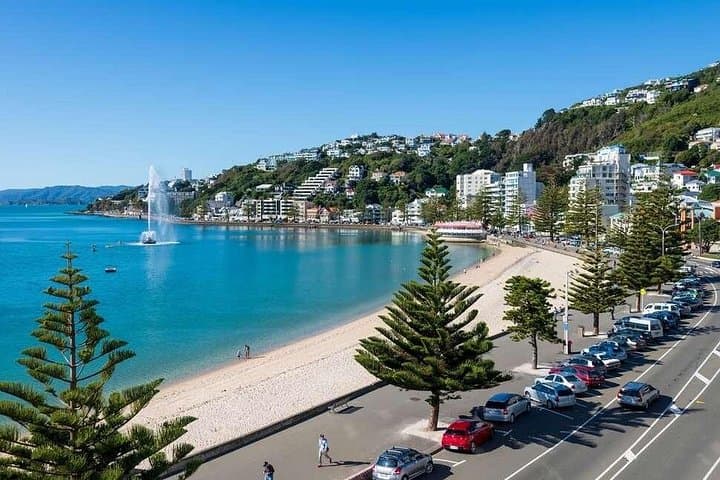
You arrive in Wellington with the wind already working at the city’s edges — a cool, insistent breath that tugs at your hood and seems to make the copper roofs and art-deco facades stand up straighter. The tour van glides away from the harbor and, within minutes, the streets begin to rise. At the Mount Victoria lookout, the city unfurls below you: the harbor’s teeth of wharves, the tidy curl of Oriental Bay, and the cable car ribbon cutting a path up from the city center. The guide offers a story, a local quip, and a good camera angle; someone exhales, and it’s the kind of slow, city-sighed breath you only get when you’re at the edge of a place and can see its bones.
That opening breath sets the tone for a day that is as much about movement as it is about context. This is a full-day, grounded introduction to Wellington — the kind of itinerary built for people who want a little of everything without the logistics fatigue. You climb for views, drop to the seaside at Lyall Bay for a salt-tinged walk, duck into the Weta store to ogle movie props and miniatures, ride the restored cable car, and wind up at Te Papa — New Zealand’s national museum — where history and contemporary art meet in airy, well-curated rooms. Between those stops you’ll walk the Lady Norwood Rose Garden, gape at the Beehive and Parliament, and take a slow, reverent look into Old St Paul’s timber cathedral.
Wellington’s landscape is quick and steep because it sits where land and sea argue: tectonic plates have pushed hills out of the water here, leaving a jagged shoreline and valleys that funnel the wind. The city’s geology is young and restless; cliffs, rocky headlands, and narrow ridgelines give almost every viewpoint a sense of immediacy. That geology shaped a human history of whaling, Māori settlement, colonial government, and, more recently, an improbable film industry that made the city a global center for practical effects and creature design. Stop at the Weta Cave and you’re seeing the cultural aftershock of that creative boom — a studio workshop that helped put Wellington on the cinematic map.
Culture in Wellington is compact and public: murals, pop-up cafes, and creative spaces spill out of alleyways and landing squares. Te Papa, the day’s anchor, is both museum and civic engine; it’s where national storylines — Māori and Pākehā histories, natural history, and contemporary politics — are presented with care and a hint of theatricality. The Cable Car is a different sort of history: a Victorian-era urban lift that feels to Kiwis like a small civic treasure. Riding it is less transit and more time capsule.
For travelers, the practical pleasures matter as much as the scenes. This is a walk-friendly tour interspersed with short drives; expect several short hikes and stairs — Mount Victoria’s lookouts require scrambling across short, uneven tracks but nothing technical. The Weta stop is great for photographers and film nerds; note that while the Weta Store and cave front are included, behind-the-scenes studio tours may require separate booking. Te Papa is expansive and accessible; allow at least 90 minutes if you want to see the Gallipoli and Māori collections in any depth.
Timing is everything: a summer day means clearer light and calmer seas for harbor photography; an overcast afternoon gives moody, textured shots and is kinder on museum visits. Local guides keep the day moving and lean on local knowledge — where to dodge the gusts at Mount Victoria, the best bench for an estuary view, the café that turns out a flat white so good travelers swear they’ll never buy airport coffee again.
Practical tips to stitch this into reality: wear sturdy walking shoes and a windproof jacket, carry a refillable water bottle, and bring a camera with a reliable wide lens for the lookouts. If you’re intent on film lore, read up on Weta Workshop and book any special-access tours in advance. If you love museums, carve out extra time at Te Papa or plan a return visit — a single day can introduce you, but it won’t satisfy the curious.
The payoff is the kind of urban immersion that leaves you feeling like you’ve earned your place in a city’s story. You will have stood where the city watches the harbor, sniffed sea air at Lyall Bay, run a hand along carved Māori display cases at Te Papa, and caught a glimpse of the creative machinery that turns stories into creatures at Weta. For a traveler who wants layered experiences with zero guesswork, this guided day is a practical, textured way to feel Wellington underfoot.
Book it, pay attention to the weather, and come ready to walk. Wellington rewards curiosity and preparation in equal measure — and at day’s end, you’ll know why locals talk about their city like a work of craft: detailed, wind-swept, and quietly proud.
Trail wisdom
Small choices, better day.
Bring layers
Wellington’s microclimates change quickly—windproof outer layers and a light midlayer will keep you comfortable between lookouts and beaches.
Comfortable walking shoes
Expect uneven paths, stairs at Mount Victoria, and city sidewalks over the course of the day.
Carry a refillable bottle
Guides will have stops for refreshments but a reusable bottle saves money and plastic.
Book special-access tours ahead
If you want behind‑the‑scenes Weta or in-depth Te Papa experiences, reserve those separately in advance.
Local knowledge
Read the place, not just the route.
Watch for native species including New Zealand fur seal (on coastal rocks), Tūī (native songbird in city reserves).
Keep an eye out for wildlife during the transition between areas and habitats. Respect distance guidelines.
Wellington’s coastal areas are sensitive; stick to marked paths, keep dogs leashed near wildlife, and use public transport when possible to reduce local congestion.
Follow the guide's instructions on size limits, ethical handling, and leave-no-trace practices.
Red Rocks / Orua-pouanui coastal walk for seal sightings and dramatic coastline. Cuba Street alleyways for indie coffee roasters and vintage shops
Locally recommended viewpoints and quiet spots known best to local operators.
Wellington became New Zealand’s capital in 1865 and has grown around a compact harbor and steep hills — Te Papa opened in 1998 as the national museum combining natural and cultural collections.
Maritime roots and regional tradition shape the waterways and working coasts.
Seasonal guide
Four versions of the same landscape.
Spring
Best forWildflowers in council parks · Milder temperatures for walking · Fewer tourists in museums
ChallengesUnpredictable showers · Windy days on lookouts
Spring brings blossoming gardens and crisp air — bring a light rain layer and enjoy fewer crowds at Te Papa and local cafes.
Summer
Best forClear harbor views · Beach walks at Lyall Bay · Long daylight for photography
ChallengesOccasional gusts despite warmer weather · Popular sites busier
Summer is ideal for vistas and seaside stops; arrive early to beat crowds at top viewpoints and the Cable Car.
Fall
Best forRich, moody light for photos · Comfortable walking weather · Rose Garden in bloom into early fall
ChallengesCooling temperatures in late season · Potential for sudden rain
Autumn offers dramatic skies and softer light; layers and a waterproof shell will make the day pleasant.
Winter
Best forQuiet museums and indoor exhibits · Dramatic storm-watching from sheltered spots · Shorter daylight for cozy cafés
ChallengesCold, wet, and windy conditions · Some outdoor stops can be blustery
Winter is quieter and atmospheric, but plan for rain and wind; indoor highlights like Te Papa become especially appealing.
Operator details
What the booking data adds.
Included
- ✓Includes ticket for Cable Car Ride & cost of guided tour
Not included
- —Lunch
Good to know
- ✓Infants and small children can ride in a pram or stroller
- ✓Public transportation options are available nearby
- ✓Infants are required to sit on an adult’s lap
- ✓Not recommended for travelers with poor cardiovascular health
- ✓Suitable for all physical fitness levels
Pack with intention
What to bring.
Good to know
Common questions.
Yes — the itinerary includes a ride on Wellington’s historic Cable Car as part of the guided experience.
Plan the edges
The details that make the day easier.
Wellington is the world’s southernmost capital city of a sovereign state — a fact that shapes its maritime climate and compact urban footprint.
After the tour, head to Cuba Street for eclectic cafés and historic dining — try a flat white at a local roaster and check out Garage Project’s taproom for craft beer. For a sit-down meal, restaurants around Courtney Place and the waterfront offer fresh seafood and regional wines.
- Closest airport
- Wellington International Airport; Typical meeting point: central Wellington (hotel pickup often available); Driving distance from airport to CBD: ~15 minutes; Cell service: good within city limits; Permits: none for the public sites on this tour.
This tour visits sensitive coastal and cultural sites — please pack out what you bring, follow guide instructions around heritage sites, and favor public transport or shuttle pickups to reduce traffic impact.
Explore by topic
Follow the threads.
Keep exploring
Make the story part of the trip.
Set out from Bass Harbor for a private, customizable day on Blue Hill Bay — lighthouses, puffins, seals, and the chance to feel Acadia from the water. Small groups, local captains, unforgettable views.
In four hours you can move from shaded canyon ferns to wind-scoured coastal ridgelines, guided by someone who knows where the light—and the hidden views—live. This private half-day hike on the Monterey Peninsula or Big Sur is compact, curated, and perfect for travelers who want depth without a multiday commitment.
 Related story
Beneath a sky of shifting light, Skaftafell’s ice reads like a map of time. This three-hour guided glacier hike mixes technical instruction with geology and culture: compact, safe, and unforgettable.