
What the day feels like
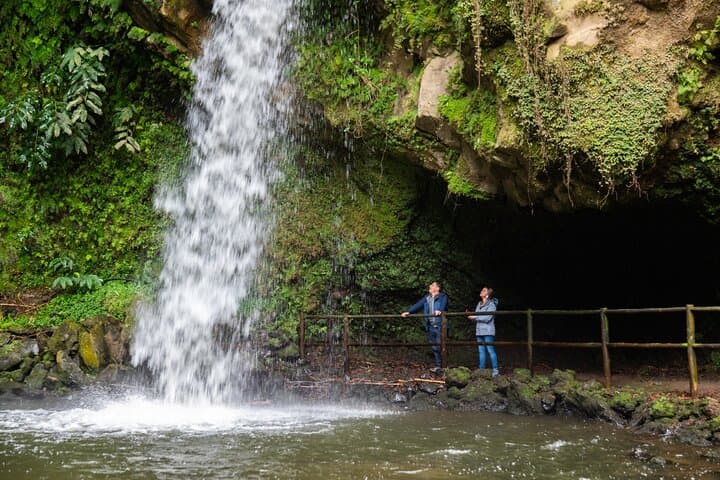
By dawn the island smells like wet stone and eucalyptus. A low cloud sits in the valley like a sleeping thing, and the first drops you hear belong not to rain but to the dozens of streams that braid São Miguel’s interior. On a single day, this tour stitches together six of those ribbons—water that has, over eons, carved amphitheaters and plunge pools into volcanic rock. You follow paths that hug gullies, step across old water mills, and eventually trade a thousand quiet splashes for the sudden roar of a drop. The day is compact and kinetic: short, steep hikes between highlights and a picnic that tastes of fresh bread and local cheese as if the island itself were refueling you.
The contrast on São Miguel is immediate. Geology here is a patient sculptor. Basalt cliffs, collapsed calderas, and the constant tempering of freshwater on volcanic substrate have produced waterfalls that vary by character—veil-like curtains into ferned niches, raw vertical chutes into black pools, and cascades that thread through green terraces. The Azores’ mid-Atlantic setting makes rainfall frequent and generous, so rivers are not mere seasonal features; they are the island’s circulatory system.
There’s a cultural seam woven through the limestone and lava, too. Old water mills still turn in sheltered ravines—silent now except for flowing water—evidence of how islanders historically harnessed the current for grain and livelihood. Tea plants make unexpected cameo appearances; Gorreana and Porto Formoso tea plantations, among Europe’s rare commercial tea gardens, cloak the slopes in neat rows. You pass small villages and a beach that reminds you this is an oceanic island: salt and fresh water exist on the same day’s itinerary.
The tour is engineered for momentum. Guides pick the shortest, sharpest routes to the best falls so you can see a variety of settings in eight hours—dense laurel groves, open pastures with a view of the sea, basalt gorges that force you to pay attention to each step. Hikes are brief but steep; expect bursts of climbing and stairs carved into rock. For adventurous travelers the reward is immediate: natural pools that sometimes invite a brave dip. The water is never passive; it dares you to move closer, to feel the current that has pushed stones into place for centuries.
Beyond the adrenaline, there’s a slow education. Guides point out hydrological subtleties—the way a spring-fed stream behaves differently from a catchment-fed torrent, the remains of millstones, and the fragile moss communities that cling to splash zones. The picnic stops are not just about calories; they offer breaths of context—stories about land tenure, agriculture, and the careful coexistence between human needs and fragile riparian ecosystems.
Practical reality colors the romance: this is an active day. The provider flags “short but steep hikes” and “good physical condition mandatory.” That means you’ll want solid footwear with grit, a light daypack, and some confidence on uneven terrain. The tour’s pace is deliberate enough that you’ll have time to shoot pictures—wide-angle shots of plunging drops and intimate frames of droplets on fern fronds—but not so slow that the weather has time to change its mind.
Timing matters. Morning light softens the valley sides and calms the glare on pools, while afternoon can bring more wind and cloud. The best season is spring into early summer when streams run full and the hills go a brilliant green. Bring a swimsuit and a quick-dry towel if you want to test the water; even if you don’t swim, you’ll appreciate a waterproof layer for the chase.
On the logistical side: the tour departs from São Miguel (most travelers stay in Ponta Delgada), runs about eight hours, and includes a picnic lunch. Transportation between sites is provided, and guides handle local entry details. The experience is ideal for travelers who want to sample the island’s variety in one efficient, scenic blast—hikers who favor punchy, technical minutes over long, flat mileage.
If you crave a deeper, quieter trip afterward, linger at one of the tea plantations to taste leaves that have been grown on volcanic soil for generations, or head to a local taberna for fish and vinho verde. The waterfalls are the main event, but the island’s food, small-scale agriculture, and hospitable towns tie the day to a broader sense of place.
Why go? Because this is a day that rewards curiosity and stamina in equal measure. You’ll return sandy, wet, and tired in a good way—full of the sort of details that travel writing covets: the shape of a cascade, the sound of a pool, the way the island’s microclimates shift with short drives. For hikers who like variety, photographers chasing textured light, and active travelers who want to feel that they’ve touched the island’s geological story, the tour is a concentrated, well-crafted way to meet São Miguel’s watery heart.
Trail wisdom
Small choices, better day.
Expect short, steep sections
Hikes are brief but can be strenuous—plan for frequent elevation changes rather than long flat mileage.
Wear grippy footwear
Trails are rocky and can be wet; shoes with good traction protect ankles and prevent slips.
Bring swim kit and quick-dry towel
Many pools invite a quick dip—pack a swimsuit and a compact towel for comfort and warmth after swimming.
Pack a small reusable water bottle
Hydration stations are limited; a 1–1.5L bottle keeps you fueled between picnic stops.
Local knowledge
Read the place, not just the route.
Watch for native species including Azores bullfinch (locally rare and found in laurel forests), Atlantic seabirds such as shearwaters and terns along coastal stretches.
Keep an eye out for wildlife during the transition between areas and habitats. Respect distance guidelines.
Stay on marked paths to protect moss and fern communities; avoid entering delicate springheads and take all trash with you.
Follow the guide's instructions on size limits, ethical handling, and leave-no-trace practices.
Gorreana Tea Plantation—Europe’s oldest working tea estate. Old water mills tucked in Ravine Valley—quiet, photogenic stops
Locally recommended viewpoints and quiet spots known best to local operators.
São Miguel’s water mills and terraces reflect centuries of small-scale agriculture and community adaptation to volcanic terrain.
Maritime roots and regional tradition shape the waterways and working coasts.
Seasonal guide
Four versions of the same landscape.
Spring
Best forFull rivers and lush vegetation · Wildflower viewing
ChallengesIntermittent rain · Muddy trails
Spring delivers the fullest cascades and the island at its greenest, though expect occasional showers and slick paths.
Summer
Best forWarmer swimming temperatures · Longer daylight
ChallengesLower river flow in dry spells · More tourists
Summer is best for comfortable swims and extended light, but some falls may be less dramatic after dry weeks.
Fall
Best forDramatic skies and quieter trails · Pleasant temperatures
ChallengesUnpredictable storms · shorter daylight hours
Fall balances good walking weather with changing light—storms can be sudden, so layer up and plan for alternates.
Winter
Best forPowerful, high-volume waterfalls · Fewer visitors
ChallengesWet, windy conditions · colder water temperatures
Winter brings dramatic water volumes and solitude, but expect colder swims and more exposed conditions on the ridge walks.
Operator details
What the booking data adds.
Included
- ✓Picnic lunch prepared by a local restaurant
- ✓Local Tour Guide
Good to know
- ✓Service animals allowed
- ✓Specialized infant seats are available
- ✓Not recommended for travelers with spinal injuries
- ✓Not recommended for travelers with poor cardiovascular health
- ✓Travelers should have at least a moderate level of physical fitness
Pack with intention
What to bring.
Good to know
Common questions.
The tour runs about eight hours and includes transportation between sites and a picnic lunch.
Plan the edges
The details that make the day easier.
São Miguel is home to the Gorreana tea plantation—one of the few places in Europe where tea has been grown continuously since the 19th century.
After the hike, head to a local tascas in Ponta Delgada for fresh seafood and a glass of Azorean wine, or visit a tea plantation for a tasting and a walk through terraced fields—both are small, humble ways to understand island life.
- Closest airport
- João Paulo II Airport (Ponta Delgada, PDL)
- Typical driving from Ponta Delgada to trail cluster
- 30–60 minutes
- Cell service
- reliable near towns, spotty in narrow valleys
- Permits required
- none for the tour
These falls and their riparian zones are sensitive; avoid trampling banks, do not remove stones or plants, and use designated paths. Support local guides to ensure low-impact access.
Explore by topic
Follow the threads.
Keep exploring
Make the story part of the trip.
Set out from Bass Harbor for a private, customizable day on Blue Hill Bay — lighthouses, puffins, seals, and the chance to feel Acadia from the water. Small groups, local captains, unforgettable views.
In four hours you can move from shaded canyon ferns to wind-scoured coastal ridgelines, guided by someone who knows where the light—and the hidden views—live. This private half-day hike on the Monterey Peninsula or Big Sur is compact, curated, and perfect for travelers who want depth without a multiday commitment.
 Related story
Beneath a sky of shifting light, Skaftafell’s ice reads like a map of time. This three-hour guided glacier hike mixes technical instruction with geology and culture: compact, safe, and unforgettable.