
What the day feels like
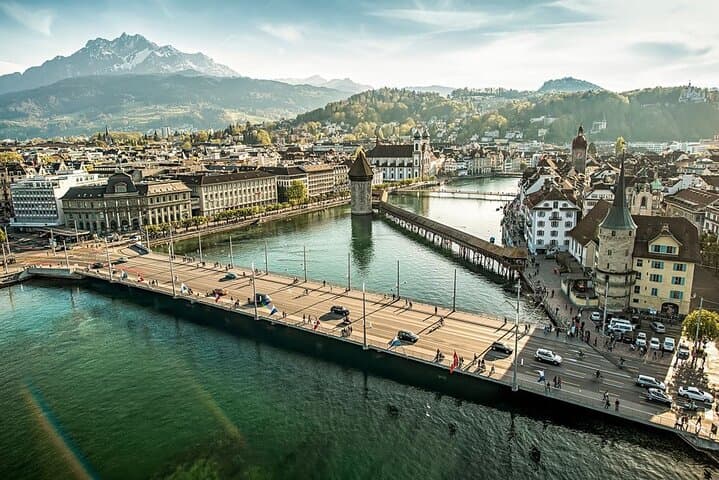
You arrive to Zurich with the lake’s surface still holding the morning light like a mirror. The city greets you in quiet, precise movements: a tram glides past, a barista pulls a ristretto, and the Limmat slips from Lake Zurich with the easy confidence of a river that has moved goods and people for a thousand years. On this seven-day Center Taxi Switzerland Tour Adventure, Zurich is both base camp and lens — a compact city whose cobbled alleys, art-filled galleries, shoreline promenades, and nearby alpine ridges form a reliable, elegant axis for exploring Swiss life.
Start with the sensory details. Walk the Bahnhofstrasse before retail hours and you’ll feel the city stretching into its day: shopfront glass fogs subtly as early deliveries go by, and the air carries the faint, satisfying scent of fresh bread. Cross the Rathausbrücke and the Limmat’s current seems to nudge you forward, pushing the pace of a place that has long traded on movement — of people, currency, and ideas. The Old Town (Altstadt) tightens the senses: steep lanes open onto hidden squares where centuries-old guild houses stand shoulder to shoulder with modern cafes. The city is tidy without being antiseptic; it offers restraint that reveals its pleasures slowly, intentionally.
History sits lightly here. Zurich’s medieval core, with churches like Grossmünster and Fraumünster, mapped the city’s role as a trade and ecclesiastical center in the Middle Ages. Geological forces shaped the scene long before humans — glacial retreats carved the basin that became Lake Zurich, and the rising Alps keep a dramatic horizon always within reach. Culture today blends those foundations with contemporary Swiss craft: precision watchmaking, design-forward cafés, and galleries that challenge a visitor’s assumptions about small-city cosmopolitanism.
This tour is structured to let Zurich be a comfortable hub while the surrounding region provides variety. Expect urban walking days interspersed with short rail or road trips: a lakeside promenade and boat crossing; a half-day to the Lindenhof for panoramic city views; a day trip into nearby hills or lower-alpine valleys for clearer air and different perspectives. Because this is a private, multi-day package, pacing is flexible—ideal if you want a measured balance of museums, market browsing, and time outdoors.
Why travelers choose this trip: it’s an efficient way to sample a compact, high-quality Switzerland without committing to long transfers or the trick of packing and repacking every one or two nights. For travelers who value comfort, local insight, and the ability to pivot from urban textures to alpine light in under an hour, the itinerary feels thoughtfully calibrated. The price point (from about USD 7,321) reflects a private, personalized seven-day experience rather than a budget group bus tour — expect chauffeur-driven convenience, customized stops, and a guide who knows which museum wing to hit on a gray morning and which lakeside terrace will hold the best light for an afternoon espresso.
Practicalities matter here. Zurich is best navigated on foot, tram, and short regional trains. Swiss punctuality is not a cliché — schedules are tight, and the rail network will be your quiet ally for day trips. Wear comfortable shoes that can handle cobbles and the occasional slick riverside boardwalk. Weather can shift; a quick alpine shower can make the lake smell of wet pine, so pack a lightweight waterproof and layers.
Logistics are uncomplicated: Zurich Airport (ZRH) is 20–30 minutes from the city center by taxi or 10–15 minutes by express train. Public transit is excellent and a Swiss Travel Pass or multi-day regional pass can save both time and money if you plan multiple regional excursions. Cell coverage is reliable across the city and most valley roads, but remote alpine trails will have sporadic signal. For photographers and travelers chasing specific sun windows, early starts are rewarded; the city empties and the light softens in a way that late afternoons don’t always match.
A few insider moves make the week richer. Take a morning boat across Lake Zurich to see the city from water level — the shoreline villas, the church towers, and the Alps in the distance make for a panoramic, restful hour. Choose a single day for a lower-alpine foray: a cable car or cog-train outing to an accessible ridge will introduce alpine meadows and views without demanding technical hiking skills. And when in doubt, let the Old Town’s side streets decide your meal: a small bistro tucked under an arcade often serves the season’s freshest produce.
Sustainability is part of the experience: Switzerland’s public transit and well-maintained trails make low-impact travel easy. Choose local guides and family-run restaurants, favor trains and boats over private flights where possible, and leave natural spots as you found them — litter and off-trail shortcuts degrade the same places you came to admire.
For a traveler who wants an elegant, manageable introduction to Switzerland, this seven-day center-based tour balances the city’s cultural depth with immediate access to natural variety. It’s a week that asks you to slow down rather than outrun a checklist, to exchange frantic sightseeing for layers of feeling: the steady current of the Limmat, the hush of an alpine meadow, the meticulous comfort of a Swiss hotel. You’ll return with more than photos: a sense of how a small, well-ordered place can hold a big, quietly generous world.
Trail wisdom
Small choices, better day.
Start Early for Light and Quiet
Mornings in Zurich are calm and photogenic; aim for sunrise to enjoy empty promenades and better light for photos.
Use Regional Trains
A Swiss Travel Pass or regional tickets simplify short excursions and often include boat rides on Lake Zurich.
Pack Layered Waterproofs
Quick showers from nearby alpine weather can arrive suddenly—bring a lightweight shell to stay comfortable.
Comfortable Shoes for Cobblestones
Old Town streets and lakeside walks require grippy, supportive footwear more than urban style shoes.
Local knowledge
Read the place, not just the route.
Watch for native species including Mute Swan on Lake Zurich, Red Squirrel in riverside parks and nearby wooded slopes.
Keep an eye out for wildlife during the transition between areas and habitats. Respect distance guidelines.
Switzerland emphasizes public-transport access and trail maintenance; stick to marked paths, use public transit, and support local businesses to reduce your footprint.
Follow the guide's instructions on size limits, ethical handling, and leave-no-trace practices.
Boat crossing to the less-touristed left bank shoreline walks. A short tram ride to a neighborhood market for local cheese and charcuterie
Locally recommended viewpoints and quiet spots known best to local operators.
Zurich has medieval roots as a trading center and grew around the Limmat River, which historically powered local industry and determined early trade routes.
Maritime roots and regional tradition shape the waterways and working coasts.
Seasonal guide
Four versions of the same landscape.
Spring
Best forBlooming parks and quieter museums · Lakeside walks with fewer crowds
ChallengesUnpredictable rain · Late snow in surrounding hills
Spring brings milder days and flower-filled parks; pack a waterproof and expect occasionally cool evenings.
Summer
Best forBoat rides and lakeside swimming · Long daylight for extended exploration
ChallengesHigher tourist numbers · Possible heat waves
Summer is ideal for water activities and long days; reserve popular sites in advance and plan midday breaks.
Fall
Best forCrisp hiking days and early autumn colors · Quieter cultural venues after peak season
ChallengesShortening daylight · Unpredictable rain
Early fall (September) offers stable weather, warm light, and fewer crowds—an optimal time for this tour.
Winter
Best forFestive markets and snow-dusted cityscapes · Nearby alpine winter sports
ChallengesShort days and occasional snow disruptions · Colder temperatures
Winter turns Zurich cozy and atmospheric; be prepared for cold and shorter daylight windows for sightseeing.
Operator details
What the booking data adds.
Included
- ✓Tickets
- ✓Lunch
- ✓Landing and facility fees
- ✓Breakfast
- ✓Driver Guide
- ✓Airport/Departure Tax
- ✓Fuel surcharge
- ✓Gratuities
- ✓Parking Fees
Good to know
- ✓Infants and small children can ride in a pram or stroller
- ✓Service animals allowed
- ✓Specialized infant seats are available
- ✓Suitable for all physical fitness levels
Pack with intention
What to bring.
Good to know
Common questions.
Moderate fitness is sufficient—expect several hours of walking on most days with occasional short hikes; no technical climbing required.
Plan the edges
The details that make the day easier.
Zurich sits at the northwestern tip of Lake Zurich, and the Limmat River flows out of the lake through the city—a geographic fact that shaped Zurich’s medieval trade and modern layout.
After a day of walking, head to Zurich's Old Town (Niederdorf) for a rustic fondue or rösti; pick up pastries or chocolates at a local confiserie like Sprüngli, and look for a neighborhood beer garden or lakeside terrace to watch the light turn the city gold.
- Closest airport
- Zurich Airport (ZRH); Driving distance to city center: ~15–25 minutes; Cell service: Excellent in the city, intermittent on remote alpine trails; Permits: None required for city or standard regional day trips; Swiss Travel Pass recommended for multi-day rail
Favor trains and boats over private vehicles, stay on designated paths, support local guides and eateries, and pack out any waste—Swiss landscapes are well cared-for and reliant on visitor responsibility.
Explore by topic
Follow the threads.
Keep exploring
Make the story part of the trip.
 Related story
Less than two hours from Nairobi, Kereita Forest pairs hands-on canopy adventure with quiet montane trails and a sobering colonial history—perfect for families, teams, and curious travelers seeking a full-day pulse of nature.
Set out from Bass Harbor for a private, customizable day on Blue Hill Bay — lighthouses, puffins, seals, and the chance to feel Acadia from the water. Small groups, local captains, unforgettable views.
In four hours you can move from shaded canyon ferns to wind-scoured coastal ridgelines, guided by someone who knows where the light—and the hidden views—live. This private half-day hike on the Monterey Peninsula or Big Sur is compact, curated, and perfect for travelers who want depth without a multiday commitment.