
What the day feels like
The boat pushes away from Puerto Mágico and the city falls off the stern like a photograph slipping out of a wallet. The sea takes the lead: bluing from near-turquoise to impossible navy, each swell flexing like a living muscle. After about an hour and a half the silhouette of the Marietas Islands resolves on the horizon—small, stony moons offshore—and you realize the day will be measured by water, wind, and the slow choreography of currents that built these coves.
This is not a scenic detour; it’s a concentrated, marine-life-rich playground. The itinerary is efficient and generous at once: a 7-hour adventure that includes a roughly 90-minute crossing from Puerto Mágico, a guided 25–35 minute snorkeling stop, optional kayak or paddleboard time, and a visit to La Nopalera Beach. Guides ferry you between activity zones; the sea ferries you into a different kind of quiet.
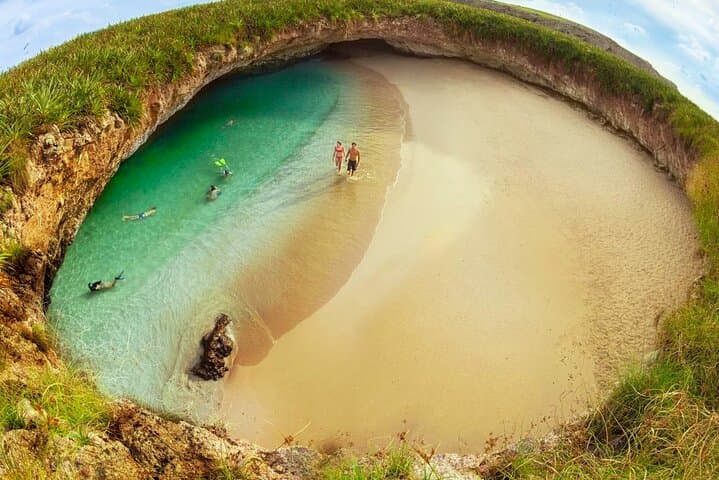
Geology and history have shaped the islands into deceptive smallness. Formed by volcanic activity and sculpted by centuries of wave action, the Marietas’ clefts and caves capture light in ways that feel staged. One of the most famous features, often called the Hidden Beach or Playa del Amor, is the product of both the earth’s heat and human history. Decades ago the islands were used for military target practice; the resulting hollows and collapse zones helped carve the sunlit bowl you can now swim into. In 2005 the islands were declared a protected area, a small victory for biodiversity and a change that turned a military proving ground into a marine sanctuary.
The wildlife arrives like punctuation. Schools of sergeant major fish flash like coins beneath your mask; rays fold through sand like ghosts, and humpback whales patrol the deep (seasonally). The park is a crucial nursery ground for sea species and a hotspot for migratory birds—frigatebirds and brown pelicans wheel above like weather signs. That sense of an active, living place is constant: water nudges, reefs offer shelter, and the sky opens to give you the kind of horizon that demands slow attention.
Why go? It’s the marriage of short, high-intensity experiences in one day—snorkel, kayak, beach—without the logistic fuss of camping or an overnight boat. For a traveler based in Puerto Vallarta, this is an accessible way to touch a protected marine environment with minimal footprint. For photographers and wildlife lovers the payoff is immediate: clear water, compact islands, and dramatic rock faces. For families and casual adventurers, the trip scales—the operator provides safety gear, and guides shepherd novices through snorkeling basics.
Practical details matter. The trip departs from Puerto Mágico; arrive an hour early for check-in. You’ll be on the water about seven hours total—plan for motion, sun, and salt. Snorkel time is short and purposeful: 25–35 minutes under the guide’s watch, enough to spot reef fish but not so long that cold or fatigue sets in. The kayak/paddleboard window lets you interpret the coastline at your own pace. Expect small-boat landings that can be boney and wettish—reef shoes help.
Book early. The park limits daily visitors to protect fragile habitats; tours can sell out, especially in winter and spring whale season. Prices start around USD 125; the tour is an instant confirmation product but comes with conservation rules you’ll need to follow—no stepping on coral, no removing flora or fauna, and restrictions around entry to certain coves.
Safety and etiquette are straightforward. Use reef-safe sunscreen and avoid touching marine life. If you’re prone to seasickness, take preventative medication and choose a seat near the boat’s center. Guides provide life vests and basic instruction; listen to them—the ocean here is friendly, but it’s not tame.
Linking the trip to deeper exploration is easy. From Puerto Vallarta’s malecón to the surf towns of Punta Mita and Sayulita, the coast offers tacos, ceviche, and small galleries to help contextualize the day. Consider pairing the Marietas day trip with a morning in town and an evening at a beachfront restaurant—fresh seafood tastes better after salt and sun.
If the Marietas have a personality, it’s a mix of quiet mischief and resilient hush. The hidden beach invites you like a shy host; the reefs encourage a respectful curiosity. The day trip gives enough structure for comfort but enough loose time to let the ocean surprise you—an encounter with rays, a pod of dolphins, the sudden quiet of floating with your mask on and the world below teeming. It’s an efficient, unforgettable inhale of Mexico’s Pacific—compact, colorful, and insistently alive.
For practical booking and more details on snorkeling, kayaking, and meeting logistics, check the local-operator page for the Marietas Islands snorkeling and kayak day trip from Puerto Vallarta: <a href="https://app.advcollective.com/local-experts/marietas-islands-snorkeling-kayak-day-trip-from-puerto-vallarta">Marietas Islands snorkeling & kayak day trip</a>. If you’re planning photos, timing your snorkeling to coincide with the morning’s calmer seas helps visibility; for whale sightings time your visit in late winter to early spring and ask guides about seasonal hotspots. Above all: come with curiosity, leave with a lasting respect for a small archipelago that refuses to be merely postcard pretty.
Trail wisdom
Small choices, better day.
Bring reef-safe sunscreen
Protect both your skin and the reef—apply sunscreen at least 20 minutes before entering the water.
Prevent seasickness
Take motion-sickness meds or pick a mid-boat seat before the crossing; the ocean can be bumpy on the way out.
Footwear for wet landings
Wear reef or water shoes for rocky beach entries and slippery surfaces on small-boat landings.
Respect the park rules
No touching coral or wildlife and follow guide directions—access to some coves is limited to protect habitats.
Local knowledge
Read the place, not just the route.
Watch for native species including Manta rays, Tropical reef fish and seasonal humpback whales.
Keep an eye out for wildlife during the transition between areas and habitats. Respect distance guidelines.
Designated as a protected area, the Marietas have strict visitor limits and enforced rules to protect coral, nesting birds, and marine life—book through authorized operators only.
Follow the guide's instructions on size limits, ethical handling, and leave-no-trace practices.
La Nopalera Beach—less frequented and great for a relaxed swim. Small offshore caves visible from kayaks that hold schools of fish
Locally recommended viewpoints and quiet spots known best to local operators.
The Marietas were used for military target practice in the 20th century; the resulting craters helped form features like the famous Hidden Beach.
Maritime roots and regional tradition shape the waterways and working coasts.
Seasonal guide
Four versions of the same landscape.
Spring
Best forWhale watching (late winter–early spring) · Calmer seas and good visibility
ChallengesHigher bookings—reserve early · Occasional spring winds
Spring offers the best chance of combining snorkeling with whale sightings and generally calm water for visibility.
Summer
Best forWarm water snorkeling · Lush marine life
ChallengesHot sun and stronger afternoon winds · Higher humidity
Summer’s warm water improves comfort in the sea, but plan for stronger sun and mid-day winds.
Fall
Best forFewer crowds · Comfortable temperatures
ChallengesOccasional storm swells · Variable visibility after storms
Fall brings quieter tours and pleasant temperatures; visibility depends on recent weather.
Winter
Best forClear, cool mornings · Peak whale migration viewing
ChallengesCooler water temperatures · Higher demand during holiday periods
Winter offers crisp mornings and excellent whale-watching windows; bring a light layer for the crossing.
Operator details
What the booking data adds.
Included
- ✓Sailors, captain and professional guide.
- ✓Meal
- ✓open bar
- ✓Breakfast (Yogurt, fruit with Hot Kakes or Chilaquiles with eggs, both options accompanied by juice)
- ✓All equipment for aquatic activities. (life jacket, mask and snorkel)
Not included
- —Entrance to Playa Escondida
- —port fee
- —Semarnat bracelet
Good to know
- ✓Public transportation options are available nearby
- ✓Not recommended for travelers with spinal injuries
- ✓Not recommended for pregnant travelers
- ✓Not recommended for travelers with poor cardiovascular health
- ✓Travelers should have at least a moderate level of physical fitness
Pack with intention
What to bring.
Good to know
Common questions.
The crossing is approximately 90 minutes each way depending on sea conditions; the full tour runs about seven hours.
Plan the edges
The details that make the day easier.
The Marietas Islands were used for target practice by the Mexican military in the mid-20th century; the resulting craters contributed to the formation of the archipelago’s unique cavities and the famous Hidden Beach.
After the trip, head back to Puerto Vallarta’s Malecón for ceviche and a cold cerveza at a beachfront palapa—popular local spots include inconspicuously great taquerias and seafood restaurants that highlight the day’s catch.
- Closest airport
- Lic. Gustavo Díaz Ordaz International Airport (PVR); Departure point: Puerto Mágico (Vallarta maritime terminal) — arrive 1 hour before departure; Driving distance from downtown Puerto Vallarta: 10–20 minutes; Cell service: patchy offshore, reliable in Puerto Vallarta; Permits: Park entrance managed by operators—book through authorized tours.
The Marietas are a protected national aquatic park—use reef-safe sunscreen, avoid touching coral or wildlife, and book with operators who follow park regulations to minimize ecological impact.
Explore by topic
Follow the threads.
Keep exploring
Make the story part of the trip.
Set out from Bass Harbor for a private, customizable day on Blue Hill Bay — lighthouses, puffins, seals, and the chance to feel Acadia from the water. Small groups, local captains, unforgettable views.
In four hours you can move from shaded canyon ferns to wind-scoured coastal ridgelines, guided by someone who knows where the light—and the hidden views—live. This private half-day hike on the Monterey Peninsula or Big Sur is compact, curated, and perfect for travelers who want depth without a multiday commitment.
 Related story
Beneath a sky of shifting light, Skaftafell’s ice reads like a map of time. This three-hour guided glacier hike mixes technical instruction with geology and culture: compact, safe, and unforgettable.