
What the day feels like
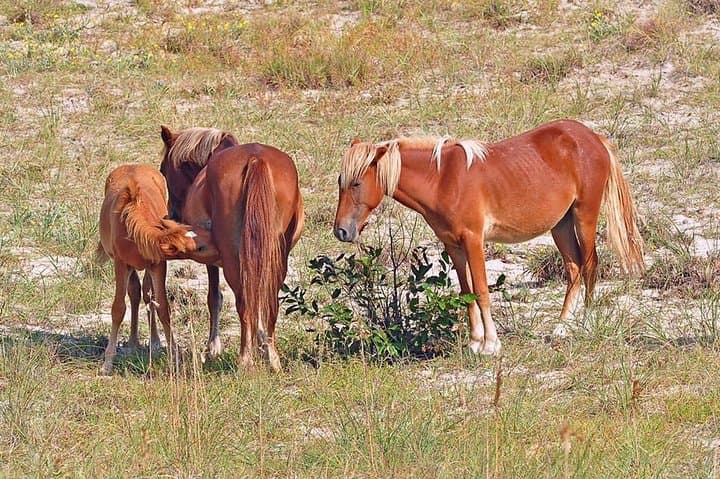
The truck hunched at the lip of the beach, engine a low promise as the sand sighed and gave way beneath heavy tires. Salt air pushed forward like a living thing, and out where the surf varnished the shoreline, a small herd of feral horses stood like weathered statues—manes tossed by the same Atlantic breath that has shaped this coast for millennia. In two hours you can watch them graze, pause for portraits, and learn the odd, stubborn life of animals that have made a life at the edge of the continent. This is not a zoo or a staged encounter; it's a close reading of an ecosystem that dares you to come closer—and the Bender family’s open-air 4WD safari on the Outer Banks gives you permission, perspective, and a guide who knows when to stay still.
Corolla's wild horses are Banker horses—small, tough animals descended from Colonial Spanish stock. Their ancestors likely arrived centuries ago, adapting to salt and storm until they were no longer a curiosity but an integral, law-protected part of the Currituck Banks landscape. The geology here is recent—wind and wave building and reconfiguring barrier islands at the pace of decades—and the horses move with those rhythms. Sand hummocks and dunes act as both backdrop and stage; marsh channels carve inland habitats where wading birds ghost through reeds, and the ocean, ever-impatient, presses the horizon into a single pale line.
The tour itself is straightforward and purposeful: small groups (maximum 12) and an experienced, professional horse guide ride in open-air 4x4 trucks with private access to the Wild Horse Conservation Area. Stops are timed for photo windows and context—history of land use, the island’s ecology, and the Bender family’s half-century tradition of running these safaris. There’s a pragmatic rhythm to the experience: drive, spot, park, listen, watch. You’ll learn why the horses congregate where they do, how storms reshape their ranges, and why respectful distance is not just etiquette but conservation.
Culturally, Corolla sits at the junction of history and modern beach life. The Whalehead Club and Currituck Beach Lighthouse anchor human stories of the turn-of-the-century coast, while the scattered vacation communities speak to the contemporary draw of sand, sun, and sound. The horses have become a symbol—and a responsibility—prompting local stewardship that balances tourism with protected habitat.
For travelers, the appeal is both cinematic and pragmatic. The trucks can access stretches of sand closed to standard vehicles; that means you’ll see horses in the places they prefer, not the places tourists congregate. The experience is accessible—no long hikes or technical gear—so families, photographers, and casual explorers can enjoy it. Still, practical prep pays off. Bring binoculars for distant mares, a telephoto lens for portraits, and layers—the ocean can be surprisingly cool even on sunny days. Morning and late afternoon runs favor the soft light and calmer horse behavior; if you want golden-hour images, book early.
Safety and respect are threaded through the guide narration. The horses are wild: don’t feed them, and let the guide set the pace. The trucks offer a stable vantage point, and guides will often keep the group still, letting the animals make the choice to approach. That hands-off approach is what keeps the herd wild and healthy. Remember, this is a protected area and part of a broader conservation story; your behavior matters.
Practicalities: the trip runs two hours, is offered multiple times daily, and accommodates up to twelve people. The operator enforces a minimum child weight (no children under 45 pounds), and the booking is instant with free cancellation. Prices start at about $65 per person—reasonable for a guided, small-group safari with private access to protected sands.
If you go, plan for a brief but intense immersion. Let the truck be your observatory; listen to the guide’s short histories—about shipwrecks, the horses’ Spanish roots, and the shifting shape of the Outer Banks—and then spend the rest of the time with your eyes and lenses open. The shore will do the rest: gulls wheel like punctuation marks, currents write new sandbars, and on the horizon dolphins sometimes rise to clap the water.
For those who want to stretch the trip into a full day, combine the ride with a visit to the Currituck Beach Lighthouse, a stop at the Whalehead Club for history, and a late lunch at a local seafood spot in Corolla Village. The region rewards curiosity: a short drive inland uncovers marshboardwalks and quiet estuaries; out to sea, you can join boat-based birding and dolphin trips.
This is a tour for people who want a tidy, guided window into a wild place—one that is easy to reach, rich in story, and governed by common-sense rules of access. If you love wide beaches, animal behavior, and the odd thrill of seeing a centuries-old lineage survive where land is literally shifting beneath your feet, the Corolla 4WD wild horse safari is the kind of two-hour commitment that returns an enduring image.
Book smart: go early for better light and calmer conditions, bring protection for sun and wind, and follow the guide’s rules so that the next visitors find these horses wild and free. For booking and local expert details, see this Outer Banks wild horse 4WD tour page with more logistical info and guide bios: <a href='https://app.advcollective.com/local-experts/outer-banks-wild-horse-4wd-tour-corolla-beach-safari'>Outer Banks Wild Horse 4WD Tour</a>. If you're planning photos, time your tour around golden hour and consider combining it with other Corolla attractions available through the same local experts on the linked page.
Trail wisdom
Small choices, better day.
Keep your distance
Let the guide set approach limits—do not exit the vehicle or attempt to feed the horses.
Bring optics
Binoculars or a 200mm+ zoom will get you close-up behavior shots without disturbing the herd.
Dress for wind and sun
Windproof layer, hat, and sunscreen matter—temperatures can feel cooler near the surf.
Book a morning or late-afternoon slot
Lighting is best and horse activity often calmer during golden hours.
Local knowledge
Read the place, not just the route.
Watch for native species including Banker horses, Dolphins and resident shorebirds.
Keep an eye out for wildlife during the transition between areas and habitats. Respect distance guidelines.
Private access and guided viewing help minimize human impact; follow rules, stay in vehicles, and avoid feeding wildlife to protect herd health.
Follow the guide's instructions on size limits, ethical handling, and leave-no-trace practices.
Currituck Beach Lighthouse (views and quick museum). Whalehead Club historic mansion and grounds
Locally recommended viewpoints and quiet spots known best to local operators.
Banker horses are descendants of Colonial Spanish stock and have lived on the Outer Banks for centuries, while Corolla’s coastal geography has been shaped by shifting barrier islands.
Maritime roots and regional tradition shape the waterways and working coasts.
Seasonal guide
Four versions of the same landscape.
Spring
Best forMild weather · Foal season sightings · Bird migration
ChallengesUnpredictable storms · Cool mornings
Spring brings newborn foals and active shorebirds; dress in layers for cool, breezy conditions.
Summer
Best forWarm beach weather · Longer daylight · Family trips
ChallengesHeat, sun exposure · Higher visitor numbers
Summer is busy and bright—go early to avoid crowds and midday heat, and pack shade and hydration.
Fall
Best forCrisp air and colors · Fewer crowds · Good light for photos
ChallengesCooler evenings · Occasional storms
Fall offers crisp, clear days and softer light—ideal for photographers and quieter tours.
Winter
Best forSolitude · Dramatic skies · Low-season rates
ChallengesCold winds · Limited services
Winter tours are intimate and dramatic but require heavier layers and flexible planning around weather.
Operator details
What the booking data adds.
Included
- ✓Transport by open air 4-wheel drive truck (no ATVs)
- ✓Friendly and professional horse guide
Not included
- —Food and drinks
- —Hotel pickup and drop-off
Good to know
- ✓Service animals allowed
- ✓Not recommended for travelers with spinal injuries
- ✓Not recommended for travelers with poor cardiovascular health
- ✓Travelers should have at least a moderate level of physical fitness
- ✓Please read all of this carefully. We cannot accomodate kids under five years of age or 40 pounds, if you do not read this and you arrive with kids that don't meet these requirements, we will be forced to tell you that they can not come and as parents ourselves, this breaks our hearts. Please read all instructions.
- ✓We are not responsible if you get stuck in traffic. Being stuck in traffic does not warrant a refund. Traffic is common. Please allow time to arrive 30 minutes prior to the time of your tour.
- ✓No children under 40 pounds can come on the tour whatsoever.
- ✓Adult pricing applies to all travelers 13 years of age and older.
- ✓Children must be accompanied by an adult.
- ✓Bring drinks, just no alcoholic beverages or glass containers.
- ✓Dogs have been asked to not be brought on tour by the Corolla Wild Horse Fund. Registered Service Animals only.
- ✓Any changes or amendments to bookings, including number of persons, date, time, or discounts must be made through Viator. Corolla outback adventures cannot amend reservations without a request from traveler made to Viator.
- ✓our ADDRESS is 1148 Ocean Trail- Corolla, NC 27927
Pack with intention
What to bring.
Good to know
Common questions.
The tour is two hours long and includes multiple stops for photo opportunities and interpretive narration.
Plan the edges
The details that make the day easier.
The Corolla wild horses are Banker horses—feral descendants of Colonial Spanish stock that have inhabited the Outer Banks for centuries and are protected by local conservation efforts.
After your safari, stop in Corolla Village for fresh seafood and coastal pubs; Duck Village (a short drive south) has craft breweries and waterfront dining—perfect for a post-tour meal and local beers.
- Closest airport
- Norfolk International (ORF) ~1.5–2 hours drive; Trailhead
- meeting
- Corolla beach access (specific meeting location provided at booking); Driving distance from nearest major town: ~20–40 minutes from Duck or southern Outer Banks hubs; Cell service: patchy on the beach; Permits
- passes
- private access included with this guided tour—stay with your operator.
This tour operates with private conservation access—stay in authorized vehicles, pack out trash, and never feed or touch the horses to protect their health and habitat.
Explore by topic
Follow the threads.
Keep exploring
Make the story part of the trip.
Set out from Bass Harbor for a private, customizable day on Blue Hill Bay — lighthouses, puffins, seals, and the chance to feel Acadia from the water. Small groups, local captains, unforgettable views.
In four hours you can move from shaded canyon ferns to wind-scoured coastal ridgelines, guided by someone who knows where the light—and the hidden views—live. This private half-day hike on the Monterey Peninsula or Big Sur is compact, curated, and perfect for travelers who want depth without a multiday commitment.
 Related story
Beneath a sky of shifting light, Skaftafell’s ice reads like a map of time. This three-hour guided glacier hike mixes technical instruction with geology and culture: compact, safe, and unforgettable.