
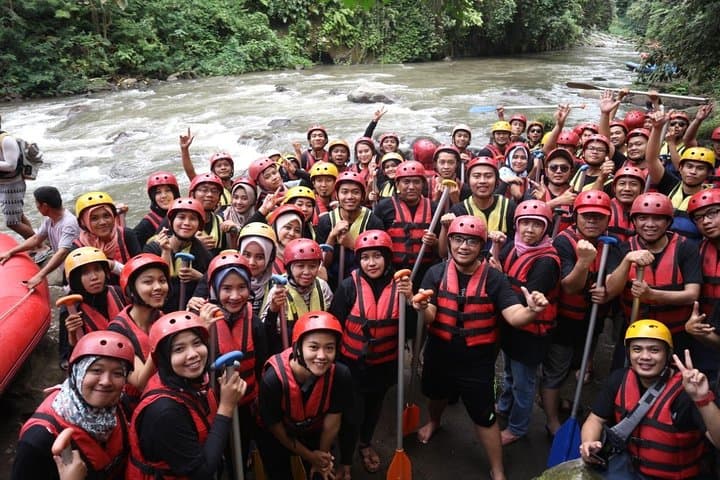
What the day feels like
The raft sits low and eager in the water, a bright orb against a ribbon of dark current. Everything else — steam of the jungle, distant roosters, the slow creak of palm fronds — seems to pause while a guide straps on the last life jacket and grins like it’s the first time he’s ever seen someone meet the river. Launching from a narrow bend, the boat slips into a corridor of shade; the rainforest leans in, orchids and ferns dangling like fringe. For the next few hours the river dares you forward: sluices of whitewater, calm pockets to catch your breath, and a secret waterfall tucked into a green alcove that rewards the patient and curious with sheets of cool spray.
This is Bali the way most guidebooks don’t begin with — less rice-terraced postcard and more kinetic, alive landscape. The trip out of Ubud balances scenery with energy: rough water that keeps things interesting but rarely terrifying, and enough flat stretches to notice the smaller things — a kingfisher’s flash, a carved temple face half-hidden in vines, a water buffalo wallowing upstream. Guides here move between cultural host and river mechanic, narrating the route and pointing out old stone markers, irrigation channels, and the occasional shrine clustered where the river makes a meaningful bend.
Geology and culture intertwine. The island’s volcanic underpinnings have fed soils that sprout the dense, dripping forests through which these rivers run. Over millennia the currents have etched gorges and pockets that now make for fun runs and dramatic scenery. Human history is threaded through the banks too: the local subak irrigation system, villages, and roadside temples speak to a way of seeing water as both livelihood and sacred resource. Ubud’s reputation as Bali’s cultural center means you’re often floating past terraced fields, hand-built temples, and the rice-growing infrastructure that has sustained communities for centuries.
Practicalities matter here in the same way they do on the river. The advertised outing runs roughly 3–6 hours door to door, including pickup from Ubud, safety briefing, changing time, and a 2–3 hour float depending on water levels. Expect class II–III rapids — lively but manageable for families and people with reasonable fitness — and a raft distance that typically covers several kilometers through rainforest and canyon. Operators provide life jackets, helmets, and a short safety lesson; lockers and changing rooms are usually available for leaving belongings dry. The tour you book is often private or small-group, with a price from around USD 29, which, considering transfers and a guided experience, is accessible for many travelers.
Timing and season change the mood dramatically. During the island’s dry months the river is calmer, the sky tends to be clearer, and the jungle gives you more open light for photos. In wetter months the current kicks up and the river feels more urgent — that increases the fun and the splash, but also the need for experienced guides and waterproofing for cameras and phones.
What you’ll remember most are the simple contrasts: cool spray against humid air, the tactile roughness of the raft underfoot, and a sense that each bend holds something new. Guides sometimes lead side hikes to a small waterfall or a cliff-side viewpoint. Local vendors near launch points sell coconut water and fresh fruit — modest, good rewards for a morning spent on the move.
How to plan it
Book for mid-morning if you can: pickup from Ubud means a short transfer time and the river tends to be less crowded and cooler before noon. Wear a swimsuit under quick-drying layers, sturdy sandals or river shoes that won’t slip off, and a hat that tethers to your head. Bring a small waterproof bag or use a camera strap; some operators will store phones in lockers but it’s wise to have your own dry protection. If you’re bringing a camera, stick to a wrist strap or a chest harness — it’s better to keep one good shot than lose equipment.
Safety is straightforward but non-negotiable: listen to the safety briefing, wear your life jacket buckled at all times, and follow guide commands on the raft. Hydrate beforehand — the humidity and adrenaline can dehydrate quickly — and if you’re prone to motion sickness, take preventative measures before launch.
Expect to finish damp, tired, and hungry. Most tours include a simple meal or snack at the end, but budget time afterward to return to Ubud for a proper meal and a stretch. Ubud’s cafes and warungs offer excellent local food, from piping bowls of spicy soto to crispy duck and fresh fruit smoothies.
Who this is for
Families with school-age kids, paired travelers, and active visitors who want a half-day adventure rooted in scenery and culture will find this an ideal outing. It’s also a practical complement to longer stays in Ubud, giving a physical counterpoint to the slower, cultural sightseeing days.
Final note
When you climb out at the end of the run, river water cooling in your ears, the jungle will seem immediate and generous. The waterfall that feels like a secret is often the trip’s emotional apex — the place where the river’s motion meets the stillness of stone and people pause. That pause is part of the reason to go: this is a day that moves you through landscape and history, then leaves you somewhere quieter, with water on your skin and a better sense of why Bali’s interior remains magnetic to travelers who want motion and meaning in the same sweep of hours.
Trail wisdom
Small choices, better day.
Timing matters
Book a mid-morning slot to avoid the midday heat and enjoy softer light for photos.
Secure your gear
Use a waterproof bag or locker—phones and cameras should either be strapped on or left behind.
Hydrate before you go
Humidity plus exertion increases dehydration—drink water before pickup and during breaks.
Listen to your guide
Follow guide instructions on paddling and safety to stay safe through rapids and maneuvers.
Local knowledge
Read the place, not just the route.
Watch for native species including Kingfishers, Monitor lizards.
Keep an eye out for wildlife during the transition between areas and habitats. Respect distance guidelines.
Choose operators that follow local guidelines to minimize riverbank disturbance, avoid single-use plastics, and support community-based tourism initiatives.
Follow the guide's instructions on size limits, ethical handling, and leave-no-trace practices.
A small tucked-away waterfall stop often included mid-run. Riverside shrines and stone markers visible from the raft
Locally recommended viewpoints and quiet spots known best to local operators.
Ubud developed as a cultural hub in the early 20th century and remains Bali’s center for arts and traditional craft.
Maritime roots and regional tradition shape the waterways and working coasts.
Seasonal guide
Four versions of the same landscape.
Spring
Best forModerate water flow · Fewer crowds · Lush jungle photos
ChallengesOccasional showers · Cooler mornings
Late spring brings lush vegetation and manageable water levels; expect some rain but plenty of green scenery.
Summer
Best forDry conditions · Easier family runs · Clearer skies
ChallengesHigher temperatures · Stronger sun exposure
Dry season offers calmer flows and warm weather—ideal for comfortable paddling and post-raft meals in Ubud.
Fall
Best forDramatic light · Good water levels · Fewer tourists
ChallengesOccasional heavy rains · Higher currents at times
Early fall can flip between dry and wet; when rains come the river livens, and the jungle looks at its richest.
Winter
Best forLush rainforest · More forceful rapids · Moody photos
ChallengesHigher river flow · Possible cancellations due to weather
Wet season ramps up the current and the drama; choose experienced operators and be prepared for wetter conditions.
Operator details
What the booking data adds.
Included
- ✓Private transportation
- ✓Lunch
- ✓Price include : Wellcome drink, all safety equipment, buffet lunch, hotel transfer and insurance.
Good to know
- ✓Service animals allowed
- ✓Public transportation options are available nearby
- ✓Infants are required to sit on an adult’s lap
- ✓Not recommended for travelers with poor cardiovascular health
- ✓Suitable for all physical fitness levels
Pack with intention
What to bring.
Good to know
Common questions.
The river run itself is typically 2–3 hours, while the full outing including transfers, briefing, and changing takes 3–6 hours.
Plan the edges
The details that make the day easier.
Ubud became internationally known as Bali’s cultural heart in the early 20th century, attracting artists and patrons and shaping its reputation for dance, carving, and painting.
After the run, head back into Ubud for a late lunch at a local warung — try nasi campur or crispy duck — or grab kopi luwak at a small café. For a relaxed afternoon, visit a nearby spa for a Balinese massage, or wander the market for carved souvenirs and textiles.
- Closest airport
- Ngurah Rai (DPS); Typical drive from airport: 60–90 minutes to Ubud; Cell service: generally good in Ubud, patchy at remote launch points; Permits: none required for tourists—operator arrangements cover access and safety.
Support operators that minimize single-use plastics, follow riverbank protection practices, and hire local guides to ensure the trip benefits nearby communities.
Explore by topic
Follow the threads.
Keep exploring
Make the story part of the trip.
 Related story
Less than two hours from Nairobi, Kereita Forest pairs hands-on canopy adventure with quiet montane trails and a sobering colonial history—perfect for families, teams, and curious travelers seeking a full-day pulse of nature.
Set out from Bass Harbor for a private, customizable day on Blue Hill Bay — lighthouses, puffins, seals, and the chance to feel Acadia from the water. Small groups, local captains, unforgettable views.
In four hours you can move from shaded canyon ferns to wind-scoured coastal ridgelines, guided by someone who knows where the light—and the hidden views—live. This private half-day hike on the Monterey Peninsula or Big Sur is compact, curated, and perfect for travelers who want depth without a multiday commitment.