
What the day feels like
The engine punctures the silence before the mountains do. At first it’s a single hum beneath your thighs, then a rhythm that matches the bend of the road: throttle, bend, coast, repeat. You leave Hanoi’s concrete sprawl behind and climb into a landscape that seems to have been folded up out of the map—terraces stacked like staircases, limestone karsts clawing at cloud, villages clinging to ridgelines. On day two you crest Ma Pi Leng and the valley drops away so abruptly the world looks like a stage set: the Nho Que River threads the gorge below, its jade ribbon daring you to drop closer. This is the Ha Giang Loop—three days of road, rock, and river that rewards riders with scenery, local hospitality, and a reminder that travel can still surprise.
The loop is less a single place than a sequence of dramatic scenes stitched together: narrow switchbacks that splay views across the Dong Van Karst Plateau, riverbanks where bamboo boats ferry passengers through narrow canyons, and small homestays where Dao and Hmong families feed you steaming bowls and tell stories by lantern light. The geology is the headline—this area is part of the Dong Van Karst Plateau Geopark, a UNESCO-recognized landscape whose jagged limestone towers are the product of millennia of uplift and erosion. The human history writes itself into terraces and town markets: ethnic minority communities here have farmed these slopes for centuries, shaping the land as much as the land shapes them.
On a guided three-day motorbike itinerary from Hanoi, the practical rhythm is simple: long morning rides into tight mountain passes, late-afternoon village stops, and a mix of paved and sometimes potholed rural roads. Expect about 10–12 hours of travel each day when you include stops—this isn’t a scenic Sunday spin. Ma Pi Leng Pass delivers the show—singular views down into the Nho Que gorge—but the quieter moments often matter more: an empty ridge-top road that smells of wet earth after a storm, a village market where bright textiles pile like islands, or the sound of a waterfall where local kids leap from a ledge into a clear pool below.
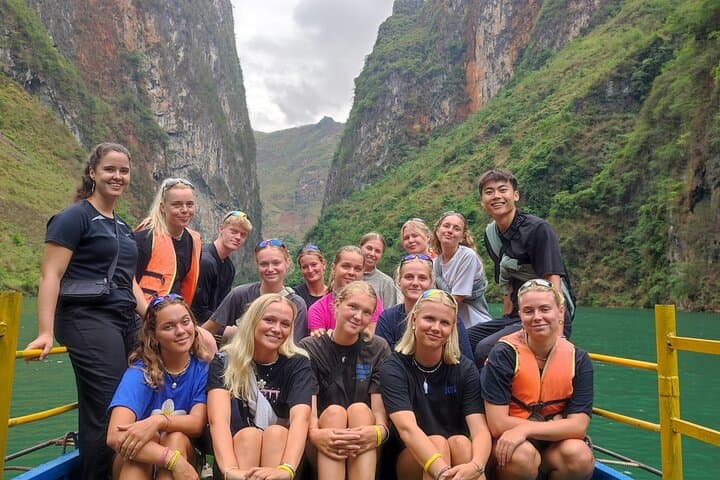
The tour package here blends adrenaline with cultural exchange. You don’t just ride—the itinerary commonly includes a short boat ride on the Nho Que River to feel the canyon from river level, a dip or waterfall jump at Du Gia when the water’s warm, and homestay nights that convert strangers into guests over shared food. Guides are local, which matters: they read the roads and the weather, negotiate roadside repairs, and bridge language and cultural gaps so you can focus on the ride. For those newer to mountain motorbikes, guided support changes the trip from risky to manageable.
Practical realities, candidly, shape the experience. Roads can be narrow and weather can switch fast; rain turns dirt shoulders slick and visibility can drop into cloud. You need a competent ride—either your own experience with a mid-weight motorbike or the confidence to take a tour that supplies bikes and mechanics. Fuel and cash are essential: rural pockets don’t always accept cards. And pack for layering—sun, wind, and mountain chills can arrive in one day.
Why go? Because the Ha Giang Loop still feels like a frontier for active travelers who want the kind of landscape that reshapes perspective. It’s not the easiest route you’ll ever do, but it’s the one where the road, the people, and the momentary quiet align. You leave having earned your view at Ma Pi Leng, your river-ride memory, and a handful of meals shared in village kitchens. Practical takeaways: carve time out of your schedule for the whole loop, keep your ride maintained, and let the guide handle local logistics so you can focus on the ride.
If you plan it right, this trip is straightforward to organize: start in Hanoi (Noi Bai is the nearest international airport), allow a day to reach Ha Giang town, and then commit to the three-day loop out and back. Bring a modest tolerance for rough roads and a big appetite for local food—com lam (bamboo rice), hearty stews, and strong local rice wine will appear at homestays. For photography, the dramatic viewpoints happen early and late in the day, so shoot in golden light and lean on wide lenses for the gorge and telephoto for patches of local life.
A final note on respect: this is a lived landscape. Keep to roads and paths, carry out plastic, and treat homestay hosts and market sellers as collaborators in your trip—not just photo opportunities. The Ha Giang Loop rewards curiosity and care in equal measure. When you finally put the bike away and sit with a cup of tea beneath a serviceable roof, the mountains will still be there—big, patient, and quietly impressive—like a story you’ve just been trusted to read for a little while.
Trail wisdom
Small choices, better day.
Ride light, pack smart
Bring only essentials—layered clothing, a compact repair kit, and enough cash; lighter loads make mountain switchbacks safer and more enjoyable.
Book a guided group if you’re new to mountain roads
Local guides know road conditions, can source fuel and parts, and manage homestay logistics—valuable on unfamiliar routes.
Fuel frequently
Top up whenever you can; remote stretches have few gas stands and you don’t want to run dry miles from town.
Respect homestay etiquette
Ask before photographing people, remove shoes indoors, and bring a small gift or extra treats for hosts to show appreciation.
Local knowledge
Read the place, not just the route.
Watch for native species including Red junglefowl, Small primates (in forested pockets).
Keep an eye out for wildlife during the transition between areas and habitats. Respect distance guidelines.
The Geopark status highlights fragile karst ecosystems—stay on roads, pack out waste, and respect local farming cycles.
Follow the guide's instructions on size limits, ethical handling, and leave-no-trace practices.
Early-morning viewpoint above Meo Vac for light and solitude. A quiet roadside tea stop near Du Gia where locals gather midafternoon
Locally recommended viewpoints and quiet spots known best to local operators.
The Dong Van Karst Plateau has been inhabited by Hmong, Dao, Tay and other ethnic groups for centuries; its terraces and markets reflect long-standing agricultural traditions.
Maritime roots and regional tradition shape the waterways and working coasts.
Seasonal guide
Four versions of the same landscape.
Spring
Best forWildflowers and mild temperatures · Fewer tourists
ChallengesOccasional rains · Cold snaps at higher elevations
March–April brings blossoms and comfortable riding weather, though spring showers can appear suddenly in the mountains.
Summer
Best forLush green landscapes · Warm river swimming
ChallengesHeavy rain and potential landslides · Higher humidity
June–August is greenest but also wettest—expect afternoon storms and slippery sections on dirt roads.
Fall
Best forClear skies and golden light · Harvest-time terraces
ChallengesCooler nights · Higher demand around holidays
September–November is ideal for clear views and harvested terraces; temperatures are stable and travel is pleasant.
Winter
Best forFog-draped scenery · Quieter roads
ChallengesCold temperatures at altitude · Some homestays may be less comfortable
December–February can be chilly, especially at dawn and dusk; pack warm layers and plan for fog-reduced visibility.
Pack with intention
What to bring.
Good to know
Common questions.
Guided tours often provide bikes and handle local requirements, but bringing a valid motorcycle license (some organizers ask for an international license) and passport is recommended.
Plan the edges
The details that make the day easier.
The Dong Van Karst Plateau was designated a UNESCO Global Geopark in 2010 for its unique karst formations and cultural landscapes.
Evening homestays serve hearty local dishes—try com lam (bamboo rice), sample maize wine, and visit the Dong Van night market for grilled meats and woven textiles. In Ha Giang town, small cafés pour strong Vietnamese drip coffee—perfect after a long day’s ride.
- Closest international airport
- Hanoi Noi Bai (Noi Bai to Ha Giang ≈ 300 km
- 6–7 hours by road). Trailhead
- Ha Giang town. Cell service: intermittent in remote passes. Permits
- paperwork
- none for tourists beyond ID and license, but confirm bike insurance and license requirements with your tour operator.
This landscape is ecologically sensitive and culturally lived-in—avoid single-use plastics, stick to roads, and support local homestays and markets when possible.
Explore by topic
Follow the threads.
Keep exploring
Make the story part of the trip.
Set out from Bass Harbor for a private, customizable day on Blue Hill Bay — lighthouses, puffins, seals, and the chance to feel Acadia from the water. Small groups, local captains, unforgettable views.
In four hours you can move from shaded canyon ferns to wind-scoured coastal ridgelines, guided by someone who knows where the light—and the hidden views—live. This private half-day hike on the Monterey Peninsula or Big Sur is compact, curated, and perfect for travelers who want depth without a multiday commitment.
 Related story
Beneath a sky of shifting light, Skaftafell’s ice reads like a map of time. This three-hour guided glacier hike mixes technical instruction with geology and culture: compact, safe, and unforgettable.