
What the day feels like
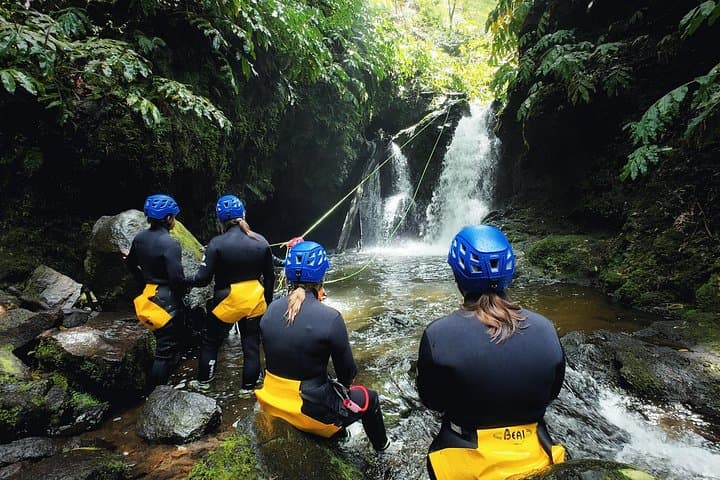
By the time you step off the van and into the ribbed shade of laurel and endemic heather, the river has already set the pace. The water throws back light like a dare: clear, cold, impatient. Your guide clips a harness around your waist, hands you a helmet, and talks through a few cues—brace, slide, commit. Then the group files down a moss-soft gorge, where cliffs lean in close and waterfalls appear as if turned on by a switch. This is Ribeira dos Caldeirões: volcanic rock shaped by time and an appetite for drama, and today it’s asking for your sense of adventure.
Level 1 canyoning here is less about technicolor spectacle and more about the tidy thrill of being guided through a landscape that alternates between gentle runs and sudden opportunities to leap, abseil, or shimmy across a rope. You’ll jump into deep pools, slide along polished rock, learn basic abseil techniques and, if you want, take a short zipline that threads across a drop. It’s an introduction to canyoning that keeps safety first—the harnesses are new, the ropes are inspected, and the guides are practiced at smoothing out the first-time jitters. Yet it still gives you the satisfying physical staccato of a true canyon trip: short bursts of adrenaline, then quiet river-watching as you plan the next move.
Geology and history here read like a hybrid textbook and travelogue. São Miguel is a young island in geological terms, born of submarine eruptions and constantly stitched by later volcanic flows. The gorge walls you move along are basalt and tuff—layers of lava flows and ash compacted over millennia—scarred by the river’s constant work. People settled these valleys for the water: old watermills and stone canals used to power small agricultural communities; many of their features still exist near the park, testament to islanders adapting to a wet, energetic landscape.
Culturally, the north coast of São Miguel has always been a quieter counterpoint to Ponta Delgada’s port bustle. The tiny villages nearby hold on to slow rhythms—local bakeries still sell bolo lêvedo and fishing boats return with the day’s catch. Inland, tea plantations such as Gorreana are just a short drive away; a post-adventure cup of island-grown black tea is an oddly perfect cap on a morning of river clambering.
For travelers, this canyon run is two things at once: accessible and distinct. It’s accessible in that it’s marketed as achievable for beginners—no prior rope skills required—and distinct because it’s set in an Azorean river system where the sea’s proximity keeps everything lush, and where the mix of waterfall drops and smooth slides feels different than many Mediterranean canyons. If you’re a casual hiker curious about rope work, it’s an ideal first step. If you’re an experienced climber or canyoneer, it’s a compact, well-run session to sharpen basic skills in an outstanding setting.
Practicalities matter in this kind of trip. The session is about three hours long, guide-led, and typically starts from the nearby meeting point in the national park; transfers are often available if you’re staying in Ribeira Grande or Ponta Delgada. Wear a sturdy pair of old trainers or canyon shoes that will grip rock and drain—this is not a place for brand-new hiking boots. A wetsuit is usually provided because the water temperature hovers on the brisk side, even in summer; it’s the combination of cold water and movement that makes a wetsuit essential for comfort and safety.
If you picture canyoning as an extreme solo sport, this will recalibrate you. The group moves deliberately: assess the jump, check your launch stance, and wait for the guide’s clear signal. There’s room for laughter too—the kind that bubbles up after a safe jump into a cold pool—and a social cadence that makes this as much about shared memories as about technical skill. You’ll emerge with a few rope-handling basics, an appetite for steeper runs, and the kind of photos that treat your camera to a new kind of landscape.
For planning: book a morning slot to avoid the hottest midday sun and to catch light streaming down into the gorge. Expect moderate fitness demands—short bursts of scrambling and repeated jumps—so a baseline of cardio and comfort in water will make the day smoother. Respect the guides’ instructions; they’re controlling the variables—water, rope friction, drop angles—that keep the experience fun and safe.
If you want to deepen the day into a full island story, tie this canyoning trip to a north-coast loop: a post-run visit to the Gorreana tea fields, a seaside lunch of grilled fish in Ribeira Grande, and a stop at a lookout for the basalt cliffs that meet the Atlantic. The sensation of river water under your feet, the smell of damp moss, and then a hot cup of tea—those contrasts are the Azores in miniature.
To book, check with local operators who run <a href="https://app.advcollective.com/local-experts/canyoning-in-ribeira-dos-caldeiroes-level-1-adventure-sao-miguel-azores">canyoning in Ribeira dos Caldeirões</a>. Expect small groups, professional guides, and the chance to step just outside your comfort zone without leaping wildly into the unknown. It’s a tidy, memorable slice of São Miguel: a place where rivers dare you, and the island gives you every tool to answer back.
Trail wisdom
Small choices, better day.
Go early
Book a morning slot to catch softer light in the gorge and avoid increased water flow after afternoon showers.
Wear quick-dry footwear
Old trail runners or canyon shoes with good grip are better than heavy hiking boots—wet rock is slippery.
Hydrate and fuel
Bring a small snack and at least 1 liter of water; the thrill of the run can hide how much energy you’re burning.
Listen to your guide
This run is guide-led: follow instructions for jumps and abseils to keep the group safe and moving.
Local knowledge
Read the place, not just the route.
Watch for native species including Azorean chaffinch, Common tern and coastal seabirds.
Keep an eye out for wildlife during the transition between areas and habitats. Respect distance guidelines.
Local outfitters operate with small group sizes to minimize river impact; visitors are asked to stay on designated paths and avoid disturbing riparian vegetation.
Follow the guide's instructions on size limits, ethical handling, and leave-no-trace practices.
Gorreana Tea Plantation—pair a tea tasting with a coastal viewpoint. Small watermills and stone bridges within Ribeira dos Caldeirões Natural Park
Locally recommended viewpoints and quiet spots known best to local operators.
The park’s stone watermills and irrigation channels reflect centuries of rural life on São Miguel and the island’s reliance on freshwater streams.
Maritime roots and regional tradition shape the waterways and working coasts.
Seasonal guide
Four versions of the same landscape.
Spring
Best forLush green scenery · Lower crowds
ChallengesHigher rainfall · Cooler water temperatures
Spring brings vivid vegetation and full waterfalls—expect cooler, more changeable weather and brisk water.
Summer
Best forWarmer air temperatures · Stable weather
ChallengesHigher visitor numbers · Stronger sun on approach trails
Summer offers the most reliable weather and balmier temps, making post-run hangs at nearby lookouts more pleasant.
Fall
Best forFewer tourists · Rich autumnal light
ChallengesIncreased rain risk toward late season · Possible higher river flow
Autumn reduces crowds and provides dramatic light, but watch for heavier rains that can increase river speed.
Winter
Best forQuiet runs · Dramatic waterfalls
ChallengesColder air and water · Occasional stormy weather
Winter is dramatic and quiet; operators may adjust or cancel runs in storm conditions—pack warm layers.
Operator details
What the booking data adds.
Included
- ✓Activity insurance. All equipment necessary for the activity.
- ✓Photos and videos of the activity.
- ✓Guide
Not included
- —Snacks
Good to know
- ✓Public transportation options are available nearby
- ✓Not recommended for travelers with spinal injuries
- ✓Not recommended for pregnant travelers
- ✓Not recommended for travelers with poor cardiovascular health
- ✓Suitable for all physical fitness levels
Pack with intention
What to bring.
Good to know
Common questions.
No—this Level 1 run is designed for beginners; guides teach safe jumping and basic abseiling techniques on-site.
Plan the edges
The details that make the day easier.
Ribeira dos Caldeirões Natural Park is known for its historic watermills and traditional stone bridges—the mills date back several centuries and were essential to the island’s agricultural economy.
After the run, head to Ribeira Grande for grilled fish and a pint at a local tasca, and don’t miss a detour to the Gorreana tea plantation for a hot cup of locally grown tea.
- Closest airport
- João Paulo II Airport (Ponta Delgada - PDL); Driving time from Ponta Delgada: ~50–60 minutes; Cell service: intermittent in the gorge; Permits: none—book a licensed guide; Meeting point: Ribeira dos Caldeirões Natural Park
Support operators who run small groups and use local guides; stay on marked routes, avoid disturbing moss and riverbanks, and pack out any waste to protect fragile riparian ecosystems.
Explore by topic
Follow the threads.
Keep exploring
Make the story part of the trip.
Set out from Bass Harbor for a private, customizable day on Blue Hill Bay — lighthouses, puffins, seals, and the chance to feel Acadia from the water. Small groups, local captains, unforgettable views.
In four hours you can move from shaded canyon ferns to wind-scoured coastal ridgelines, guided by someone who knows where the light—and the hidden views—live. This private half-day hike on the Monterey Peninsula or Big Sur is compact, curated, and perfect for travelers who want depth without a multiday commitment.
 Related story
Beneath a sky of shifting light, Skaftafell’s ice reads like a map of time. This three-hour guided glacier hike mixes technical instruction with geology and culture: compact, safe, and unforgettable.