
What the day feels like
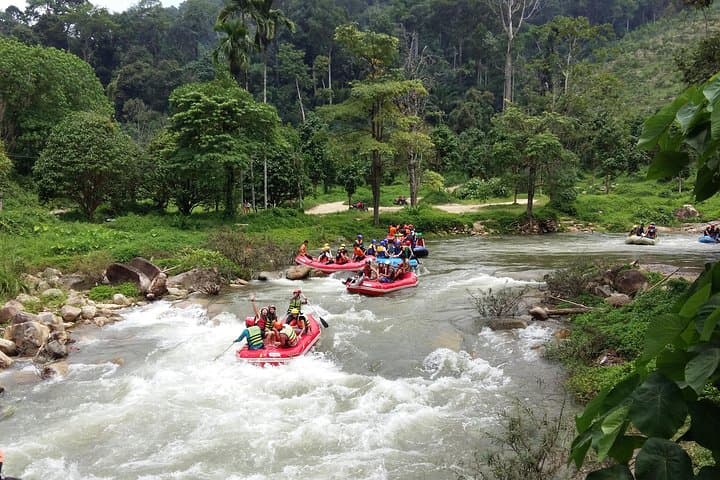
By midmorning the vans have already cut through a belt of low cloud and rubber plantations, and the air tastes of wet earth and lemongrass. You step out in Phang Nga province, where limestone teeth pierce the skyline and the Song Phreak River threads a cool, winding path through jungle. The river doesn’t beg for attention; it dares it. Guides in neon helmets check straps, joke to loosen the jitters, and push the raft toward the first swell. What follows is a pleasantly relentless alternation of adrenaline and quiet—rapids that shove you forward, and river-side clearings where the forest leans in to watch.
This is a day that stacks motion on motion: white-water paddling through class II–III drops, a flying-fox zipline over canopy gaps, a shaded jungle trek and, later, a detour to Suwan Khuha—better known as the Monkey Cave Temple—where a reclining Buddha waits in a limestone chamber populated by inquisitive macaques. The itinerary balances thrills with texture: it’s not just about the rafting. It’s a survey of Phang Nga’s raw geology, its humid lowland rainforest, and the small cultural moments that make Southeast Asian river trips memorable—tea with locals, temple incense, and the simple communal satisfaction of sharing a raft.
Geology and ecology are the trip’s silent narrators. The karst towers around you were carved over millions of years by acids in rainwater dissolving the bedrock; their fluted faces funnel clouds and host pockets of rainforest, vines and epiphytes. The Song Phreak River behaves like a living boundary: in low flows it’s a reflective ribbon hiding limestone shelves, in higher season it becomes playful and, occasionally, emphatic. Birds—kingfishers darting like blue darts, herons patient as statues—occasionally break the raft’s soundtrack of paddles and guide calls.
There’s also history embedded in this landscape. Small communities in Phang Nga have long relied on rivers and seasonal rainfall for food and transport; nearby caves like Suwan Khuha have functioned as religious sanctuaries for generations. The temple’s reclining Buddha is both a cultural waypoint and a reminder that this isn’t a remote wilderness untouched by people—rather a lived landscape shaped by human and natural rhythms.
Practicalities are straightforward, which is part of the appeal. The full experience runs about 7–8 hours (the operator lists 420–480 minutes), including round-trip hotel transfers from Krabi, safety briefings, and optional add-ons like ATVs or longer jungle walks. Guides provide life jackets and helmets; experience levels range from total novice to practiced paddler, so families and mixed-ability groups find this itinerary inviting. Price starts from the low-to-mid range (around USD 39.73 at the time of publication), making it an accessible full-day push of adventure.
Why go? Because it’s efficient. In the course of one day you experience short, satisfying rapids, an aerial rush on a flying fox, and a cultural stop that feels regionally distinct. For travelers based in Krabi, it’s a compact way to experience inland Phang Nga without committing to multi-day trekking or packing specialized river gear. For families, the mix of activities keeps younger adventurers engaged; for solo travelers or couples, the group dynamic in the raft—cheering, synchronizing paddles, laughing when the next surge hits—creates easy camaraderie.
A candid note on challenge and preparation: the rapids are fun, not extreme—expect a steady workout of paddling and bracing rather than technical white-water tactics. The humidity and tropical sun will sap energy quickly; bring hydration and sun protection. Guides are experienced and safety-focused, but basic swimming competency and the ability to follow directions are required for a confident, comfortable day.
If you’re planning this trip, think of it as a curated sampler of Phang Nga’s best hits: river, cliff, canopy, cave, and culture. Time your trip for the dry season (roughly November–February) for clearer skies and calmer access points; the hot months intensify sunshine and humidity, and the monsoon brings higher flows that change the river’s personality.
At the end of the day, sitting on the van’s bench seat with wet hair and a sunburned nose, it’s easy to tally the wins: the sudden collective whoop as the raft surges, the surprising quiet of a river bend where only the drip of leaves answers you, the odd cheeky macaque checking pockets at the temple. It’s an efficient, well-paced blend of thrills and place-making—the sort of single-day adventure you leave thinking: I could have stayed longer here.
Want to squeeze more out of a Krabi-based itinerary? Pair this day trip with a bay cruise to see the karsts from water level, or spend a night in a small riverside guesthouse to hear the forest sing with the rain. Whatever you choose, come ready: the river asks for energy and attention, and it rewards both.
Trail wisdom
Small choices, better day.
Hydrate Before You Start
Drink water on the morning transfer and carry a refillable bottle—tropical days drain energy fast.
Wear Quick‑Dry Clothing
Light synthetic shorts and a long-sleeve rashguard protect from sun and chafing while drying fast after rapids.
Secure Camera Gear
Use a small dry bag or a chest mount for phones; handheld shots from a raft are risky.
Listen to Your Guide
Follow commands for bracing and paddling—most incidents happen when guests move unexpectedly.
Local knowledge
Read the place, not just the route.
Watch for native species including Long-tailed macaque, Common kingfisher.
Keep an eye out for wildlife during the transition between areas and habitats. Respect distance guidelines.
Local operators increasingly follow leave-no-trace practices; avoid feeding wildlife, pack out all rubbish, and choose providers that limit group sizes to reduce erosion and disturbance.
Follow the guide's instructions on size limits, ethical handling, and leave-no-trace practices.
A quiet river bend upstream where the jungle forms an intimate tunnel for photos. A short viewpoint off the main road with a panoramic sweep of karst silhouettes at golden hour
Locally recommended viewpoints and quiet spots known best to local operators.
The cave temple of Suwan Khuha has long served as a local religious site—its cavern houses Buddhist statuary and has been used as a sanctuary for generations.
Maritime roots and regional tradition shape the waterways and working coasts.
Seasonal guide
Four versions of the same landscape.
Spring
Best forFewer crowds · Warmer water · Good birdwatching
ChallengesHotter temperatures · Higher UV index
Spring (Mar–May) brings heat and bright skies—expect strong sun and lively wildlife along the river.
Summer
Best forLush jungle · Higher river flows · Fewer tourists
ChallengesMonsoon rains possible · Slippery trails
Summer months can swell the river and green the forest, but heavy rain may alter timing or route.
Fall
Best forTransition weather · Comfortable daytime temps · Clear sunsets
ChallengesOccasional showers early/late in season
Fall stabilizes into drier conditions, offering comfortable paddling and clearer skies for photography.
Winter
Best forLowest rain chance · Cooler mornings · Best visibility
ChallengesCooler water temps in mornings
Thailand's winter (Nov–Feb) is the prime window—drier trails, calmer logistics and high visibility for views.
Operator details
What the booking data adds.
Included
- ✓First Aid Kit
- ✓Life jacket , Safety equipment
- ✓Lunch , Drinking water, Fruit
- ✓Free round trip transfer
- ✓Tour Guide
- ✓Accident Insurance
Not included
- —Gratuities
- —An additional charge of 200 THB for transfer from Khlong Muang and Krabi Town
- —Admission to Suwan Khuha Cave or Monkey Cave 20 THB per person
Good to know
- ✓Public transportation options are available nearby
- ✓Not recommended for travelers with spinal injuries
- ✓Not recommended for pregnant travelers
- ✓Not recommended for travelers with poor cardiovascular health
- ✓Suitable for all physical fitness levels
- ✓Child ticket: Age between 4-11 years.
- ✓Guests who are pregnant or have high blood pressure, heart disease and bone diseases are not recommended to join the tour.
- ✓There is a minimum of 4 people required to run this tour! On the rare occasion that we should be required to cancel a tour, we will inform you in advance and offer a different tour date, an alternative tour or provide a full refund.
Pack with intention
What to bring.
Good to know
Common questions.
No—this tour is designed for mixed experience levels; guides provide instruction and lifejackets, but basic swimming ability is recommended.
Plan the edges
The details that make the day easier.
Tham Suwan Khuha (the Monkey Cave Temple) contains a notable reclining Buddha inside a limestone cavern and is a common cultural stop on inland Phang Nga tours.
After the river, head back to Krabi Town or Ao Nang for fresh seafood and cold Chang beer—try grilled whole fish at a seaside restaurant or sample local southern curries at the Krabi Town night market for an authentic end to the day.
- Closest airport
- Krabi International Airport (KRB)
- Typical drive
- 60–90 minutes from Krabi to Phang Nga river sites
- Cell service
- generally available but spotty in river gorges
- Permits
- none required for day trips—book through licensed operators.
This river corridor is ecologically sensitive—pack out all trash, avoid single-use plastics, don't feed wildlife, and choose operators that practice responsible waste and group-size management.
Explore by topic
Follow the threads.
Keep exploring
Make the story part of the trip.
Set out from Bass Harbor for a private, customizable day on Blue Hill Bay — lighthouses, puffins, seals, and the chance to feel Acadia from the water. Small groups, local captains, unforgettable views.
In four hours you can move from shaded canyon ferns to wind-scoured coastal ridgelines, guided by someone who knows where the light—and the hidden views—live. This private half-day hike on the Monterey Peninsula or Big Sur is compact, curated, and perfect for travelers who want depth without a multiday commitment.
 Related story
Beneath a sky of shifting light, Skaftafell’s ice reads like a map of time. This three-hour guided glacier hike mixes technical instruction with geology and culture: compact, safe, and unforgettable.