
What the day feels like
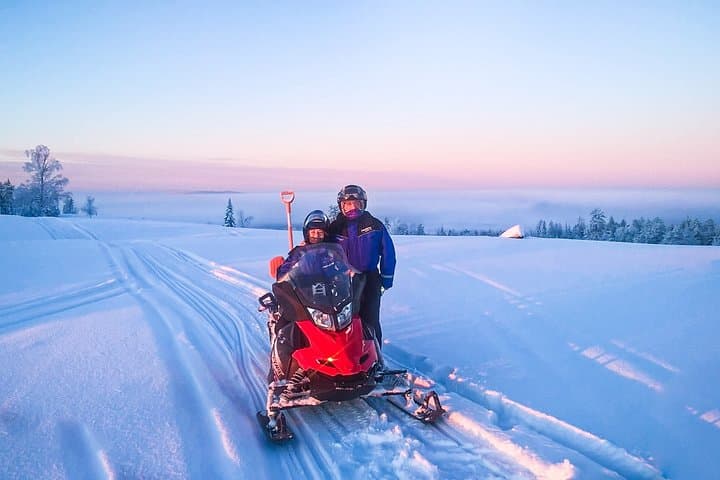
The engine thumps once, like a heartbeat waking the white. Ahead, the tundra opens — not flat ice but a textured quilt of wind-sculpted drifts, lichen-tufted hummocks and the dark, patient trunks of dwarf birches poking through the snow. You can feel the landscape thinking: patient, immense, indifferent. When the guide lifts the throttle, the pack slides forward in a single, exhilarating motion, the cold air cutting like a presence that keeps you alert. In that first minute you trade ordinary senses for something more elemental: the hum of the sled, the squeak of packed snow, the horizon that insists you keep going.
This is a Snowmobile Safari on the Tundra from Saariselkä, a short drive north of Ivalo in Finnish Lapland. The route threads across ancient glacial plains and peatlands that thaw and freeze with the seasons. The ground beneath this white skin is shaped by the weight of ice ages — boulder-strewn moraines and shallow lakes that surface in summer, then sleep under snow. For a few hours, the modern, gas-fed machines let you negotiate these old forms of earth quickly and fluidly, while the Arctic sky performs its slow, infinite show above.
Lapland is a place of modest histories and long memories. Reindeer herding has shaped livelihoods here for centuries; Sami culture remains present, a living thread of song, handicraft and seasonal migration. On the edges of town, weathered cabins and smoke saunas give away human rhythms tuned to the light and cold. During a safari you’ll likely cross lands used by herders — respectful distance and quiet are the best courtesies you can offer to both animals and people. And if the solar conditions align, the night sky may gift you the northern lights, ribbons of green and violet that seem to ride the wind.
Geology matters on a trip like this. The tundra’s surface is a thin ecosystem, fragile in summer when plant roots knit the soil. That’s one reason guided snowmobile routes are contained to marked paths: the winter snow acts as a protective blanket, and staying on trails minimizes damage when the snow melts. Guides are local experts, not only in machine operation but also in reading the land: where the ice on a frozen lake is thick and safe, where the drift will conceal a wedge of peat, and where to angle for a view that opens like a theater curtain.
Practicality arrives as part of the pleasure. Tours typically last 3–4 hours and are suitable for beginners as well as more confident riders. Machines can be driven solo or shared — there’s usually a passenger seat — and operators provide basic instruction, helmets, and thermal suits. Still, the cold is an active participant; it will test glove dexterity, electronics and endurance. Dress in layers, bring a dry pair of gloves, and hydrate before you go: cold compresses the body’s signals, and you’ll be surprised how quickly your throat tightens without water.
This excursion is both about speed and pause. You’ll throttle across open plains, the snow daring you to maintain momentum, then stop on a ridge to watch the flat horizon bruise in late afternoon light. Guides often build in a ceremonial stop — perhaps a thermos of hot berry juice, a short walk into a still-forested pocket to listen to the soft thud of snow from branches. The experience is tactile; the wind pushes you, the sled hums under your knees, and the tundra seems to breathe around you.
If you’re booking, timing matters. Peak snow quality runs from January through March, with March often offering longer daylight and more stable, deeper snowpack. Early- or late-season travelers should be prepared for rides by ATV if snow conditions are thin. Safety briefings are non-negotiable, and an operator that emphasizes training and smaller group sizes will offer the best balance of thrill and control.
Expect to be both satisfied and hungry after a safari. Local cafes in Saariselkä focus on warming, hearty fare — think reindeer stew, rye bread and cloudberry jam — the kinds of food that seem to mend frozen fingers and sharpen stories. If you want to extend the trip, many operators pair snowmobile safaris with options like overnight glass-igloo stays, sauna evenings, or aurora chases.
For anyone who’s ever wanted to feel the Arctic in motion, the tour delivers: speed without cruelty, proximity without intrusion, with enough local context to make the ride feel like part of a place rather than an amusement. Book with a responsible operator, layer well, and let the tundra do what it does best — remind you how small you are and how big the world remains.
Trail wisdom
Small choices, better day.
Dress in breathable layers
Base layers that wick and an insulated outer shell let you regulate temperature without shedding all protection while riding.
Protect your extremities
Bring a spare pair of insulated gloves and liner gloves — hands get cold quickly even while moving at speed.
Listen to the safety briefing
Guides cover terrain hazards and engine basics; follow instructions for throttle and braking to avoid surprises.
Charge devices beforehand
Cold reduces battery life — bring a warm pocket for your phone and a small power bank if you need photos or maps.
Local knowledge
Read the place, not just the route.
Watch for native species including Reindeer, Ptarmigan.
Keep an eye out for wildlife during the transition between areas and habitats. Respect distance guidelines.
Stick to marked trails to protect the thin summer tundra; choose operators who maintain trails and follow low-impact practices.
Follow the guide's instructions on size limits, ethical handling, and leave-no-trace practices.
A quiet ridge overlooking a frozen lake where guides often stop for berry tea. Short, local Sami-run handicraft shops in Saariselkä selling traditional textiles and knife sheaths
Locally recommended viewpoints and quiet spots known best to local operators.
This area is part of traditional Sami lands; reindeer herding and seasonal migration have shaped the culture and landscape for centuries.
Maritime roots and regional tradition shape the waterways and working coasts.
Seasonal guide
Four versions of the same landscape.
Spring
Best forlonger daylight · stable snow · aurora still possible
Challengesvariable temperatures · slushy late-season snow
March to early April offers longer days and often the most forgiving snowpack, but watch for melt and softer drift spots.
Summer
Best forATV alternatives · midnight sun hikes · wildlife viewing
Challengesno snow for snowmobiles · cold tundra insects later in season
If snow is gone, operators may offer ATV safaris; the landscape changes to a green tundra with midnight sun light.
Fall
Best forfewer crowds · aurora season starts · cool crisp air
Challengesearly snowfall unpredictable · shortening daylight
Late autumn can be beautiful and moody, but snow depth is often insufficient until winter is established.
Winter
Best forsnowmobiling · northern lights · winter activities
Challengesvery cold temperatures · short daylight in deep winter
December through March is prime snow season—cold and reliable snow but pack for extreme conditions in deep winter.
Operator details
What the booking data adds.
Included
- ✓Approx. 1.5-2h snowmobile driving
- ✓Organizer's liability insurance
- ✓Winter adventure gear and helmet
- ✓Light snacks and beverages by the open fire
- ✓Guidance services
- ✓Transportation
Not included
- —Ivalo Pickup & Drop off (available for additional fee)
- —Solo driving available for an additional fee
Good to know
- ✓Specialized infant seats are available
- ✓Not recommended for pregnant travelers
- ✓Suitable for all physical fitness levels
Pack with intention
What to bring.
Good to know
Common questions.
No — most tours offer instruction for beginners and allow passengers if you prefer not to drive.
Plan the edges
The details that make the day easier.
Saariselkä lies north of the Arctic Circle in the municipality of Inari and is one of Finland’s northernmost year-round ski and outdoor destinations.
After a ride, warm up with poronkäristys (reindeer stew), dark rye bread and cloudberry jam at a local café; finish with a smoke sauna if offered by your lodge or booking operator to complete the Arctic experience.
- Closest airport
- Ivalo Airport (IVL) ~30–40 min drive to Saariselkä; Meeting point: operator base in Saariselkä; Cell service: reliable in town, patchy on outlying tundra routes; Permits: none typically required for guided tours
Respect marked trails and the fragile tundra beneath the snow; choose operators who minimize group sizes and follow local environmental guidelines to reduce impact.
Explore by topic
Follow the threads.
Keep exploring
Make the story part of the trip.
Set out from Bass Harbor for a private, customizable day on Blue Hill Bay — lighthouses, puffins, seals, and the chance to feel Acadia from the water. Small groups, local captains, unforgettable views.
In four hours you can move from shaded canyon ferns to wind-scoured coastal ridgelines, guided by someone who knows where the light—and the hidden views—live. This private half-day hike on the Monterey Peninsula or Big Sur is compact, curated, and perfect for travelers who want depth without a multiday commitment.
 Related story
Beneath a sky of shifting light, Skaftafell’s ice reads like a map of time. This three-hour guided glacier hike mixes technical instruction with geology and culture: compact, safe, and unforgettable.