
What the day feels like
You leave Cusco before the city wakes, a slow ribbon of headlights threading out of the high-altitude bustle and into a calmer valley. The Andes rearrange themselves as you go: ridgelines soften, terraced fields appear like steps cut into the mountains, and the air, already dryer than the city, feels cooler at your windows. After about an hour and a half your vehicle drops you at a low-slung compound on the river’s bank — a River Lodge with hot showers, a steaming kettle of coca tea, and a sauna that feels like a small, restorative church after the drive. The guides meet you with helmets and smiles; you leave your pack and step closer to the river to listen.
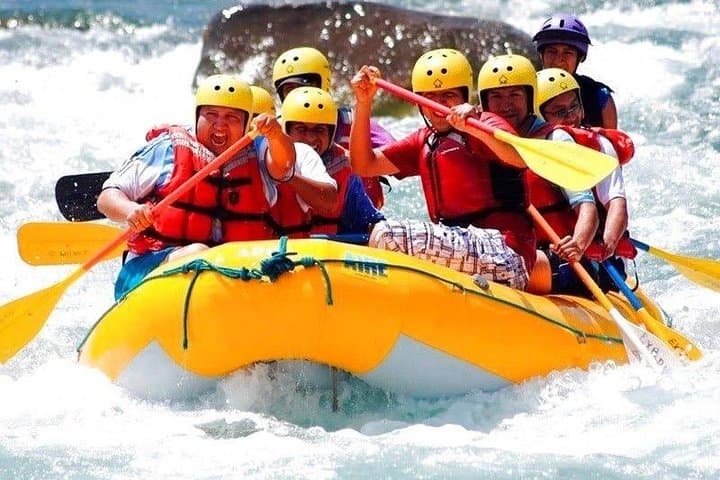
The Urubamba is not a quiet river. In Quechua it’s associated with Vilcanota — the river that cuts the Sacred Valley, a lifeline that for centuries threaded together agricultural terraces, Inca settlements, and modern Andean communities. Today it pulls at your curiosity the same way it pulls at the rafts: forward, impatient, daring you to let go. Your guides — bilingual, experienced, and pragmatic — run a succinct safety talk, hand out neoprene suits and spray jackets, and walk you through the strokes that will keep your raft from pinballing down the class III chutes ahead.
The run itself is honest and immediate. Class III rapids mean freighted corners and rolling waves that will test your timing without feeling cruel. The river’s personality shifts from smooth, gliding stretches where you can trade stories, to sudden buckets of whitewater that make you hold your breath and paddle like it matters. The canyon walls remind you of the area’s geology: uplifted granite and sedimentary layers folded and sheared by the same tectonic forces that made the Andes. Peaks that once hosted glaciers now feed the river in meltwater and memory.
Midway on the course, the guides steer you toward a gravel bar and the raft becomes a place to notice: local farmers working irrigated terraces, a distant flock of vicuña-like shapes on a slope, the skeletal frame of an old Inca irrigation channel. The river here isn’t only adrenaline; it’s a corridor of culture — irrigation practices and town layouts that have barely changed since pre-Columbian times. After the run, you won't be shipped out; instead, there's a short drive to a zipline platform where the valley opens wide. Strapped in, you move from being pushed by the river to being pulled by gravity — a clean, horizontal freefall over a ribbon of water, mountain carved fields, and the occasional Andean condor silhouette. The zipline is quick, panoramic, and a perfect corollary to a day on the river: energy directed outward into the valley.
Why do this as a day trip from Cusco? Practicality is part of the appeal. The drive is manageable, the lodge provides a base where you can clean up and recharge, and the guides fold local knowledge into every briefing. The trip’s logistics — hotel pickup, private transport, provided equipment, and a bilingual team — make it a good fit for travelers who want maximum outdoor time with minimal guesswork. It’s also a rare way to see the Sacred Valley from a riparian perspective; most visitors spend their hours among ruins and plazas, but the water here shows you how the landscape works, how the people and the land trade resources across centuries.
For planning: the trip runs about eight hours, leaving time in your schedule for either an early dinner back in Cusco or an afternoon wandering the Plaza de Armas. You’ll be operating at altitude — Cusco sits around 3,400 meters — so hydrate and rest the day before. The river stretches are at lower elevations than the city, which helps the body adjust, but the exertion of paddling and the adrenaline spikes will still demand that you listen to your breathing.
Safety is immediate but not theatrical: rapids rated III require attention and teamwork rather than white-knuckle survival skills, and the outfit supplies wetsuits, helmets, and self-bailing rafts. The zipline is professionally rigged and follows a standard harness system; your guides walk every guest through the connection systems and clip checks. Musically, the day moves between controlled instruction and the natural chorus of water and wind — both elements that claim agency in the narrative, urging forward or underscoring the quiet stretches.
This tour rewards travelers who want an active day that is both social and sensory. It’s not a technical expedition for hardened paddlers, nor is it a scenic float stripped of motion. It sits in the practical middle: accessible, rigorous enough to feel like a small achievement, and revealing enough about the Sacred Valley to change the way you read the landscape.
If you go: choose the dry months (May through September) when river conditions are stable and visibility is at its best. Wear a robust pair of water shoes, bring a small dry bag for your phone and a change of clothes, and budget time afterward to swap stories with your guides over coca tea or a plate of grilled local produce. Leave the trip with a clearer sense of why the valley is called sacred: the water has shaped the land, the harvests, and the communities in ways that remain inseparable.
Why this matters for travelers: it’s a compact adventure that blends adrenaline with context. You’ll get wet, you’ll fly, and you’ll do both within reach of a city that remains rich with history and hospitality. The Urubamba is an acting character in this story — insistent, generative, and somehow, by the end of the day, quietly companionable.
Trail wisdom
Small choices, better day.
Acclimate Before You Go
Spend at least one night in Cusco to reduce altitude effects and hydrate the day before your trip.
Wear Water Shoes
Closed-toe, quick-drain shoes protect toes and provide grip on wet rafts and riverbanks.
Secure Electronics
Use a small dry bag or leave electronics in the River Lodge to avoid water damage during the run.
Listen to Your Guide
Follow paddle calls and flotation instructions — teamwork keeps the raft stable through class III rapids.
Local knowledge
Read the place, not just the route.
Watch for native species including Andean condor (occasionally overhead), River otters and Andean waterbirds.
Keep an eye out for wildlife during the transition between areas and habitats. Respect distance guidelines.
Operators often work with local communities to minimize impact; stay on marked paths, avoid single-use plastics, and respect local land-use practices.
Follow the guide's instructions on size limits, ethical handling, and leave-no-trace practices.
River Lodge sauna and hot showers — rare comfort on an active day trip. Gravel bars along the run that offer quiet views of nearby terracing and irrigation channels
Locally recommended viewpoints and quiet spots known best to local operators.
The Urubamba (also called Vilcanota upstream) runs through the Sacred Valley — a corridor central to Inca agriculture and settlement patterns that still shapes local communities.
Maritime roots and regional tradition shape the waterways and working coasts.
Seasonal guide
Four versions of the same landscape.
Spring
Best forFewer crowds · Lush valley blooms
ChallengesVariable river levels · Occasional showers
Spring (Sept–Nov in Southern Hemisphere transition) can mean greener terraces and rising river flows; expect occasional rain that may make conditions livelier.
Summer
Best forWarmer days · Longer daylight
ChallengesHigher afternoon storms · Peak tourism
Summer months bring warm sun but also the possibility of late-afternoon rain; mornings are best for outdoor activities.
Fall
Best forClear skies · Stable river conditions
ChallengesCooler mornings · Shorter days
Autumn (March–May) offers crisp air and stable water levels — a reliable window for rafting and ziplining with great visibility.
Winter
Best forDry conditions · Stunning visibility
ChallengesCold nights · Stronger UV at altitude
Winter (May–September) is dry and often considered prime season: cold at night, but brilliant, clear days ideal for both river runs and aerial views.
Operator details
What the booking data adds.
Included
- ✓Lunch
- ✓Use of Snorkelling equipment
- ✓Air-conditioned vehicle
- ✓Coffee and/or Tea
Good to know
- ✓Public transportation options are available nearby
- ✓Not recommended for travelers with spinal injuries
- ✓Not recommended for pregnant travelers
- ✓Not recommended for travelers with poor cardiovascular health
- ✓Suitable for all physical fitness levels
Pack with intention
What to bring.
Good to know
Common questions.
No — this trip is guided and suitable for beginners; guides teach paddling technique and safety before launch.
Plan the edges
The details that make the day easier.
The Urubamba River is also known as the Vilcanota in its upper reaches; it has been a vital artery for Andean agriculture and civilizations dating back to pre-Inca times.
After a day on the water, head back to Cusco for roasted alpaca or aji de gallina with Andean corn; pair it with a local craft beer or a glass of chicha morada (purple corn drink) and look for artisan markets selling woven textiles from nearby communities.
- Closest airport
- Alejandro Velasco Astete International Airport (Cusco). Driving time from Cusco: ~1.5 hours to the put-in. Cell service: patchy along river stretches; good at lodge. Permits: none required for day trips; operator provides equipment and bilingual guides.
This river corridor supports fragile agricultural terraces and riparian habitat — pack out all trash, avoid disturbing shoreline vegetation, and support local guiding companies that employ community members.
Explore by topic
Follow the threads.
Keep exploring
Make the story part of the trip.
Set out from Bass Harbor for a private, customizable day on Blue Hill Bay — lighthouses, puffins, seals, and the chance to feel Acadia from the water. Small groups, local captains, unforgettable views.
In four hours you can move from shaded canyon ferns to wind-scoured coastal ridgelines, guided by someone who knows where the light—and the hidden views—live. This private half-day hike on the Monterey Peninsula or Big Sur is compact, curated, and perfect for travelers who want depth without a multiday commitment.
 Related story
Beneath a sky of shifting light, Skaftafell’s ice reads like a map of time. This three-hour guided glacier hike mixes technical instruction with geology and culture: compact, safe, and unforgettable.