
What the day feels like
The harbor wakes with a low hum—ferry horns calling across the bay, gulls heckling breakfast boats, the horizon pulling a clean line where city glass gives way to blue water. You step onto the deck and the Pacific gives you that look it’s famous for, a mix of mischief and promise, as if to say: keep up. Moments later the engines roll you out past the Embarcadero, past bobbing sail masts and the shadow of Point Loma, and San Diego’s skyline loosens into the open ocean. It’s here, along a migratory corridor older than our maps, that the gray whales move—20,000 of them every year—writing their own season across the surface.
From December through April, gray whales commute between Alaska’s Bering Sea and the warm calving lagoons of Baja California. Few places along the West Coast offer a front-row seat quite like San Diego. Cold, nutrient-rich currents fold into the coastline, the bottom drops off quickly, and the continental shelf acts like a highway shoulder where giants draft the coast. On this <a href="https://app.advcollective.com/local-experts/san-diego-whale-watching-cruise-gray-whales-dolphins-coastal-wildlife" target="_blank">San Diego whale watching cruise</a>, marine educators from Birch Aquarium point out spouts long before you see them, translating the horizon’s shorthand into stories: a 15-foot exhale stacked like a ghostly candle flame; a rolling back that keeps going and going; flukes lifting like punctuation.
There’s drama, but it’s the grounded kind—the kind of day where nature does the talking and your job is to listen. Swells shoulder the bow and the boat answers, steady and sure. The coastline slides by in sandstone bands, and kelp forests rake their fingers along the surface. Common dolphins race in, mischievous and fast, pushing their noses against the bow wave as if inviting you to a dare. Sea lions heckle from channel markers. Every so often, the ocean clears its throat: a blow. You follow the plume, and then a mottled gray back breaks the surface. Gray whales don’t rush. They glide as if towing the season behind them.
San Diego’s maritime identity is layered. Long before its modern harbor, Kumeyaay people read these waters with practiced precision; later, whalers and schooners crowded charts with ambition. Today, science and stewardship lead the way. Onboard interpreters explain the migratory map, dorsal ridges, and why gray whales often travel within a few miles of shore during winter. You’ll learn how the submarine canyons off La Jolla funnel nutrients into these waters, feeding krill clouds that draw blue and fin whales in summer. And you’ll hear the field rules that keep animals safe: vessels should slow, give space, and let encounters happen on the whales’ terms. The ocean sets the pace; we’re the guests.
Expect plenty of time to settle in. This trip runs roughly three and a half hours—long enough to breathe into the rhythm of the swells. Layers are your friend. Even on sunny days, the deck breeze bites, and wind loves to find any gap in your jacket. Sunglasses help you track spouts without squinting. Binoculars, if you have them, turn distant signals into close conversation.
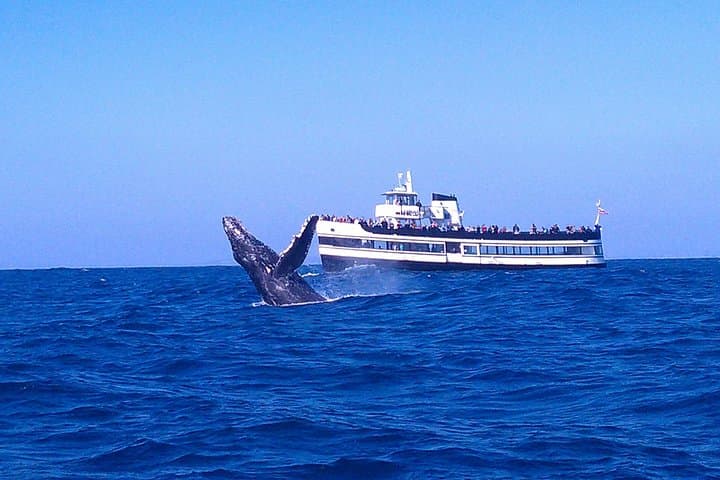
When the whales do choose you, it can be subtle—a broad back rolling through slate water—or it can be cinematic. Sometimes a tail lifts into full frame, water streaming from the trailing edge like spun glass. No one on board pretends they’re blasé, not even the crew. You’ll feel the deck shift as everyone moves in a quiet dance, keeping balance with the boat as it yawns and dips. The ocean nudges, but you learn to read it, flexing your knees to the swell. It’s presence training, and the payoff is a kind of focus that follows you back on land.
Season matters. Winter is the headline act for gray whales. Spring can bring cow-calf pairs lingering nearshore. Late spring into summer, you might chase blue whales—Earth’s largest animal—offshore if conditions deliver; the boat will aim for areas where bait is thick and birds are working. Fall sharpens the light and smooths the sea on calmer days, with common and bottlenose dolphins by the hundreds. Whatever month you pick, remember that wildlife is on its own schedule. That’s part of the magic. No two trips write the same script.
Practical advice carries the day. Arrive early for the best viewing spots. Mid-ship is the most stable place if you’re motion-sensitive; the bow gives you the thrill of speed but catches the wind. Eat a light, non-greasy meal beforehand and bring ginger chews or motion relief if you’re unsure about your sea legs. Listen to the naturalists—they’re your interpreters in a fast-moving theater. And consider booking a morning trip, when winds are typically lighter and seas are kinder.
After you step back onto the dock, the city returns, brisk and easy. But you won’t shake the feeling that the ocean asked you to slow down and watch. The gray whale highway runs whether we show up or not, but stepping out to meet it is an invitation: to learn, to keep distance, to cheer quietly, to let the current do what it does best—push life forward. If you want more context or to plan your day around the seasons, bookmark this <a href="https://app.advcollective.com/local-experts/san-diego-whale-watching-cruise-gray-whales-dolphins-coastal-wildlife" target="_blank">coastal wildlife guide to San Diego whale watching</a>. And when you’re ready, the harbor—and the whales—will be waiting.
As for the skeptics who think a city day can’t hold real wildness, San Diego begs to differ. The Pacific doesn’t perform on cue, but it does keep time. Show up, and it may just roll out a sequence you’ll remember for years: a blow on the horizon, a back like a barn roof, and a fluke that waves once before slipping cleanly into the blue. Book the <a href="https://app.advcollective.com/local-experts/san-diego-whale-watching-cruise-gray-whales-dolphins-coastal-wildlife" target="_blank">San Diego whale watching cruise</a> and let the ocean write you into the story.
Trail wisdom
Small choices, better day.
Arrive Early for the Rail
Boarding early increases your odds of snagging a wind-sheltered spot near the rail with clear sightlines.
Mid-Ship for Stability
If you’re motion-sensitive, stand mid-ship on the lower deck where movement is minimal and the horizon is steady.
Dress for Wind, Not Just Temperature
A windproof layer makes winter outings comfortable, even on sunny days with cool sea breeze.
Listen for the Blow
Sometimes you’ll hear a whale exhale before you see it—use sound to guide your eyes toward the plume.
Local knowledge
Read the place, not just the route.
Watch for native species including Gray whales, Common dolphins.
Keep an eye out for wildlife during the transition between areas and habitats. Respect distance guidelines.
Vessels here follow NOAA marine mammal viewing guidelines; keep noise low, maintain distance, and never feed or attempt to touch wildlife.
Follow the guide's instructions on size limits, ethical handling, and leave-no-trace practices.
Cabrillo National Monument tide pools after your cruise for intertidal life. The Embarcadero’s lesser-known benches near the Maritime Museum for sunset harbor views
Locally recommended viewpoints and quiet spots known best to local operators.
San Diego has been a whale-watching hub for decades, with Point Loma’s 1855 lighthouse guiding ships as the nearshore gray whale migration passed each winter.
Maritime roots and regional tradition shape the waterways and working coasts.
Seasonal guide
Four versions of the same landscape.
Spring
Best forCow-calf gray whale pairs · Clear morning seas
ChallengesVariable winds · Cool marine layer
Late-season grays linger nearshore, occasionally with calves. Expect cooler mornings and a mix of glassy and breezy days.
Summer
Best forBlue and fin whale sightings · Warm deck days
ChallengesAfternoon chop · Haze and glare
Pelagic blues and fins may feed offshore when krill is abundant. Go early to beat wind and pack polarized sunglasses.
Fall
Best forCalmer seas · Big dolphin pods
ChallengesLess predictable whale presence · Heat and sun exposure
Often smooth seas and warm light. Whale sightings vary, but dolphins and seabirds put on a show.
Winter
Best forPeak gray whale migration · Crisp visibility
ChallengesChilly winds · Occasional swell
San Diego’s prime season for reliable gray whale encounters. Dress warm and choose mornings for the steadiest conditions.
Operator details
What the booking data adds.
Included
- ✓All safety equipment and life jackets
- ✓360-degree ocean viewing yacht
- ✓Marine wildlife spotting (whales, dolphins, sea turtles when visible)
- ✓Indoor and Outside seating
- ✓Live guide commentary on marine life and whale migration patterns
Not included
- —We suggest dressing in layers. The temperature and winds can be unpredictable even if it's sunny out.
- —Medication - If you may be prone to seasickness, plan ahead.
- —Snacks
- —Food and Drinks
Good to know
- ✓Infants and small children can ride in a pram or stroller
- ✓Service animals allowed
- ✓Public transportation options are available nearby
- ✓Specialized infant seats are available
- ✓Suitable for all physical fitness levels
- ✓Chances of spotting a whale are exactly the same, whether you choose the morning or afternoon departure. Whales don't wear watches.
- ✓Same goes for the days of the week. Each day has an equal chance of sightings. Whales do not have calendars.
- ✓In the unlikely event that your departure is cancelled due to poor weather conditions, we do our best to contact you in the morning at the phone number you provide. We will reschedule your tour for another day if you like or provide you with a full refund—your choice.
- ✓Guests with wheelchairs can access the vessel and interior main deck. However, the exterior top deck and the restrooms are not ramp accessible.
- ✓No touching the whales. No feeding the whales. No petting the whales. This is whale watching. We watch with our eyes.
- ✓Indoor and Outdoor Seating
- ✓.
Pack with intention
What to bring.
Good to know
Common questions.
December through April is peak gray whale migration, with January–February offering especially consistent sightings close to shore.
Plan the edges
The details that make the day easier.
Gray whales migrate up to 10,000–12,000 miles round-trip each year—one of the longest migrations of any mammal—and pass close to San Diego’s coast during winter.
After your cruise, walk to the Embarcadero for fish tacos at the waterfront, then grab a craft beer in Little Italy’s taprooms. If you want a view with your history, the Maritime Museum’s historic vessels are steps away.
- Closest airport
- San Diego International (SAN), 10–15 minutes to the Embarcadero. Departure: Downtown San Diego waterfront. Driving from Gaslamp Quarter: ~5 minutes. Cell service: Strong in harbor, variable offshore. Permits: None required for passengers.
Respect NOAA viewing guidelines and marine protected areas off Point Loma and La Jolla. Pack out all trash, secure loose items on deck, and never attempt to feed or call wildlife—let encounters be on the animals’ terms.
Explore by topic
Follow the threads.
Keep exploring
Make the story part of the trip.
In four hours you can move from shaded canyon ferns to wind-scoured coastal ridgelines, guided by someone who knows where the light—and the hidden views—live. This private half-day hike on the Monterey Peninsula or Big Sur is compact, curated, and perfect for travelers who want depth without a multiday commitment.
 Related story
Beneath a sky of shifting light, Skaftafell’s ice reads like a map of time. This three-hour guided glacier hike mixes technical instruction with geology and culture: compact, safe, and unforgettable.
 Related story
Lose the city for a few hours without leaving it: this 5-mile, 900-foot-gain Forest Park loop threads old-growth pockets, city viewpoints, and cultural landmarks for a compact taste of Portland’s wild side. Expect moss, roots, and stories.