
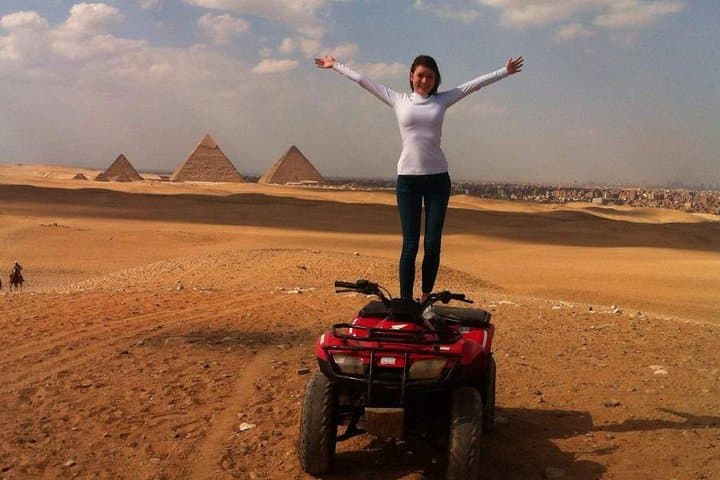
What the day feels like
You feel the desert before you see it: a dry heat that rises off the sand in a slow, shimmering exhale. The quad bike hums under your hands, a small engine translating the flat, patient weight of the plateau into motion. Then the pyramids appear—first a stone shoulder on the skyline, then the geometry of the Great Pyramid sharpening against the late-morning light. It’s a strange kind of intimacy: an adrenaline-whipped approach to monuments built for a different pace of life, where millennia of wind and sun have given the stones a matte, ancient authority.
This is not the museum hush of Cairo’s galleries. It’s an up-close, kinetic encounter with the Giza Plateau: dunes that dare you to test traction, stretches of packed desert that push speed without warning, and a backdrop of one of the world’s oldest and most imposing human achievements. The ATV portion of the tour lasts a few hours within a longer five-hour window—enough time to feel the blur of sand, to stop for breath and pictures, and to absorb the uncanny proximity of colossal tombs that have weathered 4,500 years.
The Giza pyramids—Khufu, Khafre and Menkaure—are not simply archaeological wonders; they are anchors of human history. Built during Egypt’s Fourth Dynasty around 2600–2500 BCE, these monuments were engineered with astronomical precision and Bouyed by a civilization’s resources and rituals. The Great Pyramid of Khufu is the only surviving structure of the Seven Wonders of the Ancient World. Riding around them on an ATV means layering modern speed onto an ancient landscape—two timelines overlapping in the desert heat.
Geologically, the plateau is limestone and wind-sculpted sand, a mostly flat expanse interrupted by the pyramids’ sheer faces and the intermittent ridges of low dunes. The desert here doesn’t behave like deep, shifting dunes on the Sahara’s remote fringes; much of the area is compacted, with stretches of looser sand where ATVs can kick up ribbons of grit. Local guides know the lines to ride—routes that avoid archaeological zones and protect fragile strata—and the tour operators flagged on this experience typically include helmets, instruction and a safety briefing before you throttle forward.
Culturally, the trip is part performance and part negotiation. Camels and camel-men work the tourist spaces around the plateau; rooftop cafés serve tea and telescope views of the monuments; vendors offer papyrus and mini-replicas. There’s a give-and-take here—an economy built on the pyramids’ gravity. A good guide will orient you to appropriate behavior: don’t touch or climb the monuments (it’s illegal and damaging), take care to leave no trash, and be respectful of local customs when photographing people.
Practicalities matter as much as the spectacle. The full experience runs about five hours, with roughly one to two hours on ATVs depending on the route and stops. Expect some start-and-stop tempo: helmet fit and a short safety course, a ride across the plateau toward vantage points, photograph breaks, and a guided walk near the base of the pyramids where permitted. Weather is the dominant variable. Spring and fall bring temperate days and light winds; summer can be intensely hot—plan early morning start times—and winter nights cool off sharply.
What to know before you go: bring a full water bottle and sip often; dust and sand are the other constants—close-laced shoes, UV protection and a lightweight scarf or buff will make a big difference. If you’re new to quads, don’t overcommit to speed; the machines are forgiving but the terrain can surprise you. For photographers, golden hour light scrubs the stone into dramatic contrast, but be mindful of blowing sand—protect lenses and sensor housings.
Beyond the ride, there are low-key pleasures: the Solar Boat Museum near the Great Pyramid houses an intact ancient vessel once intended for Khufu’s afterlife; rooftop cafés in the nearby Dahshur and Giza neighborhoods offer unexpectedly civilized tea breaks with close-up pyramid panoramas; and a short drive into Cairo opens a warren of markets, museums and eateries where the city’s culinary pride—koshari, ful medames and freshly baked baladi bread—gives you a real taste of place.
Safety is straightforward but non-negotiable: helmets on, a baseline of mechanical respect for the vehicle, and adherence to your guide’s route to avoid protected or unstable areas. Operators that advertise ‘skip-the-line’ and private-tour options often handle logistics—tickets, permits and check-in—so you spend more time riding and less time sorting entry.
This is a trip for people who like motion and perspective: the sensory contrast of speed against stone, the odd vertigo of modern recreation at the threshold of ancient mortality. It’s not a pilgrim’s close-reading of hieroglyphs, nor is it the deep archaeology of a research dig; it’s a visceral, accessible way to experience one of the planet’s most storied sites with an adventurous edge. If you go, do it with curiosity and restraint—enjoy the rush, but let the pyramids keep their composure.
Trail wisdom
Small choices, better day.
Hydrate Before and During
Bring at least 1–1.5 liters of water and refill when available—desert heat dehydrates quickly even on short rides.
Protect Against Sand
Use a neck gaiter or scarf and keep camera gear covered; sand will infiltrate zippers and lenses fast.
Wear Closed-Toe Shoes
Sturdy sneakers or light hiking shoes protect feet from heat and provide needed grip on ATVs.
Follow Your Guide’s Lines
Stick to designated routes to avoid fragile archaeological areas and minimize impact.
Local knowledge
Read the place, not just the route.
Watch for native species including Desert lizards and skinks, Domesticated camels and their handlers around tourist zones.
Keep an eye out for wildlife during the transition between areas and habitats. Respect distance guidelines.
Stick to marked routes and avoid driving over archaeological features; support licensed local guides who follow site-protection rules.
Follow the guide's instructions on size limits, ethical handling, and leave-no-trace practices.
Solar Boat Museum (near the Great Pyramid). Rooftop cafés in Giza offering intimate pyramid views at sunset
Locally recommended viewpoints and quiet spots known best to local operators.
The three main Giza pyramids date to Egypt's Fourth Dynasty (ca. 2600–2500 BCE); the Great Pyramid was built for Pharaoh Khufu and remains the only surviving Seven Wonder.
Maritime roots and regional tradition shape the waterways and working coasts.
Seasonal guide
Four versions of the same landscape.
Spring
Best forMild temperatures · Clear skies for photos
ChallengesOccasional wind and sand gusts · Busy tourist season
Spring offers comfortable riding temperatures and generally stable conditions—ideal for photographers and first-time riders.
Summer
Best forSunrise rides · Long daylight hours
ChallengesIntense heat · Risk of midday sunstroke
Summer is hot; plan early-morning tours and bring extra water and sun protection.
Fall
Best forCooler daytime temps · Golden-hour lighting
ChallengesOccasional wind storms · Higher visitor numbers
Fall is perhaps the best overall time—cooler days, crisp light, and comfortable riding weather.
Winter
Best forClear skies · Quieter tourism
ChallengesChilly mornings and evenings · Cool desert nights
Winter days can be pleasant but mornings and nights are cool—layer up and expect brisk starts.
Operator details
What the booking data adds.
Included
- ✓All Transfers by Private A/C latest Model Vehicle
- ✓1- Hour ATV
- ✓Audio guide
- ✓Bottle of water
Not included
- —Personal Items
- —Tipping
- —any entry fees
Good to know
- ✓Public transportation options are available nearby
- ✓Specialized infant seats are available
- ✓Suitable for all physical fitness levels
- ✓Entry fees includes basic area only
Pack with intention
What to bring.
Good to know
Common questions.
The full booking is five hours; typically 1–2 hours are spent on the ATV portion depending on the route and stops.
Plan the edges
The details that make the day easier.
The Great Pyramid of Giza is the only surviving structure of the Seven Wonders of the Ancient World.
After the ride, head into Giza for koshari or a rooftop tea with a pyramid view; nearby Cairo neighborhoods like Zamalek offer relaxed cafés, Nile-side promenades and a lively dinner scene to round out the day.
- Closest airport
- Cairo International Airport (CAI); Driving time: ~40–60 minutes to Giza Plateau depending on traffic; Meeting point: operator checkpoint near Giza Plateau main entrance (operator provides exact location); Cell service: generally available but can be spotty near dunes; Permits: entrance fees to Giza Plateau apply—operator often handles tickets and ‘skip-the-line’ access.
This is a sensitive archaeological landscape—stay on designated routes, avoid littering, and support licensed local guides to minimize impact.
Explore by topic
Follow the threads.
Keep exploring
Make the story part of the trip.
In four hours you can move from shaded canyon ferns to wind-scoured coastal ridgelines, guided by someone who knows where the light—and the hidden views—live. This private half-day hike on the Monterey Peninsula or Big Sur is compact, curated, and perfect for travelers who want depth without a multiday commitment.
 Related story
Beneath a sky of shifting light, Skaftafell’s ice reads like a map of time. This three-hour guided glacier hike mixes technical instruction with geology and culture: compact, safe, and unforgettable.
 Related story
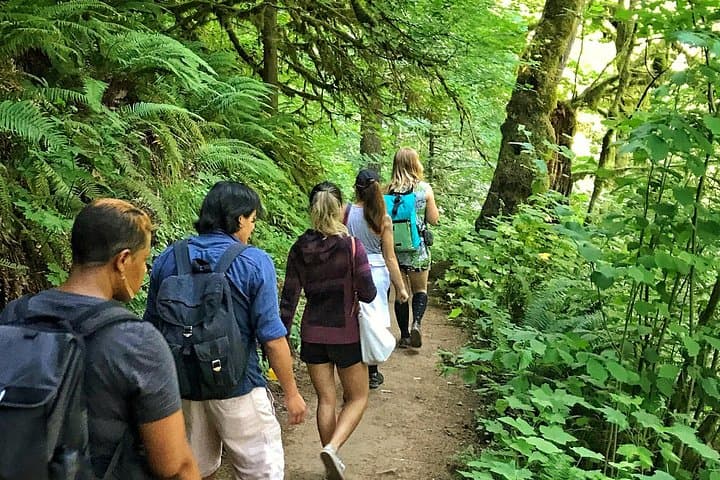
Lose the city for a few hours without leaving it: this 5-mile, 900-foot-gain Forest Park loop threads old-growth pockets, city viewpoints, and cultural landmarks for a compact taste of Portland’s wild side. Expect moss, roots, and stories.