
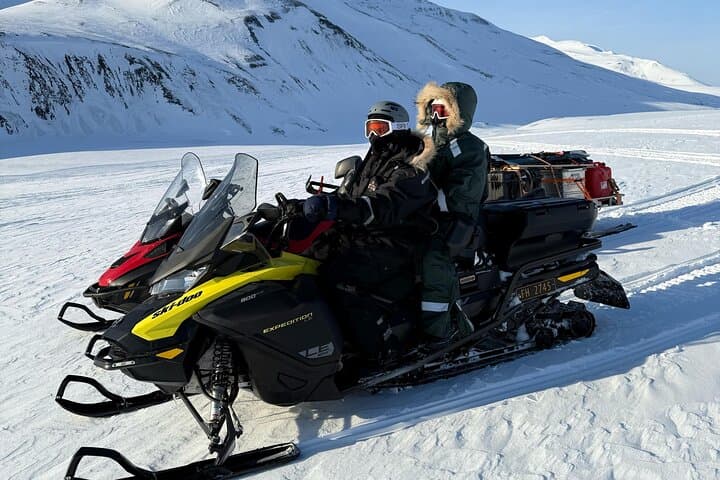
What the day feels like
The engine’s first breath snaps the silence of the Arctic plain and, for an instant, you feel like you’ve been handed an impossible map of white and sky. We launch from Longyearbyen, the northernmost settlement with its weathered wooden houses clinging to the hillside, and the trail unfurls: wind-sculpted drifts, low-lying tundra, the distant teeth of glaciated ridgelines. Snowmobiling here is equal parts speed and reverence. The machines answer willingly beneath you, a steady rumble that becomes rhythm—throat-deep and constant—while the landscape alternates between intimate pockets of spruce and birch and large, severe bowls of ice that look ancient enough to withhold secrets.
Svalbard’s ice is a storyteller. The cave you enter an hour from town feels like a sculptor’s studio—walls of saturated blue, thin fissures that glow when you bring a headlamp closer, and layers of compressed ice that have been patiently squeezing out every but the bluest light. That color is physics: dense glacial ice absorbs longer red wavelengths and lets the shorter blue ones pass, so the deeper, older ice appears jewel-toned. Your guide will pause and explain how glaciers have carved these basins over millennia, how permafrost holds a map of past climates, and how every footprint matters in this fragile system.
The human history of Svalbard is brief and bracing. Longyearbyen grew from mining camps into a scientific and logistical hub under the Svalbard Treaty of 1920, and there’s a peculiar juxtaposition between frontier industry and international stewardship. The town’s Global Seed Vault—buried in a mountain nearby—captures that tension: a vault that preserves biodiversity as the climate that shaped the surrounding glaciers shifts. On the ride out, you’ll see markers of a mining past—ruined machinery, rusted rails—then the vast, silent tundra where reindeer watch like wary ghosts and Arctic foxes slip across the snow.
This tour is kinetic but oddly contemplative. Snowmobiles thrust you into places that would otherwise require days of glacier travel; they act as both vehicle and translator, allowing the terrain to be approached at a pace that reveals, rather than flattens, detail. Guides are trained to read the weather and the ice; they know when to throttle back and when to push, and they carry the gear to keep you safe—thermal suits, helmets, radios, and avalanche probes in the vehicle’s kit. Safety is about more than equipment: it’s about respect for the Arctic’s volatility and for wildlife. Polar bears remain a real possibility outside the settlement, which is why going with a licensed guide is not only recommended—it’s often required.
Why go? Because the region compresses extremes into a four-hour window: a compact lesson in glacial science, a hands-on encounter with polar landscapes, and a chance to be physically present in one of Earth’s coldest theaters. For photography, the payoff is immediate: reflective blue ice, stark black rock ridges, and the low sun in winter that flattens and gilds features into cinematic contrast. For wildlife fans, reindeer often dot the ridgelines; sightings of Arctic foxes are quieter and more fleeting. And for travelers who want a visceral sense of place—air cold enough to sting the lungs, tracks that disappear behind you, a guide’s soft voice narrating—this tour delivers.
Practical edge: the tour is four hours total and departs from Longyearbyen; all safety gear and thermal suits are provided, and the operators give a thorough briefing before you depart. Dress in warm layers beneath the provided suit, bring moisture-wicking base layers, and protect exposed skin from windburn. Cameras need fast-shutter settings to stop motion and a stable place on the machine or a chest harness to reduce vibration blur. Time your trip for late winter (February–April) when the light is generous and the ice caves are stable; avoid the high-sun summer months when the caves can become unstable and snowmobile access is limited.
There’s a practical intimacy to this kind of travel: you’re moving through a landscape that doesn’t do small mistakes well. Leave no trace, keep a distance from wildlife, and listen to your guide. The region’s fragility—tectonic, glacial, atmospheric—warrants a quiet curiosity. Come prepared, and Svalbard will tell you something essential about scale, time, and the thinness of the line between human thrill and environmental stewardship.
Trail wisdom
Small choices, better day.
Dress in Warm Layers
Wear moisture-wicking base layers under the provided thermal suit and bring an insulating mid-layer—cotton is a no-go.
Protect Your Face
Use a balaclava and windproof goggles to prevent windburn and snow glare during high-speed sections.
Secure Your Camera
Mount cameras to a chest harness or use a strap—handheld shots blur on a snowmobile ride.
Heed Guide Instructions
Guides manage route safety for weather, ice, and wildlife; follow speed and spacing guidance at all times.
Local knowledge
Read the place, not just the route.
Watch for native species including Svalbard reindeer, Arctic fox.
Keep an eye out for wildlife during the transition between areas and habitats. Respect distance guidelines.
The High Arctic environment is fragile—avoid trampling vegetation, keep to guided routes outside settlements, and never disturb or feed wildlife; many areas are protected under Norwegian regulations.
Follow the guide's instructions on size limits, ethical handling, and leave-no-trace practices.
Veins of old coal infrastructure near Longyearbyen that tell the town’s mining story. A short detour to a ridge for panoramic views of the Adventfjorden at dusk
Locally recommended viewpoints and quiet spots known best to local operators.
Longyearbyen began as a mining outpost and evolved under the 1920 Svalbard Treaty into an international community; remnants of mining dot the landscape between town and glacier.
Maritime roots and regional tradition shape the waterways and working coasts.
Seasonal guide
Four versions of the same landscape.
Spring
Best forStable snowpack · Blue ice visibility · Longer daylight
ChallengesVariable temperatures · Thawing surfaces in late spring
Late winter into spring (Feb–Apr) is prime: firm snow, dramatic light, and stable ice caves, though warming can change conditions quickly.
Summer
Best forMidnight sun landscapes · Boat-based excursions · Wildlife on shorelines
ChallengesSnowmobile access limited · Ice caves unstable or inaccessible
Summer transforms Svalbard into tundra and open water; snowmobile tours and ice caves are typically not available.
Fall
Best forNorthern lights visibility · Quieter travel windows · Wildlife movement
ChallengesShortening days · Early snow or storms
Fall offers crisp air and aurora possibilities, but early storms can close routes and shorten excursions.
Winter
Best forSnowmobiling · Ice cave exploration · Aurora viewing
ChallengesExtreme cold · Limited daylight earlier in season
Deep winter provides classic Arctic conditions for sledding and blue ice, with shorter days earlier and beautiful low-angle light later in the season.
Operator details
What the booking data adds.
Included
- ✓Search and Rescue insurance
- ✓Hot drinks are served on the tour
- ✓Head lamps
- ✓Use of snowmobiles, fuel and snowmobile suits
- ✓Pick up from hotels
Not included
- —Private travel insurance
Good to know
- ✓Public transportation options are available nearby
- ✓Not recommended for travelers with spinal injuries
- ✓Travelers should have at least a moderate level of physical fitness
Pack with intention
What to bring.
Good to know
Common questions.
No—guides provide instruction and a safety briefing; tours accommodate beginners with tandem options and paced routes.
Plan the edges
The details that make the day easier.
Longyearbyen hosts the Global Seed Vault—a secure repository of the world’s crop seeds—located about 10 kilometers outside town, reflecting Svalbard’s role in global conservation.
After the ride, warm up with fresh Arctic char or reindeer at local favorites like Huset or Kroa; drop into Svalbar for a casual beer and conversation with long-time residents and researchers.
- Closest airport
- Longyearbyen Airport (LYR). Driving
- transfer time
- 10–30 minutes from town center depending on staging. Cell service: reliable in Longyearbyen, limited outside settlement. Permits: Guided travel outside town is strongly recommended
Svalbard’s ecosystems are highly sensitive—stay on designated routes, pack out all waste, avoid disturbing wildlife, and choose operators that follow Leave No Trace principles and local environmental guidelines.
Explore by topic
Follow the threads.
Keep exploring
Make the story part of the trip.
In four hours you can move from shaded canyon ferns to wind-scoured coastal ridgelines, guided by someone who knows where the light—and the hidden views—live. This private half-day hike on the Monterey Peninsula or Big Sur is compact, curated, and perfect for travelers who want depth without a multiday commitment.
 Related story
Beneath a sky of shifting light, Skaftafell’s ice reads like a map of time. This three-hour guided glacier hike mixes technical instruction with geology and culture: compact, safe, and unforgettable.
 Related story
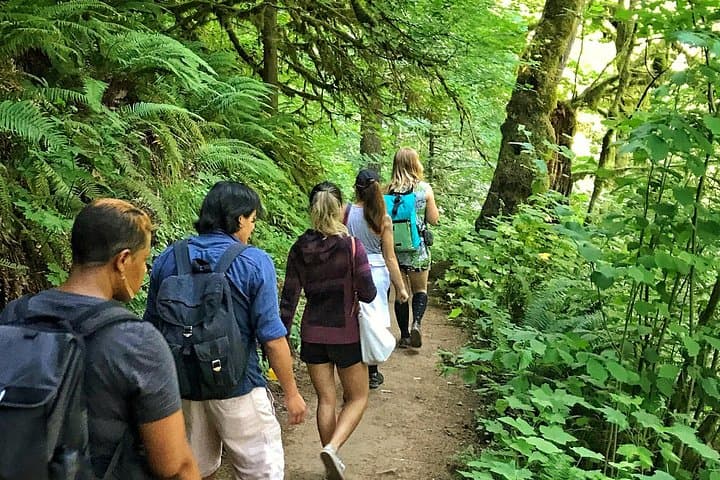
Lose the city for a few hours without leaving it: this 5-mile, 900-foot-gain Forest Park loop threads old-growth pockets, city viewpoints, and cultural landmarks for a compact taste of Portland’s wild side. Expect moss, roots, and stories.