
What the day feels like
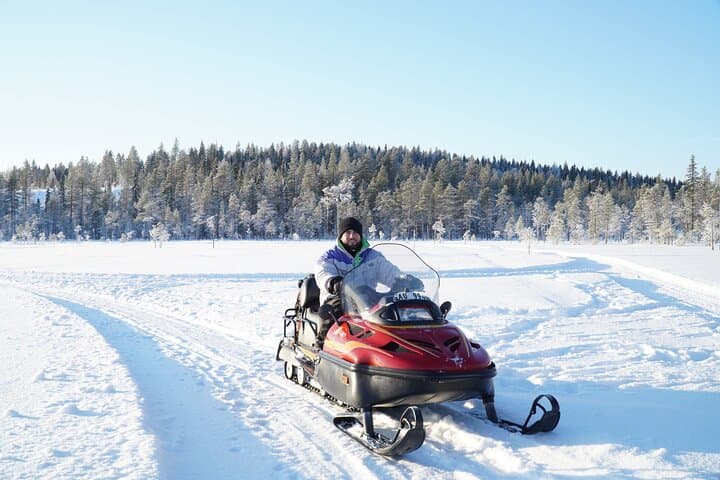
The machines wake you before the sun does: a soft, mechanical rumble that threads through a cluster of wooden lodges and mixes with the metallic bite of -10°C air. You pull on an insulated suit and a helmet, your breath fogging the visor as an experienced guide hands you a pair of gloves and a quick set of instructions. For the next four-and-a-half hours you’ll be sitting astride a snowmobile, carving tracks across a landscape that seems designed to humble and reward in equal measure — frozen lakes like polished mirrors, stands of spruce leaning low under snow, and the distant silhouette of fells that hold their own ancient stillness.
This is northern Sweden in winter: open, bright, and startlingly quiet. A snowmobile tour here is less about adrenaline than about access — these machines are the country roads of Lapland, the way locals and Sámi reindeer herders negotiate long winters. You’ll move faster than on skis, but slower than on a plane; the pace lets you read the land, spot fresh tracks of arctic fox or ptarmigan, and stop at a river bend where the wind has sculpted a low gallery of snow preventing any noise but the crackle of your own heated visor.
History and geology press close at once. The bedrock beneath your skis-turned-track is part of the Fennoscandian Shield, one of Europe’s oldest geological formations. Over millennia, glacial ice ground it smooth and left broad basins that now freeze solid each winter. On the human scale, these are Sámi lands — places where reindeer grazing patterns and sacred sites connect people to seasonal cycles. Modern mining and towns like Kiruna brought industry and infrastructure, but the wilderness roads are still the routes of centuries of movement.
This particular outing runs roughly 4.5 hours (tour duration is 270 minutes) and is family-friendly while remaining satisfyingly remote. Expect a loop that uses compacted machine trails and open tundra crossings; elevation gains are modest, but wind can make any flat stretch feel mountainous. Guides give a short safety briefing and basic handling tips before you set off, so no previous snowmobile experience is required — but an appetite for cold and a sense of adventure help.
Practicalities matter. Dress in layers focused on warmth and windproofing; bring a full-face helmet and good gloves. Fuel and machine maintenance are handled by the operator, but you should have a compact daypack with water, a spare battery for your camera, and snacks because cold increases caloric needs. The best months for reliable snow cover and long, stable days are late February into March — when daylight comes back in force and there’s still decent snow for trail shaping.
Why do this instead of staying cozy in an ice hotel or watching the aurora from a heated lavvu? Because a snowmobile tour delivers the landscape itself, unmediated. You are not gazing from a lookout; you are moving through the air and light, touching the bark of trees as you thread a stand of birch, crossing a frozen lake that dares you with a clean, white expanse. Photography opportunities are abundant: the low winter sun throws detail into the snow and creates blue shadows that look almost unreal against the pale pines.
Safety and sustainability are folded into the experience. Operators typically run guided groups to keep noise and fuel use consolidated on established routes — a small step toward minimizing impact on sensitive winter habitats and migratory routes. Respect local signage, avoid disturbing reindeer herding areas, and follow the guide’s instructions about stopping zones and wildlife encounters.
If you’re planning this trip, consider pairing it with other local highlights. Spend a night in Kiruna to visit the Icehotel in Jukkasjärvi, sample reindeer stew, and learn a few phrases in Swedish or Sámi to show respect. For those chasing the aurora, timing your visit later in the season increases the odds of clear skies paired with long nights. Want a deeper dive? Read more about exploring northern Sweden by snowmobile to plan routes, gear, and how to connect with local guides: <a href="https://app.advcollective.com/local-experts/exploring-northern-sweden-by-snowmobile">Exploring Northern Sweden by Snowmobile</a>.
This is a trip for travelers who want contact with the Arctic without the logistical overhead of a multi-day backcountry ski. It’s a machine-assisted way to travel responsibly through fragile terrain, and it gives you an immediate sense of scale — the way the land spreads, uninterrupted, under a massive sky. In the end, you’ll remember the hush more than the engine: the brief silence when the group stops and the guide points out a distant ridge or a slow-moving cloud, and the sound that follows when the machines start again and you continue forward, pushing into bright, cold country.
Practical snapshot: the outing is easy to book with instant confirmation and private-tour options are available. Tours often include instruction, thermal overalls, helmets, and hot drinks; confirm details at booking and ask about group size if you prefer a quieter ride. For hands-on travelers this is one of the most accessible ways to touch Lapland’s wild core — to feel the wind as both a force and a companion, and to come away with a sharper sense of how people have lived with Arctic winters for generations. Learn more and secure a guide at <a href="https://app.advcollective.com/local-experts/exploring-northern-sweden-by-snowmobile">Exploring Northern Sweden by Snowmobile</a>.
Trail wisdom
Small choices, better day.
Layer for warmth
Start with a moisture-wicking base, add insulating layers, and finish with a windproof outer shell; gloves and a balaclava make long stops comfortable.
Bring spare batteries
Cold drains batteries quickly for cameras and phones — keep spares warm inside your clothing until needed.
Listen to your guide
Guides know thin-ice zones and reindeer corridors; follow instructions for stopping points and speed.
Book morning light
Choose earlier departures for crisp air and better light for photography; afternoons can be windier.
Local knowledge
Read the place, not just the route.
Watch for native species including Reindeer, Arctic fox (tracks commonly seen).
Keep an eye out for wildlife during the transition between areas and habitats. Respect distance guidelines.
Stay on marked trails and join guided tours that consolidate machine use to minimize disturbance to wintering wildlife and reindeer grazing areas.
Follow the guide's instructions on size limits, ethical handling, and leave-no-trace practices.
Drive a short distance to Jukkasjärvi to visit the Icehotel (seasonal) and its artisan workshops. Take a quiet coffee break at a local café in Kiruna to meet miners and Sámi artisans
Locally recommended viewpoints and quiet spots known best to local operators.
Kiruna and the surrounding region are within traditional Sámi lands; the town’s development accelerated with iron mining in the early 20th century.
Maritime roots and regional tradition shape the waterways and working coasts.
Seasonal guide
Four versions of the same landscape.
Spring
Best forLonger daylight · Stable snowpack
ChallengesVariable melt-freeze cycles · Slushy lakes late-season
Late winter into early spring (Feb–Mar) offers long days and firm snow, ideal for smoother trails and clearer visibility.
Summer
Best forMidnight sun alternatives (not applicable) · Hiking after snowmelt
ChallengesNo snow — snowmobiles unavailable · Wet terrain
Summer is not suitable for snowmobiling here; operators switch to ATV or hiking experiences as snow melts.
Fall
Best forAurora season onset · Crisp clear days early fall
ChallengesInconsistent early snow · Cooling temperatures
Autumn can be transitionary; early cold snaps may allow limited snowmobile access, but check local operators.
Winter
Best forSnowmobiling · Aurora viewing · Winter landscape photography
ChallengesExtreme cold · Short daylight in deep winter
Winter (Dec–Mar) is peak season: reliable snow, accessible trails, and a high chance of aurora displays on clear nights.
Operator details
What the booking data adds.
Included
- ✓Borrow winter cloths if needed
- ✓Enjoy a lovely warm meal around the fire in the grillhut
- ✓Your guide is licensed and certified
- ✓Coffee and/or Tea
Not included
- —Transfer to and from us, contact us for options
Good to know
- ✓Public transportation options are available nearby
- ✓Infants are required to sit on an adult’s lap
- ✓Suitable for all physical fitness levels
- ✓The remaining 2,5 hours will be on getting ready (putting on snow clothes etc) Getting the information about the snowmobile Food and drinks after the tour in the grillhut.
Pack with intention
What to bring.
Good to know
Common questions.
No — most tours include a brief instruction session and pair you with a guide or an experienced buddy if you’re new.
Plan the edges
The details that make the day easier.
Kiruna is Sweden’s northernmost city and is currently undergoing a large-scale relocation due to expanding iron ore mining beneath the town.
After the ride, warm up with a plate of reindeer stew or smoked char, visit the Icehotel in Jukkasjärvi, and try a locally brewed beer in Kiruna’s casual pubs — great places to swap stories with guides and locals.
- Closest airport
- Kiruna Airport (KRN)
- Typical drive to trailhead
- 20–60 km
- Cell service
- intermittent in remote areas
- Permits
- none typically required for guided tours
Choose operators who use consolidated routes and brief guests on wildlife-sensitive areas; avoid chasing wildlife with machines and pack out all trash.
Explore by topic
Follow the threads.
Keep exploring
Make the story part of the trip.
Set out from Bass Harbor for a private, customizable day on Blue Hill Bay — lighthouses, puffins, seals, and the chance to feel Acadia from the water. Small groups, local captains, unforgettable views.
In four hours you can move from shaded canyon ferns to wind-scoured coastal ridgelines, guided by someone who knows where the light—and the hidden views—live. This private half-day hike on the Monterey Peninsula or Big Sur is compact, curated, and perfect for travelers who want depth without a multiday commitment.
 Related story
Beneath a sky of shifting light, Skaftafell’s ice reads like a map of time. This three-hour guided glacier hike mixes technical instruction with geology and culture: compact, safe, and unforgettable.