
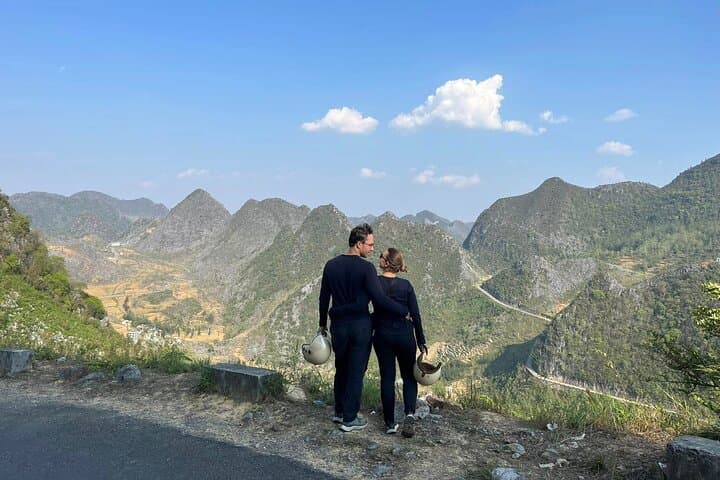
What the day feels like
The road climbs with a deliberate appetite. Switchback after switchback peels away the lowland haze and reveals a lattice of limestone ridges, folded and ridged like the spine of the earth itself. Motorbikes and SUVs become temporary translators of the landscape — the engine’s hum a steady narration as the valley opens, closes, and opens again. On the second morning, you stand at Ma Pi Leng pass and the Nho Quế River dares you to look down: a ribbon of jade threading through a gorge that feels older than memory.
This is the Ha Giang Loop, a compressed sermon on northern Vietnam’s highlands delivered in two days. The organized tour format — a local driver trained on mountain roads and an English-speaking guide, capped at 15 people — removes the logistics friction so you can focus on what matters: reading terraces, meeting ethnic minority communities, and riding roads that push your sense of smallness in the best way.
The core itinerary threads Ha Giang City, the Dong Van Plateau, Meo Vac, and Ma Pi Leng. In two days (roughly 48 hours on the saddle or in the van), you move through a landscape shaped by karst geology and hundreds of generations of farming: terraced fields and buckwheat patches turn seasonal; villages cluster in hollows; stone walls and old forts watch the passes. The Dong Van Karst Plateau — an otherworldly spread of limestone towers and plateaus — is recognized as a UNESCO Global Geopark, and that designation is clear when you see the sheer, sculpted cliffs rising from braided valleys.
Culturally, Ha Giang is stitched from many threads. Hmong, Dao, Tay, and Lo Lo communities keep distinct textile traditions and architecture. Markets are social theaters: color, barter, and shared cups of corn wine. Accommodations on this tour typically mean local guesthouses or homestays, where the rhythm of the evening is simple — a shared meal, a stove-warmed room, and a chance to hear stories of land and weather from hosts who have carved lives from stone.
Geologically, the loop is a lesson in time: the limestone formations here are ancient, and the steep gorges and passes — Ma Pi Leng among them — are routes the mountains offered late and reluctantly. Ma Pi Leng itself sits at about 1,200 meters, and the drop to the Nho Quế river is dramatic enough to make the view feel like a dare.
Why do travelers still come here, even though the roads are long and the comforts are basic? Because the route rewards attention. There are sweeping viewpoints with no fences and little crowding; there are roadside vendors selling sticky rice and steaming bowls of local noodle soups; there are moments where the road narrows and the world reduces to the sound of your wheels and a wind that seems intent on keeping you awake. The loop is both an easy spectacle and a practical challenge: scenery that is beautiful without being staged, and driving that is technical enough to demand focus.
Practical edges: this two-day experience covers roughly 300–350 kilometers across mountain roads. Expect long stretches of riding with patches of rough pavement and occasional gravel. Weather is the primary variable — clear autumn days deliver the best visibility and cool temperatures, while winter fog and summer rain will slow you down and make the ride slick. The tour is typically available with transport from Hanoi by sleeper bus on request; expect a 6–8 hour transfer by road if you don’t take the overnight bus.
Safety and preparation are not dramatic but necessary. Bring a layered shell, good gloves, and a helmet that fits. Hydrate and pace yourself; the altitude changes are steady rather than steep, but the days are long. If you’re on a motorbike for the full loop, be honest about your skills — the driver-led vehicle option exists for a reason. A local, experienced driver will handle the trickiest stretches and let you relax into the views.
Beyond the obvious postcard scenes, the Ha Giang Loop rewards curiosity. Stop at small markets in Quan Ba or Yen Minh; walk a side trail to a limestone outcrop; accept a cup of corn wine and reciprocate with a conversation. Travel here with humility — the communities are living, not staged for tourists — and you’ll be treated accordingly.
If you want a compact, intense taste of northern Vietnam’s highlands, two days on the Ha Giang Loop is an efficient, memorable way to do it. It’s not light on riding or on landscape, but it’s organized enough to be accessible. The payoff is immediate: cliffs that feel close enough to reach, passes that pull the air thin and clean, and a mosaic of human life held in the folds of mountains.
Practical snapshot: two full days, guided local driver, small-group format (max 15), roughly $115 USD starting price, includes core transport and local guiding. Bring patience, curiosity, and a willingness to trade the predictable comforts of a city for something quieter and more elemental. The road will ask you to slow down; it’s best to oblige.
Trail wisdom
Small choices, better day.
Ride With a Local Driver
If you’re not an experienced mountain rider, choose the passenger option—local drivers know the narrow switchbacks and unpredictable truck traffic.
Layer for Variable Weather
Temperatures swing between sun, wind, and fog; a breathable waterproof shell and warm mid-layer keep you comfortable on the pass.
Cash for Markets and Snacks
ATMs are sparse; bring Vietnamese dong for roadside food, small purchases, and homestay tips.
Leave Time for Side Stops
Plan buffer time—unexpected viewpoints and village markets are the trip’s highlights, not interruptions.
Local knowledge
Read the place, not just the route.
Watch for native species including Himalayan shortwing (bird species), Occasional langurs in high cliffs (rare).
Keep an eye out for wildlife during the transition between areas and habitats. Respect distance guidelines.
The area is part of the Dong Van Karst Plateau Geopark; travel with respect—avoid littering, keep to roads and trails, and support local homestays rather than large, disruptive developments.
Follow the guide's instructions on size limits, ethical handling, and leave-no-trace practices.
Viewpoint above the Nho Quế gorge (less crowded mid-morning). Small markets in Yen Minh — best for textiles and local snacks
Locally recommended viewpoints and quiet spots known best to local operators.
The Dong Van Karst Plateau has been a crossroads of ethnic groups for centuries; its strategic position along high passes shaped local trade and cultural exchange.
Maritime roots and regional tradition shape the waterways and working coasts.
Seasonal guide
Four versions of the same landscape.
Spring
Best forBlooming terraced fields · Cool mornings for riding · Quieter trails
ChallengesOccasional rain · Patchy mud on secondary roads
Spring brings soft green terraces and cool, pleasant riding temperatures, though late-season rains can make some unpaved sections slushy.
Summer
Best forLush landscapes · Off-peak travel for fewer tourists · Warm daytime temperatures
ChallengesHeavy rain and flash floods · Fog and low visibility at times
Summer is green and dramatic, but frequent afternoon rainstorms can slow progress and make gravel sections slippery.
Fall
Best forClear skies and visibility · Buckwheat flowers (Oct–Nov) · Crisp, cool weather
ChallengesCool nights · Higher demand during peak months
Autumn is the ideal window—stable weather and crisp air reveal the full drama of the karst plateau and buckwheat blooms.
Winter
Best forDramatic low-cloud scenes · Fewer tourists · Crisp, sharp light for photography
ChallengesCold temperatures at altitude · Fog and occasional icy patches
Winter is quiet and visually striking, but come prepared for cold mornings, patchy fog, and shorter daylight hours.
Operator details
What the booking data adds.
Included
- ✓Experienced english speaking guide
- ✓Lunch
- ✓Dinner
- ✓Breakfast
- ✓New motorbike tour with gas, helmet
Not included
- —Beverages, travel insurance & tax, personal expense, tips
- —Private room: 15 USD/person
- —Holiday surcharge
Good to know
- ✓Not recommended for travelers with spinal injuries
- ✓Not recommended for pregnant travelers
- ✓Not recommended for travelers with poor cardiovascular health
- ✓Suitable for all physical fitness levels
- ✓We can accommodate dietary needs such as vegetarian, vegan, gluten-free, etc. If you have dietary requirements. Please kindly indicate it to the special requirements at the time of booking.
Pack with intention
What to bring.
Good to know
Common questions.
No—most tours provide passenger seating in vans or accompany you with local drivers; choose the passenger option if you’re not confident riding mountain roads.
Plan the edges
The details that make the day easier.
The Dong Van Karst Plateau was designated a UNESCO Global Geopark in 2010, recognizing its unique limestone formations and geological heritage.
After a day on the road, head to Dong Van town for grilled mountain pork or a bowl of local noodle soup; try ‘thang co’ (a traditional Hmong stew) if offered, sip corn wine with hosts, and stay in a homestay to hear local stories and enjoy home-cooked meals.
- Closest major airport
- Noi Bai International Airport (Hanoi). Typical transfer: 6–8 hours by road or overnight sleeper bus to Ha Giang City. Primary start point
- trailhead
- Ha Giang City. Driving distance from Hanoi: ~300–320 km. Cell service: Patchy outside towns. Permits: None required for tourists.
The loop passes through a UNESCO Global Geopark—pack out trash, avoid single-use plastics when possible, and prioritize locally owned homestays and vendors to support community economies.
Explore by topic
Follow the threads.
Keep exploring
Make the story part of the trip.
Set out from Bass Harbor for a private, customizable day on Blue Hill Bay — lighthouses, puffins, seals, and the chance to feel Acadia from the water. Small groups, local captains, unforgettable views.
In four hours you can move from shaded canyon ferns to wind-scoured coastal ridgelines, guided by someone who knows where the light—and the hidden views—live. This private half-day hike on the Monterey Peninsula or Big Sur is compact, curated, and perfect for travelers who want depth without a multiday commitment.
 Related story
Beneath a sky of shifting light, Skaftafell’s ice reads like a map of time. This three-hour guided glacier hike mixes technical instruction with geology and culture: compact, safe, and unforgettable.