
What the day feels like
You leave Phuket’s tourist bustle the way you leave a party—slow, reluctant, but eager for the road to open. The bus skims across the Sarasin Bridge, the island shrinking behind you, then threads quieter highways through rubber plantations and villages where laundry swings like flags across wooden porches. After an hour or so the landscape changes from coastal scrub to a thicker, greener kind of quiet: the forested hills of Tone Pariwat. The tour’s name—Ride & Raft—promises two very different ways to meet the place. One is low and steady, tires spinning over red-dusted tracks; the other is fast and capricious, an oarful of water and a chorus of splashes.
By late morning you’re at a small station tucked into the hills. Guides in neon safety vests fit helmets with calm efficiency. A songteow—an open-sided local truck—promises a quick, bouncy ride deeper into shaded tracks; the jungle closes in and the air cools. The ATVs are basic but well maintained, enough machine to feel purposeful without needing a mechanic’s temperament. Trails wind over ridgelines, through stands of dipterocarp and teak, and past limestone outcrops that fragment the sky. The sound is primarily the tires and the wind; occasionally a bird—bright, unafraid—declares itself from the canopy.
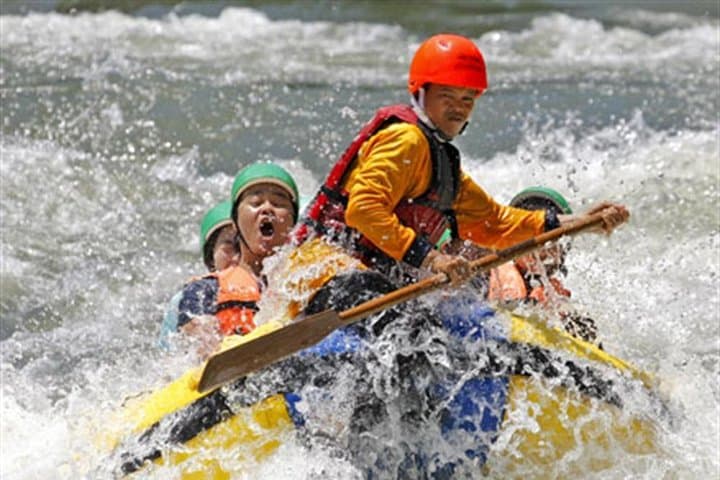
The day is arranged like a compact introduction to Phang Nga’s backcountry: an off-road section that lets you bank a grin into your left cheek, then a transition into the river system where rafting takes over. The whitewater here is approachable—mostly Class II with occasional Class III chases—fast enough to feel like a small, pleasing challenge even if you’re new to rafting. With an experienced guide at the bow and well-practiced safety drills, most people find it exhilarating rather than intimidating. Between rapids the river slows and broadens; the jungle leans close and dares you to look away. Small waterfalls punctuate the ride—perfect places to hop out for a quick, refreshing swim and to trade salty laughter.
Lunch is simple and exactly right: a Thai set meal with salad and fresh fruit. Eating in that clearing—plates passed around, sweat cooling on necks—feels nicely local and un-staged. There’s time for a short jungle walk afterward, an easy loop that exposes the area’s geology: limestone ribs folded into cliffs, pockets of cave and cavern carved by millennia of water. Your guide points out medicinal plants and the occasional hornbill call far overhead; if you’re lucky you might glimpse a shy macaque on the forest fringe.
This is not a technical wilderness expedition; it’s a curated full-day that trades deep immersion for accessibility. It’s designed to show a vivid cross-section of Phang Nga—its rivers, ridges, and a slice of local life—without asking for advanced skills. For travelers based in Phuket who want one day away from beaches and bars, it’s an efficient, sensory-rich swap: the thrill of speed, the coolness of river spray, the earthy smell of the shade.
Practicalities are straightforward. The tour runs about eight hours door-to-door from Phuket and includes transport, guides, safety equipment, and lunch. Price is in the mid-range for Thai adventure days—about USD 165 at time of booking—and confirmation is instant. You will be safer and more comfortable if you bring quick-dry clothing, a waterproof phone pouch, closed-toe water shoes, and a light daypack. Expect intermittent cell service once you leave the main roads; the guides carry VHF radios and first-aid kits.
A few local notes help deepen the visit: Tone Pariwat and the rivers of Phang Nga sit on karst limestone shaped over eons—a landscape that supports unusual pockets of biodiversity and small, hidden pools. The communities around the route maintain traditional ties to the waterways; the songteow and local guides are likely to be the same faces you see at markets or ferry crossings. Respect those ties: tipping guides, following instructions, and leaving no trace goes a long way here.
Who should book this? Couples and small groups who want a one-day mix of adrenaline and nature, travelers with moderate fitness who can hop on an ATV and paddle with a guide, and visitors pressed for time who still want to experience the interior of Phang Nga. If you’re an experienced rafter seeking continuous, technical rapids, this won’t replace multi-day river running—but it will give you a bright, confident taste of Thailand’s inland waterways.
Final thought: whether you remember the day for its river-smear of laughter, the thunk of an ATV into a soft berm, or the citrus-sweet finish of shared fruit under the trees, this is a trip that rewards attention. It’s a reminder that Phang Nga’s character exists not just on glossy postcards of sea stacks and limestone islands, but in the smaller, wilder exchanges between land, water, and people.
Trail wisdom
Small choices, better day.
Wear closed-toe water shoes
Traction matters on both slippery river rocks and muddy ATV trails—water shoes or sturdy sandals with straps are best.
Bring a waterproof pouch for electronics
Phone or camera near the river needs protection; a pouch keeps shots safe and accessible.
Reserve morning departures
Mornings are cooler and the river is usually calmer—better light for photos and less heat on the ATVs.
Listen to your guides
Guides lead safety briefings for a reason—follow instructions during rafting and ATV sections for a smooth day.
Local knowledge
Read the place, not just the route.
Watch for native species including Hornbills, Long-tailed macaques.
Keep an eye out for wildlife during the transition between areas and habitats. Respect distance guidelines.
This area includes protected forestlands; follow guides, avoid disturbing wildlife, and pack out all trash to reduce impact.
Follow the guide's instructions on size limits, ethical handling, and leave-no-trace practices.
Small waterfall swimming pools off the main rafting route. Hilltop viewpoints accessible by songteow with panoramic valley views
Locally recommended viewpoints and quiet spots known best to local operators.
Tone Pariwat and the surrounding forest sit on limestone karst that has shaped local settlement and biodiversity patterns for millennia.
Maritime roots and regional tradition shape the waterways and working coasts.
Seasonal guide
Four versions of the same landscape.
Spring
Best forWarm dry hiking · Lower river flows for calmer rapids
ChallengesIncreasing heat and humidity · Afternoon thunderstorms late in season
March–May is hot and increasingly humid; early spring offers stable days but afternoons can build storms.
Summer
Best forLush green jungle · Larger waterfalls after rains
ChallengesMonsoon rains making trails muddy · Stronger river flows
May–October brings the monsoon—spectacular green scenery but heavier rains and sometimes stronger rapids.
Fall
Best forTransition to drier weather · Fewer tourists
ChallengesUnpredictable weather early in season · Trail gloss from remaining rains
October–November cools and dries; it’s a shoulder season with improving conditions and vivid foliage.
Winter
Best forCooler, drier days · Clear skies and comfortable riding
ChallengesHigher tourist volumes November–February · Slightly cooler mornings
November–February is the optimal window—dry, pleasant, and ideal for both ATVs and rafting.
Operator details
What the booking data adds.
Included
- ✓Lunch
- ✓English Speaking Guide
- ✓Admission to: Ton Pariwat Wildlife Sanctuary
- ✓Round Trip Transfer
- ✓Refreshment
- ✓Insurance
Not included
- —Gratuities
Good to know
- ✓Public transportation options are available nearby
- ✓Infants are required to sit on an adult’s lap
- ✓Suitable for all physical fitness levels
Pack with intention
What to bring.
Good to know
Common questions.
Expect about eight hours total from pickup in Phuket to return—this is a full-day experience.
Plan the edges
The details that make the day easier.
Phang Nga Bay famously includes Khao Phing Kan—"James Bond Island"—which was featured in the 1974 film The Man with the Golden Gun.
After a day on the river, head back to Phuket Town for evening markets and southern Thai seafood—try a local curry or grilled fish and a cold beer at a simple waterfront stall to celebrate the day.
- Closest airport
- Phuket International Airport; Driving distance: ~1.5–2 hours from central Phuket; Cell service: intermittent in the forest and river gorges; Permits
- passes
- Usually managed by the tour operator and included in the itinerary.
Tone Pariwat overlaps protected forest—respect local rules, avoid single-use plastics, stay on designated trails, and follow guide instructions to minimize impact.
Explore by topic
Follow the threads.
Keep exploring
Make the story part of the trip.
Set out from Bass Harbor for a private, customizable day on Blue Hill Bay — lighthouses, puffins, seals, and the chance to feel Acadia from the water. Small groups, local captains, unforgettable views.
In four hours you can move from shaded canyon ferns to wind-scoured coastal ridgelines, guided by someone who knows where the light—and the hidden views—live. This private half-day hike on the Monterey Peninsula or Big Sur is compact, curated, and perfect for travelers who want depth without a multiday commitment.
 Related story
Beneath a sky of shifting light, Skaftafell’s ice reads like a map of time. This three-hour guided glacier hike mixes technical instruction with geology and culture: compact, safe, and unforgettable.