
What the day feels like
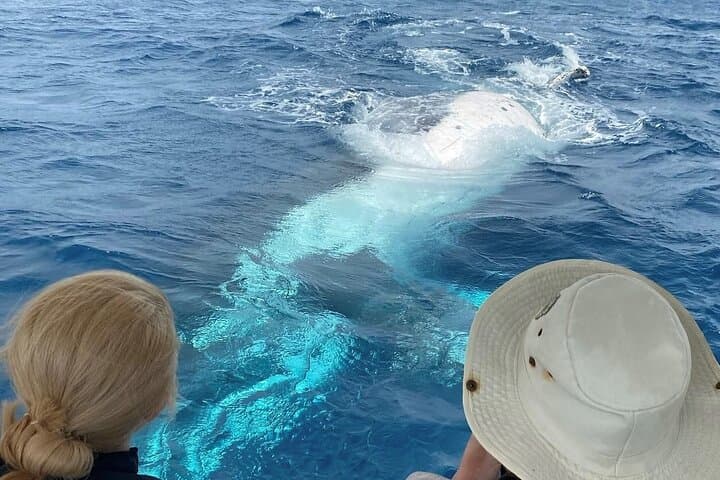
The rib’s bow punches into the Tasman Sea and spray pins your cheeks as the Sunshine Coast slides away. At first it’s a line of silver—shoals of slick-backed dolphins cutting the swell—then a blow, a vertical steam that marks a whale’s breath like a lighthouse in motion. On the Adventure Whale Watching Tour out of Mooloolaba, the thunder of a humpback breaking the surface is not an abstract fact but a physical event: a 40-ton animal reshaping the horizon. The RIB answers with speed and nimbleness, and within minutes the ocean feels like a theater where everyone has a front-row seat.
This is coastal Australia at its kinetic best. Mooloolaba sits on the traditional lands of the Gubbi Gubbi (Kabi Kabi) people, whose stories and seasonal knowledge read like an atlas of the sea: where whales pass, when tides turn, where currents concentrate bait and predators. Geologically the Sunshine Coast is simple — a weathered coastline punctuated by rocky headlands and the continental shelf that drops away in a pattern that funnels migrating humpbacks relatively close to shore. It’s one reason humpback watching here is reliably good from June through November, with peak movement in August and September as whales move north and then return south with calves.
On-board guides for Adventure Rafting arrange the choreography: engine hum, a run out to the migration lanes, and the hush that falls when a blow appears. The boat’s size—max 20 guests—means you’re not a faceless extra on a big ferry; you’re in a small group that can pivot with a breach or tail slap. For travelers, that intimacy is the difference between seeing whales and feeling like you’ve met them. Expect close passes, surface behavior like pectoral slaps and spyhopping, and the occasional full breach that rearranges the set of the sea.
But the experience is more than spectacle. Local guides weave natural history into the ride: why humpbacks sing in winter, how calves ride their mothers’ flukes, and how currents and upwellings create temporary feeding hotspots. There’s also the cultural layer—contemporary Mooloolaba is a tourism hub yet still anchored in fishing and maritime life. A morning on the water can be followed by a late breakfast at the Mooloolaba Wharf seafood stalls, where the fish was quite possibly landed that same dawn.
Practicalities matter: the trip runs about two hours, and the operator’s high-speed RIB design minimizes transit time so you’re watching longer and traveling less. If you book, you’ll pay from about USD 58.80; the operator offers instant confirmation and a small-group format that’s family-friendly but not stroller-friendly—expect motion and wet spray. Free cancellation is available through the vendor’s booking terms.
Timing and conditions shape the day. Early morning rides often deliver calmer seas and softer light for photography, while late-morning tours can catch more active whales as currents shift. The Tasman Sea is always weather-involved; the same swell that makes a perfect dramatic shot can make the RIB ride fresh and bouncy. For that reason, wear a windproof layer, stow electronics in waterproof protection, and take motion-sickness precautions if you’re sensitive. Guides will brief passengers on safety and the marine park’s whale-watching code—stay quiet and steady when mothers and calves are near.
Beyond the tour, there’s an itinerary to be built around the day. Walk the Esplanade when you return, grab a coffee on Ocean Street, or head to Point Cartwright for a different angle on passing whales. If you want to stretch the adventure, combine your whale trip with a morning surf at Mooloolaba Beach or an afternoon at the nearby Glass House Mountains for a contrasting summit and sea day.
Who is this for? Casual travelers who want a high-value wildlife encounter get more than a checklist—they get the pace of a small-boat expedition and the interpretive context to understand what they’re seeing. Families with older kids will appreciate the intimacy and speed; photographers will want the early departures for softer light and calmer seas. Experienced adventurers will find the RIB’s motion and spray invigorating, and the chance to witness complex whale behaviors is always a draw.
Tips for making the most of it: book an early slot for calmer seas, bring a dry base layer and waterproof bag, and don’t be shy about asking the crew where to stand for photos. Respect the animals and the local rules: maintain silence during delicate interactions, and follow the crew’s instructions on approach distances. Remember also to check tide and weather before you leave—conditions determine whether you’re riding near a surfable swell or a glassy plain of water.
Wooden piers, seafood, and surf round out the Mooloolaba experience, but the memory you bring home is usually a small moment on the water: the exhalation that smells like the ocean itself, a calf’s curious spyhop, or a massive fluke vanishing through an orange ribbon of light. That’s the appeal here—an efficient, focused encounter with one of the ocean’s most charismatic travelers, delivered with the nimbleness of a high-speed RIB and the local knowledge to make it meaningful. If you’ve ever wanted a close, clean look at humpbacks without the crowds, the Adventure Whale Watching Tour delivers a short, sharp, and unforgettable dose of marine wonder.
Trail wisdom
Small choices, better day.
Choose early departures
Morning trips usually have calmer seas and better light for photography.
Dress for spray
Wear a windproof outer layer and protect cameras in waterproof cases—the RIB makes you part of the sea.
Take sea-sickness precautions
If you’re prone to motion sickness, use prevention (bands or meds) before boarding.
Listen to the crew
Guides will brief safety, approach protocols, and best viewing spots—follow instructions to protect whales and passengers.
Local knowledge
Read the place, not just the route.
Watch for native species including Humpback whales, Bottlenose dolphins.
Keep an eye out for wildlife during the transition between areas and habitats. Respect distance guidelines.
Operators follow Australia's marine mammal watching guidelines; keep distance, avoid chasing animals, and choose providers who prioritize minimal disturbance.
Follow the guide's instructions on size limits, ethical handling, and leave-no-trace practices.
Point Cartwright headland for scenic shore viewing and lighthouse vistas. Mooloolaba Fish Market and Wharf for fresh local seafood and cafe culture
Locally recommended viewpoints and quiet spots known best to local operators.
Mooloolaba is on Gubbi Gubbi country and has a long maritime history tied to fishing and coastal navigation; humpbacks have been migrating these waters for millennia.
Maritime roots and regional tradition shape the waterways and working coasts.
Seasonal guide
Four versions of the same landscape.
Spring
Best forPeak whale movements · Calmer seas in late season · Good calf sightings
ChallengesVariable weather · Higher visitor numbers
Spring (Sept–Nov) often delivers abundant sightings and active behaviors as whales head south with calves; expect more tour traffic and mixed weather.
Summer
Best forLonger daylight hours · Warm landing times for post-tour beach visits
ChallengesRougher seas early and late in season · Occasional storms
Summer brings warm afternoons ideal for combining whale watching with beach time, but seas can be choppier and weather more changeable.
Fall
Best forShoulder-season calm · Fewer crowds · Comfortable temperatures
ChallengesWhale numbers start to taper off by late autumn
Autumn offers quieter decks and pleasant temperatures; sightings may be less concentrated than peak winter–spring windows.
Winter
Best forReliable migration viewing · Cool, crisp mornings · Strong marine activity
ChallengesCooler conditions on-deck · Potential for rougher seas on some days
Winter (June–Aug) is prime migration time with high sighting probability; wrap up warmly for early departures and watch for colder winds offshore.
Operator details
What the booking data adds.
Included
- ✓All Fees and Taxes
Good to know
- ✓Infants and small children can ride in a pram or stroller
- ✓Public transportation options are available nearby
- ✓Not recommended for travelers with spinal injuries
- ✓Not recommended for pregnant travelers
- ✓Not recommended for travelers with poor cardiovascular health
- ✓Travelers should have at least a moderate level of physical fitness
- ✓Children travelling must be 5 years or older to participate in this experience.
- ✓If you're pregnant, unfortunately this tour is not for you
Pack with intention
What to bring.
Good to know
Common questions.
The Adventure Whale Watching Tour is approximately 2 hours long, including transit time and on-water viewing.
Plan the edges
The details that make the day easier.
Humpback whales migrate along Australia’s east coast each year, traveling up to 8,000 km between Antarctic feeding grounds and northern breeding waters—peak sightings on the Sunshine Coast occur between August and September.
After the tour, head to the Mooloolaba Wharf or Ocean Street for fresh seafood—try grilled local coral trout or a seafood platter; stroll the Esplanade, then sample a local craft beer at a waterfront pub to wind down.
- Closest airport
- Sunshine Coast Airport (MCY). Departure point: Mooloolaba Harbour
- Wharf. Driving distance from Brisbane
- ~100 km
- 1.5 hours. Cell service
- Good near shore, patchy once offshore. Permits: None for guests; operators comply with marine park and whale-watching regulations.
This area follows strict marine mammal watching guidelines—keep noise low, avoid approaching calves, and choose operators that adhere to responsible viewing codes to minimize disturbance.
Explore by topic
Follow the threads.
Keep exploring
Make the story part of the trip.
In four hours you can move from shaded canyon ferns to wind-scoured coastal ridgelines, guided by someone who knows where the light—and the hidden views—live. This private half-day hike on the Monterey Peninsula or Big Sur is compact, curated, and perfect for travelers who want depth without a multiday commitment.
 Related story
Beneath a sky of shifting light, Skaftafell’s ice reads like a map of time. This three-hour guided glacier hike mixes technical instruction with geology and culture: compact, safe, and unforgettable.
 Related story
Lose the city for a few hours without leaving it: this 5-mile, 900-foot-gain Forest Park loop threads old-growth pockets, city viewpoints, and cultural landmarks for a compact taste of Portland’s wild side. Expect moss, roots, and stories.