
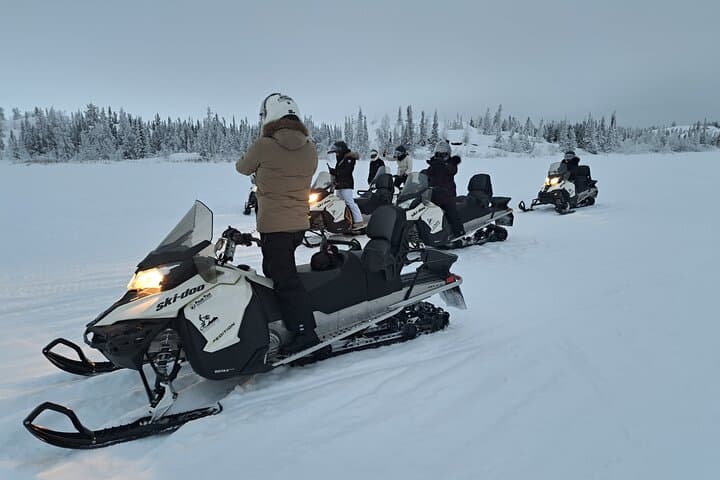
What the day feels like
The first gasp of cold is the honest kind — sharp, clean, promising. You step into the Arctic low light with a helmet warm from its liner and fingers already grateful for heated grips. Engines sputter into life like distant thunder waking the tundra, and the trail opens: wind-sculpted drifts, skeletal birch, and a sky that seems to have been painted especially for flight. For two hours a short drive from downtown Yellowknife, a guided snowmobile tour hands you the throttle to an autumn-of-ice heart, where frozen lakes dare you to cross and pines push back the horizon.
Yellowknife wears its history as plainly as its weather. This city on the north shore of Great Slave Lake rose from gold rush camps and the resilient cultures of the Dene peoples; now it’s a hub for contemporary arctic travel. The ridgelines and lake ice you break across on the ride are chapters of much older geology: basalts and ancient Precambrian Shield rock underpin a landscape shaped by glaciers leaving behind scoured plateaus and deep basins — the same forces that birthed Great Slave Lake, the deepest lake in North America.
The Guided Snowmobile Adventure is built around a tidy, high-adrenaline promise: two hours, modern Ski-Doos with heated handlebars and helmets, warm outerwear available for rent, and trails chosen to shelter you from the worst of the wind. That practical infrastructure makes risk manageable and joy abundant; this isn’t untrammeled exploration so much as the best kind of access — a nudge into wildness backed by local know-how. Guides teach throttle control, line choice, and how to read the sleet-furrowed horizon; they also read the mood of the land, steering clear of thin ice and fresh drifted cornices.
The feeling of snowmobiling here is partly mechanical — the machine hums, the sled responds, your body learns momentum — and partly conversational with the land. The wind seems to lean in, to test whether you mean to pass, while the black spruce stand like an audience of patient witnesses. Rivers that have frozen into glass reflect the low sun and dare you to skim them; film-thin rime along branches adds a crystalline hush. Because the tour runs in very cold conditions, operators outfit riders in Canada Goose-style parkas and heated liners, turning what could be a teeth-chattering ordeal into an experience most ages can enjoy.
Practicalities matter. The excursion runs roughly 120 minutes and is priced from about USD 118.57, a fair rate for guided equipment, local expertise, and warm clothing. It’s close to Yellowknife’s core, so hotels and restaurants are minutes away after the ride. This makes a half-day schedule simple: morning tour and an afternoon spent chasing northern lights photos, or vice versa in high winter when the aurora plays late.
Photography here rewards a methodical approach: layer for warmth, keep hands warm until it’s time to shoot, and use a small, fast lens for low-light aurora shots if you linger after the ride. Guides are used to travelers wanting to stop for pictures; they plan pauses that don’t compromise trail safety. If you arrive during the darker months, there’s a good chance you’ll punctuate your ride with ribboned curtains of aurora in the sky above, a reminder that mechanical speed and cosmic slow-motion can coexist.
Safety and culture are intimately linked in northern travel. Respect for the land is built into each guide’s practice: staying on established trails preserves delicate lichen and thawing permafrost, while the guides’ knowledge of seasonal wildlife corridors limits disturbance to caribou or foxes. You’ll hear local stories of the region and about the Dene relationship to the land; that context turns a heart-pound ride into a place-centered experience.
If you’re planning the trip, aim for late winter when daylight stretches and conditions offer stable ice cover. Bring a camera that handles low temperatures or carry spare batteries in an inner pocket. Dress in moisture-wicking base layers, and consider gaiters and insulated boots — even short exposure to wind drives heat out of your system faster than you'd expect.
Booking is straightforward and instant confirmation is usually provided for most tours, but space sells out in peak season. Operators emphasize equipment sanitation, experienced guides, and clothing rental — things that matter when you’re combining comfort with cold-weather performance. After the ride, warm up with local fare in Yellowknife: a seafood-forward bistro, a wood-fired pub, or a coffee shop where locals swap aurora sightings and trail tips.
Take this tour not because you have to conquer an extreme, but because it hands you a fast lane to remembering what a winter landscape feels like when it’s in motion. It’s family-friendly enough for multigenerational guests, thrilling enough for adrenaline seekers, and practical enough to be the centerpiece of an Arctic weekend: snowmobiles humming under bare palms of birch, the sky leaning its weight into color, and a guide at your shoulder making sure the wilderness stays wonderful for the next person to arrive.
If you want to explore Yellowknife’s arctic wilds with experienced local guides and modern sleds, learn more and book a tour here: <a href="https://app.advcollective.com/local-experts/explore-yellowknifes-arctic-wilds-on-a-guided-snowmobile-adventure">guided snowmobile tour</a>. For practical planning and to see availability, you can follow this link to <a href="https://app.advcollective.com/local-experts/explore-yellowknifes-arctic-wilds-on-a-guided-snowmobile-adventure">explore Yellowknife’s arctic wilds</a> and lock in a two-hour ride that fits right into a short northern itinerary.
Trail wisdom
Small choices, better day.
Layer Smart
Start with a moisture-wicking base, insulating mid-layer, and a windproof outer shell; inner pockets help keep spare batteries warm.
Battery Care
Carry spare camera and phone batteries in an inner pocket — cold drains charge quickly.
Listen to Your Guide
Follow throttle and braking instructions and stick to group spacing to avoid thin ice or hidden hazards.
Protect Your Face
Use a balaclava and anti-fog helmet visor to prevent windburn and maintain clear vision.
Local knowledge
Read the place, not just the route.
Watch for native species including Arctic fox, Snowshoe hare.
Keep an eye out for wildlife during the transition between areas and habitats. Respect distance guidelines.
Operators use established trails and limit noise near sensitive habitats; guests are asked to avoid disturbing wildlife and pack out all trash.
Follow the guide's instructions on size limits, ethical handling, and leave-no-trace practices.
Ice-sculpted shorelines on less-traveled bays. Short, quiet pullouts overlooking frozen river channels
Locally recommended viewpoints and quiet spots known best to local operators.
Yellowknife grew from gold mining and Indigenous trade routes; the city now serves as a gateway to winter arctic experiences and Dene cultural traditions.
Maritime roots and regional tradition shape the waterways and working coasts.
Seasonal guide
Four versions of the same landscape.
Spring
Best forCalmer weather · Longer daylight · Scenic thaw lines
ChallengesVariable ice stability · Mud at thaw edges
Late winter into early spring brings longer days and softer light; expect thawing conditions near shorelines and vary routes accordingly.
Summer
Best forNot applicable for snowmobiling · Sightseeing in town · Aurora chasing (off-season)
ChallengesNo snow/ice · Different activity options required
Summer ends the snowmobile season; switch to hiking, boating, or cultural tours — snowmobiling is not available.
Fall
Best forPre-winter preparations · Northern lights onset · Fewer crowds
ChallengesUnpredictable freeze-up · Limited trails until full ice
Fall is a transition: early freeze can be inconsistent, and operators typically wait for stable ice before running tours.
Winter
Best forSnowmobiling · Aurora viewing · Family-friendly cold-weather adventure
ChallengesExtreme cold nights · Short daylight in deep winter
Full winter offers the most reliable trails and the best chance for auroral displays; dress for deep cold and plan for shorter daylight windows.
Operator details
What the booking data adds.
Included
- ✓Winter Gear Available for Rental
- ✓Air-conditioned vehicle
Not included
- —No Washroom on Site
- —No Pick up from BnB, Hotel Pick up Only
Good to know
- ✓Service animals allowed
- ✓Not recommended for travelers with spinal injuries
- ✓Not recommended for pregnant travelers
- ✓Suitable for all physical fitness levels
- ✓No washroom Facility on site
- ✓There is virtually no walking at all on this tour, snowmobiles are operated with both hands only
- ✓Outdoor riding time is between 50-60min
- ✓Total tour time include transportation, clothing change, indoor orientation
- ✓Contact lens are highly recommended to prevent eyeglasses from fogging up
Pack with intention
What to bring.
Good to know
Common questions.
No — guides provide instruction and controlled practice; tours are designed for beginners through experienced riders.
Plan the edges
The details that make the day easier.
Yellowknife sits on the north shore of Great Slave Lake, which is the deepest lake in North America.
After the ride, warm up at Bullock’s Bistro for comfort food and regional fish dishes or head to a local brewpub to share aurora stories with residents; downtown shops offer Indigenous art and locally made winter gear.
- Closest airport
- Yellowknife Airport (YZF)
- Meeting point
- downtown Yellowknife (hotel pickup often available)
- Typical drive time from town
- 10–30 minutes
- Cell service
- good in town, limited on trails
- Permits
- none typically required for guided tours
Stay on designated trails to protect lichen and permafrost; pack out all trash and follow guide instructions to minimize wildlife disturbance.
Explore by topic
Follow the threads.
Keep exploring
Make the story part of the trip.
Set out from Bass Harbor for a private, customizable day on Blue Hill Bay — lighthouses, puffins, seals, and the chance to feel Acadia from the water. Small groups, local captains, unforgettable views.
In four hours you can move from shaded canyon ferns to wind-scoured coastal ridgelines, guided by someone who knows where the light—and the hidden views—live. This private half-day hike on the Monterey Peninsula or Big Sur is compact, curated, and perfect for travelers who want depth without a multiday commitment.
 Related story
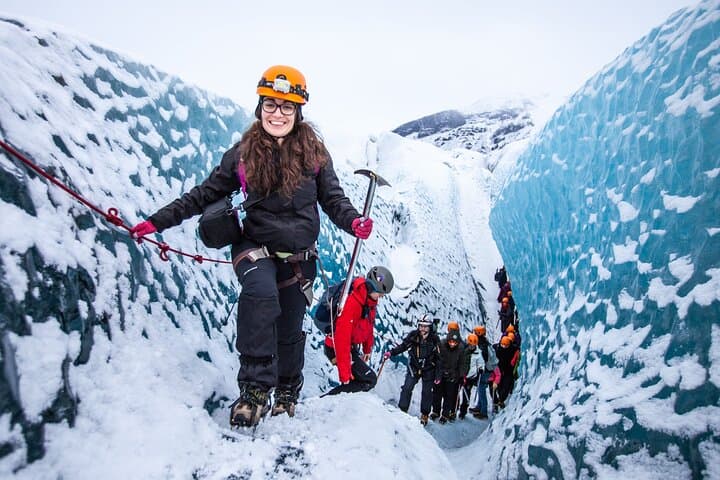
Beneath a sky of shifting light, Skaftafell’s ice reads like a map of time. This three-hour guided glacier hike mixes technical instruction with geology and culture: compact, safe, and unforgettable.