
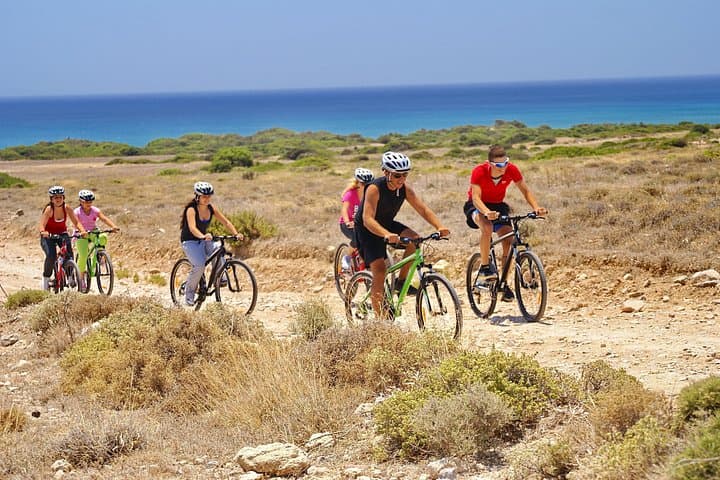
What the day feels like
You start in Haraki before the sun has fully warmed the sea. Fishing boats rock lazily against a stone quay, gulls wheel low and the first pedal strokes kick up a smell of salt and orange blossom. The route unfurls like a local map sketched in dirt and limestone: olive groves give way to orange orchards, a riverbed narrows into a red-streaked gorge, and an old Italian bridge offers a pause for breath and story. By late afternoon you are rolling toward a small, pebbled beach where the Mediterranean is startlingly blue and forgiving, a cooling end to a day of climbing and technical singletrack. This is Red Water on Rhodes, a full-day mountain-bike loop that mixes cultural landmarks with classic Aegean geology and a swim that feels like permission to relax.
The trail sequence reads like a condensed history of the island. Haraki itself is a shuttered, low-slung fisherman village—an intimate place to load bikes and tune brakes—while nearby Feraklos castle perches on a strategic ridge that has watched comings and goings since Byzantine times. The route traces human uses of the land: age-old olive terraces, orchards where families still harvest oranges by hand, and the relics of 20th-century occupation, including an Italian-built runway and wartime battlements. Those features are tangible reminders that Rhodes sits at a crossroad of Mediterranean empires; the landscape keeps the stamp of each era in both stone and route.
Geologically, the Red Water gorge earns its name from iron-stained bedrock and alluvial deposits where water has cut a narrow channel through older limestone. In spring the stream has enough flow to feel like a small river; by late summer it retreats to a series of emerald pools. Agriculture and the rough rhythms of seasonal rainfall shaped the network of farm tracks you ride—what the locals call kalderimia and service tracks—so expect an intimate, ever-changing mix of loose gravel, packed dirt, hard limestone slabs and short technical pitches.
Culturally, the ride is a lesson in island living. Expect to stop for snacks at the village church plaza, where a taverna owner might hand you fresh bread, local cheese and a shot of raki. You pass working farms and the Ferraklos Byzantine ruins, places where local stories are as important as the map on your phone. Riding here is as much about the social pauses as it is about covering kilometers.
Practically speaking, this is a full-day outing. The operator lists the duration as 6–8 hours, and you should plan for roughly 25–35 km (15–22 miles) of riding with intermittent climbs and descents; expect cumulative elevation gain in the several-hundred-meter range depending on route choices and exploratory stops. Terrain alternates between smooth coastal lanes and rough, occasionally rocky singletrack; there are segments that require confident handling and good line choice. Riders with basic mountain-biking skills and reasonable fitness will find the day highly rewarding. E-bikes are helpful for riders who want to take the strain off steeper climbs, but a well-maintained hardtail or full-suspension bike works fine for riders comfortable on mixed terrain.
Timing matters. Rhodes sun is generous: start early in spring, late afternoon in shoulder seasons if you like softer light, and avoid the heat of midday in summer. Bring sun protection and plan to rehydrate often—there are grocery stops on the route, but water stations are not guaranteed. The tour typically includes historic stops and a final beach finish at Haraki or Agia Agathi, so plan on bringing a small dry bag or change of clothes if you want that post-ride dip.
Safety and logistics are straightforward. Wear a helmet, pack a basic repair kit, and check tire pressure for mixed surfaces. If you ride alone, tell someone your plan—cell coverage can be intermittent in gorges—and consider the guided option if you prefer local knowledge on route-finding, history stops and the best swimming cove. The tour price starts around USD 101.54 and includes a guide, bikes (if booked through the operator), and scheduled stops; confirmation is manual so check pickup points and what is included before booking.
Why do this ride? It is compact and varied—half cultural walking, half technical ride, half beach reward—and it feels like an old-fashioned island circuit that combines the best of Rhodes in a single day. You leave with sand in your shoes, a few good photos, and an understanding of why the Aegean continues to draw riders who want traction, history and a swim at the end of the day.
If you go: start early, ride conservatively on loose limestone, carry extra water, and save a little hunger for a seaside taverna at the finish. The Red Water loop is not an expedition; it is an invitation to connect pace with place, culture with cadence, and to leave the mainland behind for a day of island riding.
Trail wisdom
Small choices, better day.
Start Early
Begin at or just after dawn to avoid midday heat and secure cooler trail conditions.
Hydration + Snacks
Carry 2–3 liters of water and energy-dense snacks; stores exist but may be sparse during the route.
Tire Choice
Run tubeless or bring a spare tube and a compact pump—expect loose gravel and occasional sharp limestone.
Respect Private Orchards
Stay on marked tracks, avoid riding through orange and olive groves, and be courteous at farm crossings.
Local knowledge
Read the place, not just the route.
Watch for native species including Common Chaffinch, Mediterranean tortoise (in summer).
Keep an eye out for wildlife during the transition between areas and habitats. Respect distance guidelines.
Stick to established tracks to avoid soil erosion in the gorge; support local guides and tavernas to keep tourism benefits local.
Follow the guide's instructions on size limits, ethical handling, and leave-no-trace practices.
Small plunge pools upstream of the Red Water source—best spotted in spring. An overlook near Feraklos castle with sweeping views of Haraki bay at sunset
Locally recommended viewpoints and quiet spots known best to local operators.
Feraklos castle and nearby stone bridges date to Byzantine and medieval periods; Italian-era infrastructure from the early 20th century is also visible along the route.
Maritime roots and regional tradition shape the waterways and working coasts.
Seasonal guide
Four versions of the same landscape.
Spring
Best forCooler riding temperatures · Wildflowers and full streams · Photography of green orchards
ChallengesOccasional muddy sections · Variable stream crossings
Spring offers the most pleasant temperatures and flowing water in the gorge, though spring rains can make low-lying sections slick.
Summer
Best forReliable sun and warm sea swims · Long daylight hours
ChallengesHigh heat and strong sun · Reduced river flow
Summer guarantees a rewarding post-ride swim but plan early starts and ample sun protection; midday is best avoided.
Fall
Best forMild weather for sustained riding · Harvest activity in orchards
ChallengesShortening daylight · Occasional windy days
Autumn is a comfortable, less-crowded time to ride; you may witness harvest work along the route.
Winter
Best forQuiet trails and lower tourist numbers
ChallengesCooler temperatures, possible rain · Some service closures
Winter can be mild compared with northern Europe but expect wetter conditions and check local services before setting out.
Pack with intention
What to bring.
Good to know
Common questions.
The guided outing runs 6–8 hours; riders should expect approximately 25–35 km with several hundred meters of cumulative climbing depending on the chosen lines and detours.
Plan the edges
The details that make the day easier.
Rhodes was governed by Italy from 1912 to 1943; remnants of Italian-era infrastructure, like old runways and bridges, are visible across the island and along this route.
After the ride, head to a Haraki taverna for grilled octopus, freshGreek salad and local white wine; if you want more atmosphere, continue to Lindos for rooftop bars and tavernas with sea views.
- trailhead
- Rhodes Diagoras International Airport to Haraki ~45–60 min drive; Driving distance from nearest town: Lindos ~15–25 min; Cell service: intermittent in gorge; Permits: none, guided tours recommended
Stay on established tracks to prevent erosion, pack out all trash, and support local tavernas and guides to keep economic benefits in the community.
Explore by topic
Follow the threads.
Keep exploring
Make the story part of the trip.
Set out from Bass Harbor for a private, customizable day on Blue Hill Bay — lighthouses, puffins, seals, and the chance to feel Acadia from the water. Small groups, local captains, unforgettable views.
In four hours you can move from shaded canyon ferns to wind-scoured coastal ridgelines, guided by someone who knows where the light—and the hidden views—live. This private half-day hike on the Monterey Peninsula or Big Sur is compact, curated, and perfect for travelers who want depth without a multiday commitment.
 Related story
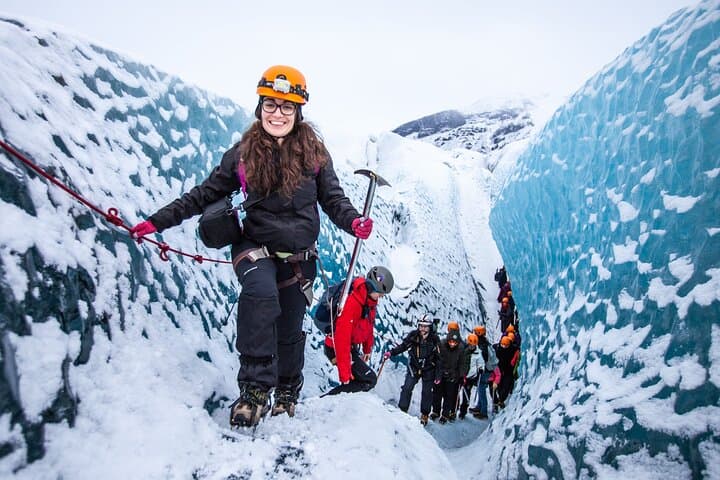
Beneath a sky of shifting light, Skaftafell’s ice reads like a map of time. This three-hour guided glacier hike mixes technical instruction with geology and culture: compact, safe, and unforgettable.