
What the day feels like
The morning heat in Punta Cana arrives quietly, as if the island is holding its breath, waiting for the day’s pulse to quicken. Engines cough to life and a line of bright buggies kicks up a ribbon of dust through sugarcane and dry scrub; the ride is part joyride, part backroad geography lesson. You feel the land in the seat beneath you—the slick steering wheel, the push of acceleration, the tiny jolts where volcanic-era limestone gives way to pockets of washed sand. By mid-morning the trees close in and the choreography of the day begins: the flutters of zipline harnesses, the smell of wet earth around a hidden cenote, and the drumbeat of a Taino welcome that roots the experience in centuries of island history.
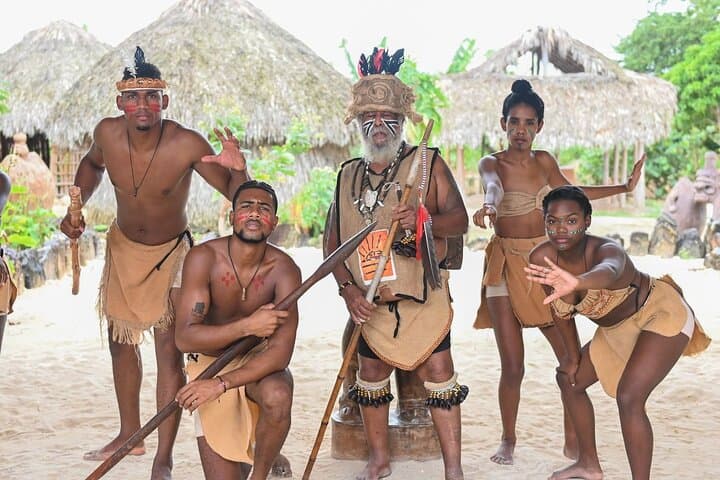
This full-day loop at Domitai Park Punta Cana folds adrenaline, culture, and a dive into karst geology into roughly 5¾ hours (about 345 minutes). There’s no single summit or long ridge walk to conquer; the value here is kinetic variety. You drive off-road through shaded tracks and riverbeds in two-seater buggies, trade speed for altitude as you clip into ziplines high among monkeypod and almond trees, and then plunge into a cool cenote carved into the island’s limestone bedrock. The cultural finale is a staged—but heartfelt—Taino village visit with live performances and tastings of Dominican staples like coffee, cacao, and mamajuana, that old island elixir of rum, red wine, honey and native botanicals.
Geology explains the cenote: Punta Cana sits on a porous limestone shelf where decades of rain and runoff dissolve channels beneath the surface. When the roof collapses, a circular sinkhole opens and fills with groundwater—an inland pool that feels improbably cool in the tropical heat. The park’s cenote is sheltered and often clearer than coastal waters, offering a vivid contrast to the sun-swept expanses of the nearby Atlantic beaches.
Culturally, the tour deliberately threads Taino history through the itinerary. The Taino were the indigenous people of Hispaniola long before European contact, and though many details of their daily lives were disrupted after the 15th century, islands’ place names, agricultural practices, and certain ritual objects retain their echo. The guided village visits and performances at Domitai do not pretend to be archaeological excavations; they are accessible, interpretive moments that aim to center that heritage alongside the thrills.
Practicalities are straightforward. The half-day to full-day schedule moves at a brisk pace—expect roughly 5–6 hours from pickup to return. Terrain for the buggies is low-elevation but can be rocky, muddy after rains, and occasionally rutted; there’s minimal climbing on foot unless you take an optional trail to viewpoints. Fitness needs are moderate: you should be comfortable getting in and out of off-road vehicles, handling brief zipline stair climbs, and swimming in open water. The tour length makes it friendly for families with older kids and active travelers who want variety without a long hike.
Safety and comfort are practical priorities: closed-toe shoes, a light long-sleeve layer for sun and thorn protection, and reef-safe sunscreen will make the day more pleasant. Hydration is non-negotiable—Dominican humidity can sneak up on you—and insect repellent helps at the cenote and in shaded trails. Age and weight limits for ziplining and buggy rides vary by operator, so confirm details when you book.
Why do this rather than a straight beach day? The payoff is contrast. Where Punta Cana’s resorts offer manicured shoreline escapes, this tour compresses multiple island modes—land, air, and water—into a single narrative. You leave with splashed knees, coffee-sweetened teeth, and a firmer sense of place: what the island’s bones feel like; what its human history sounds like.
Planning tips: book in the dry months if you want fewer muddy track segments, but be prepared for midday warmth year-round. Bring a small quick-dry towel and a waterproof phone case; many guests opt for a lightweight action camera to mount on helmets. Respectful photography during cultural demonstrations is encouraged, but ask before stepping into personal space. Finally, treat the cenote as a fragile site—avoid lotions and fragrances before swimming and follow guides’ conservation instructions.
This is not an expedition for technical climbers or long-distance backpackers, nor is it a motorized joyride disconnected from context. It’s a curated day that lets you touch multiple layers of Punta Cana—its limestone geology, its lowland ecosystems, and the culture that predates the island’s modern tourism boom. For travelers who want to trade a single postcard view for a stitched-together story of place, this is an efficient, memorable way to do it.
Trail wisdom
Small choices, better day.
Wear closed‑toe shoes
Trails and buggy footwells can be rocky or muddy; sturdy shoes protect feet while boarding and during any short walks.
Bring a refillable water bottle
Hydrate early and often—the tour is active and humid; many operators allow refills before and after activities.
Use reef‑safe sunscreen
Apply only after the cenote swim or use biodegradable products to protect freshwater ecosystems.
Secure loose items
Phones, hats, and sunglasses can fly off during bumpy buggies or ziplines—use straps or leave valuables on the bus.
Local knowledge
Read the place, not just the route.
Watch for native species including Green iguana, Tropical birds (hummingbirds, parakeets).
Keep an eye out for wildlife during the transition between areas and habitats. Respect distance guidelines.
Cenotes are delicate karst features—avoid chemical sunscreens in the water, stay on marked paths, and follow the guide’s instructions to protect freshwater habitats.
Follow the guide's instructions on size limits, ethical handling, and leave-no-trace practices.
A private cenote pool tucked beneath a limestone canopy on the park grounds. Off‑road vantage points that overlook inland sugarcane fields and coastal glimpses
Locally recommended viewpoints and quiet spots known best to local operators.
The Taino were the indigenous inhabitants of Hispaniola before European arrival; modern Dominican culture retains culinary and linguistic traces of their legacy.
Maritime roots and regional tradition shape the waterways and working coasts.
Seasonal guide
Four versions of the same landscape.
Spring
Best forDry trails · Comfortable swimming temps · Lower humidity than summer
ChallengesShort heavy showers possible · Midday sun intensity
Spring (March–May) is generally dry and warm—ideal for combining buggy trails with a refreshing cenote swim and cultural stops.
Summer
Best forLong daylight hours · Lush vegetation · Frequent tour availability
ChallengesHigher heat and humidity · Afternoon storms
Summer brings lush green landscapes but expect intense heat and occasional downpours; plan earlier starts to avoid midday humidity.
Fall
Best forFewer tourists · Lower prices some weeks · Lush scenery
ChallengesHurricane season peaks (Aug–Oct) · Possibly muddy trails
Fall can be quieter and very green—but it overlaps with hurricane season, so monitor forecasts and flexible booking policies.
Winter
Best forDry, pleasant weather · Stable seas for travel · Peak daylight comfort
ChallengesHigher tourist demand · Slightly cooler mornings
Winter (Dec–Feb) is the high season with drier weather and comfortable temperatures—book early for availability.
Operator details
What the booking data adds.
Included
- ✓Water
- ✓Hotel Pickup and Drop-off
- ✓Local Products
- ✓Activities
- ✓Official Guide
Not included
- —Gratuities
Good to know
- ✓Public transportation options are available nearby
- ✓Not recommended for travelers with spinal injuries
- ✓Not recommended for pregnant travelers
- ✓Suitable for all physical fitness levels
Pack with intention
What to bring.
Good to know
Common questions.
The experience runs about 345 minutes (roughly 5¾ hours) from pickup to return, depending on transit time from your hotel.
Plan the edges
The details that make the day easier.
Mamajuana, sampled on this tour, is a traditional Dominican infused drink—rum, red wine, honey and local botanicals—often called the island’s ‘elixir’ and used historically as a tonic.
After the tour, head to Bávaro or Punta Cana Village for seaside fish fritters or sancocho; look for small comedores serving pollo guisado and tostones and finish with a cold Presidente beer or a mamajuana tasting to extend the island flavors.
- Closest airport
- Punta Cana International Airport (PUJ); Driving time from most resorts: 25–60 minutes depending on location; Cell service: generally good near resorts, spotty on some inland trails; Permits: none required—tour fee typically covers park access and gear.
Cenotes and karst landscapes are sensitive—use biodegradable sunscreen, avoid single‑use plastics, follow guides’ instructions, and pack out all trash to minimize impact.
Explore by topic
Follow the threads.
Keep exploring
Make the story part of the trip.
Set out from Bass Harbor for a private, customizable day on Blue Hill Bay — lighthouses, puffins, seals, and the chance to feel Acadia from the water. Small groups, local captains, unforgettable views.
In four hours you can move from shaded canyon ferns to wind-scoured coastal ridgelines, guided by someone who knows where the light—and the hidden views—live. This private half-day hike on the Monterey Peninsula or Big Sur is compact, curated, and perfect for travelers who want depth without a multiday commitment.
 Related story
Beneath a sky of shifting light, Skaftafell’s ice reads like a map of time. This three-hour guided glacier hike mixes technical instruction with geology and culture: compact, safe, and unforgettable.