
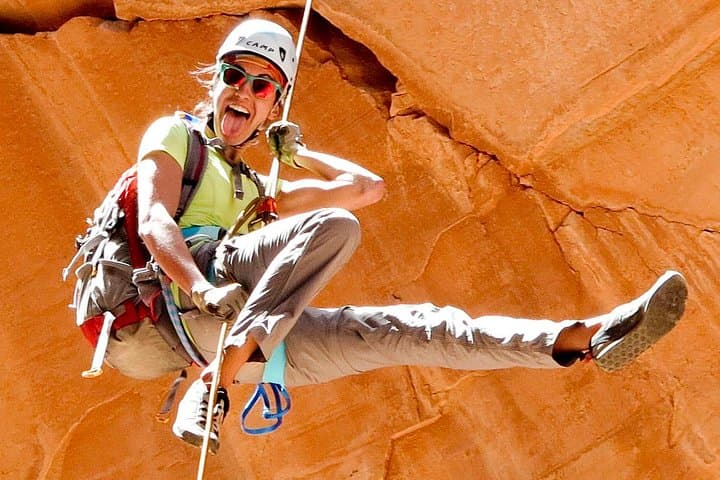
What the day feels like
You push through a narrow throat of stone the width of your pack, the red slickrock pressing close on either side. Light—thin and theatrical—comes down from a high seam, catching dust motes and the salt-etched texture of sandstone. Every step is deliberate: a toe here, a palm there, a quick shimmy past a pothole that seems to have swallowed the sky. Eight hours later you step out with chalk on your fingers and a grin the color of canyon sun. This is Bluejohn Canyon—Aron Ralston’s famously unforgiving fault line—and the 127 Hours Canyon Adventure Tour compresses that raw geology into a technical, guided day of slots, rappels, and hands-on canyoneering.
The tour wears its movie pedigree lightly. Ralston’s 2003 accident—later the subject of the film 127 Hours—brought global attention to a place already threaded with local lore: Robbers Roost Wilderness, a high-desert labyrinth once used as hideouts by outlaws like Butch Cassidy. The stone itself tells a longer story. Millennia of wind and water carved the Navajo Sandstone into narrow slots, plunge pools, and potholes that now demand both humility and skill from anyone who ventures in. Geologically speaking, you’re moving through collapsed dune fields fossilized into cross-bedded red rock; physically, you’re negotiating a vertical playground where exposure alternates with intimacy.
What makes this tour sing is the balance between spectacle and practicality. Guides bring technical expertise—ropes, anchors, helmets, and a steadying presence—so you can focus on reading the rock: where it flakes, where it offers a flat handhold, when the slot will squeeze and when it will open to a broad skylight. The itinerary is compact but demanding: expect tight chimneying, down-climbs that test your footwork, and 20–60 foot rappels that frame the canyon like theatrical curtains. Fitness matters; the day moves at a purposeful pace across uneven, sometimes slick terrain. Water is transported in packs, not rivers, and heat in summer can turn each step into a strategic decision.
Culturally, the area is quiet but resonant. Robbers Roost’s name preserves a legacy of frontier skirmishes and outlaw stories, while nearby towns like Moab have evolved from mining and ranching hubs into outdoor hubs where guide services, desert breweries, and gear shops supply the modern iteration of exploration. The land is managed mainly by federal agencies—BLM and adjacent national park areas—so leave-no-trace ethics are not a suggestion here; they’re fundamental to keeping these fragile backcountry features intact.
Practically speaking: the tour is an all-day commitment (about eight hours), aimed at folks comfortable with sustained physical challenge and willing to trust a rope. Guides on the Viator tour provide technical gear and instruction, reducing the need to bring a full rack, but you should arrive with solid hikers or approach shoes, a daypack with at least 2–3 liters of water, sun protection, and the right attitude. The operator sizes parties to keep rappels efficient and to minimize impact on anchors and fixed lines. Weather dictates a lot—wind, flash flood risk, extreme heat—so timing matters. Fall and spring are often the most comfortable windows; summer turns the slot into a furnace, and winter can introduce slick ice in shady potholes.
Why should you sign up? Because canyoneering compresses so many forms of outdoor satisfaction into one contained experience: problem-solving on uneven terrain, the quiet of a slot where only your breath exists, the adrenaline of a controlled descent, and the simple reward of getting out intact and filled with stories. It’s a day that teaches humility—about how small you are in the face of geological time—and competence: the practical rope and movement skills you’ll carry into other technical adventures.
Planning tips that matter: bring layers (desert temps swing dramatically), treat water like a currency, and don’t underestimate the mental component of tight spaces. Even confident hikers can be surprised by the claustrophobic sections; your guide is not just there for safety but for pacing and psychological support. If you’re coming from out of state, fly into Grand Junction or the small Canyonlands (CNY) airport, rent a vehicle with ground clearance, and plan for a full day away from cell service.
For photographers, the canyon is a study in contrasts—deep shadow pockets and sudden shafts of light—so think high-ISO versatility, a wide-angle lens for enclosed passages, and a waterproof or dust-resistant cover for your camera. Keep shots simple; long exposures in high-contrast slots work best near skylights when your guide stops for a rope rig.
The 127 Hours Canyon Adventure Tour is not for everyone—its thrills are technical and its comforts sparse—but for those who seek a day of compact, efficient adventure, it’s a rare education in desert craft. You come for the rappels and the movie lore, and you leave with a recalibrated sense of how to move across rock, how to read a line, and how much a single canyon can ask of you and give back in equal measure.
Trail wisdom
Small choices, better day.
Hydrate Strategically
Carry at least 2–3 liters, sip consistently, and plan to ration water during long, hot sections; refilling isn’t an option in the slot.
Shoes That Grip
Use approach shoes or lightweight hiking boots with sticky rubber for slabs and wet potholes—avoid brand-new soles.
Trust the Rope
If you’re new to rappelling, let the guide talk you through body position and braking techniques before your first descent.
Protect the Desert Surface
Step on rock where there’s no cryptobiotic crust; follow your guide’s footsteps to minimize damage to fragile soils.
Local knowledge
Read the place, not just the route.
Watch for native species including Desert bighorn sheep, Red-tailed hawk.
Keep an eye out for wildlife during the transition between areas and habitats. Respect distance guidelines.
This is sensitive desert terrain—follow Leave No Trace, avoid disturbing cryptobiotic soil, and use established anchors to limit new hardware in the rock.
Follow the guide's instructions on size limits, ethical handling, and leave-no-trace practices.
Upper forks of Bluejohn for quieter narrows and skylights. Robbers Roost overlooks for panoramic views without the technical commitment
Locally recommended viewpoints and quiet spots known best to local operators.
Bluejohn Canyon entered popular culture after Aron Ralston’s survival story; the wider Robbers Roost area was historically used by outlaws and later as a filming locale for Westerns.
Maritime roots and regional tradition shape the waterways and working coasts.
Seasonal guide
Four versions of the same landscape.
Spring
Best forModerate temperatures · Wildflower pockets near washes
ChallengesPossible runoff and slick spots · Variable night-to-day temperatures
Spring offers comfortable hiking temps and dramatic water-carved features, but watch for recent rain that can make potholes and approaches treacherous.
Summer
Best forLong daylight hours · Consistent daylight for scheduling
ChallengesExtreme heat · Higher dehydration risk and potential flash floods
Summer can be brutally hot; early starts or booking during cooler parts of the day are essential, and guides may alter routes to avoid midday heat.
Fall
Best forCool, stable weather · Lower crowds and clear skies
ChallengesShorter daylight hours · Chilly mornings
Fall is often the sweet spot—pleasant temperatures and reliable conditions—making it the optimal season for a full-day technical canyon trip.
Winter
Best forSolitude and dramatic low-angle light · Possibility of ice formations in shaded potholes
ChallengesCold, icy sections · Short daylight and possible snow on approaches
Winter reduces crowds and creates stark scenery, but frozen water and slick rock increase difficulty; guided trips adjust for safety accordingly.
Operator details
What the booking data adds.
Included
- ✓All Fees and Taxes
- ✓Professional Guide
- ✓Canyoneering Gear
Not included
- —Gratuities
- —Lunch
- —Bottled water
- —Private transportation
Good to know
- ✓Not recommended for pregnant travelers
- ✓Not recommended for travelers with poor cardiovascular health
- ✓Travelers should have at least a moderate level of physical fitness
Pack with intention
What to bring.
Good to know
Common questions.
No prior canyoneering experience is required—the guides provide instruction and technical gear—but you should be comfortable with sustained scrambling and exposure.
Plan the edges
The details that make the day easier.
Aron Ralston’s 2003 entrapment in Bluejohn Canyon inspired the book and film '127 Hours', bringing global attention to technical canyoneering in Utah.
Base your trip in Moab—after a long canyon day, celebrate at Moab Brewery for local beer and pub fare, or book a table at Desert Bistro for a heartier dinner; downtown outfitters also offer map briefings and rental gear.
- Closest airport
- Canyonlands (CNY) or Grand Junction (GJT); Driving from Moab: 30–90 minutes depending on trailhead and route; Cell service: intermittent to none in canyon; Permits: guided tours typically handle access—check with operator for BLM or wilderness requirements.
Bluejohn sits on fragile desert soils—pack out all waste, avoid creating new anchor points, and walk on durable rock surfaces to protect cryptobiotic crusts.
Explore by topic
Follow the threads.
Keep exploring
Make the story part of the trip.
Set out from Bass Harbor for a private, customizable day on Blue Hill Bay — lighthouses, puffins, seals, and the chance to feel Acadia from the water. Small groups, local captains, unforgettable views.
In four hours you can move from shaded canyon ferns to wind-scoured coastal ridgelines, guided by someone who knows where the light—and the hidden views—live. This private half-day hike on the Monterey Peninsula or Big Sur is compact, curated, and perfect for travelers who want depth without a multiday commitment.
 Related story
Beneath a sky of shifting light, Skaftafell’s ice reads like a map of time. This three-hour guided glacier hike mixes technical instruction with geology and culture: compact, safe, and unforgettable.