
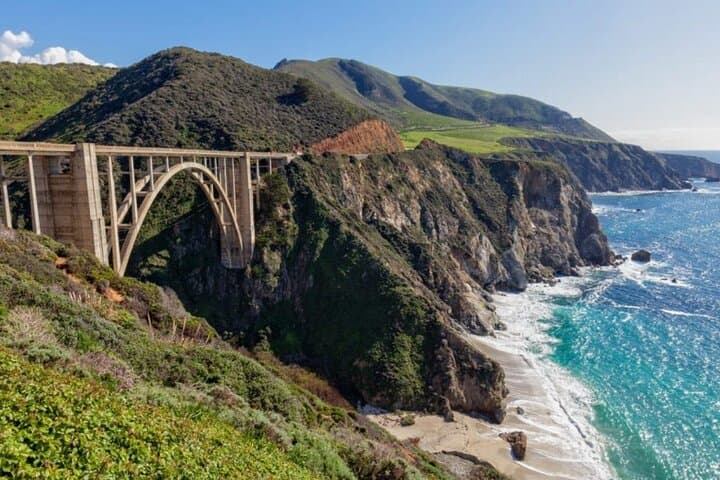
What the day feels like
The ocean arrives before you see it — a misted baritone that hits the face and fills your nostrils with salt and kelp. You round a bend on Highway 1 and, across from the tidy gravel lot of Andrew Molera State Park, a narrow ribbon of dirt peels inland: the Old Coast Road. A guide checks helmets, hands out Specialized Tero e-bikes, and the little hum of motors becomes the soundtrack for the next few hours. The cliffs here feel like a held breath; gulls ride the updrafts and the Pacific, a slate-blue muscle, keeps nudging the shore.
There’s a reason riders fall quiet on this stretch. The Old Coast Road is not about speed so much as attention — to the shear geology of the coast, to the stand of coyote brush and matilija poppies, to a coastline that resisted development and reads like a layered book of uplift and erosion. The route on this guided tour follows dirt and seasonally rutted single-lane track, with short climbs that the e-bike makes graceful. You stop to look down on coves that feel private even from a cliff, and to listen where the shore caves and cobbles keep time.
History here is compact and layered. The Esselen peoples hunted and harvested along these banks for millennia; later the Spanish mission roads skirted the hills, and 20th-century homesteaders and ranchers left faint traces. Geologically, Big Sur is a collision story — the Salinian Block and Pacific plate pushing, folding, and carving a coastline that drops off precipitously into deep water. That drama is on display in every seaside outcrop you pass.
The tour is more than scenery. It’s a pragmatic way to see a part of Big Sur that’s quieter than the pull of Bixby Bridge or Pfeiffer Beach. Guides frame the ride with local context — why certain coves host harbor seals, how the eucalyptus groves arrived with settlers, and why some sections of Highway 1 remain untamed. Your guide will also emphasize safety and Leave No Trace principles; there is no cell service at the meeting point, which makes the experience feel deliberately removed.
Practical realities are simple and important: the trip runs about 2–3 hours (the operator lists a variable duration of 120–180 minutes), and covers an enjoyable mix of dirt road, packed gravel, and short stretches of paved shoulder on Highway 1 when you rejoin the scenic corridor. Expect a few steady but short climbs totaling a few hundred feet of elevation gain; the electric assist levels allow riders of moderate fitness to keep pace with the group. The company uses Specialized Tero electric mountain bikes as the default fleet; Super73 RX models can be provided on request, pending availability. Guides usually meet directly across the Andrew Molera State Park entrance on Highway 1 — arrive a little early because parking fills and there is no cell service for last-minute coordination.
This ride is ideal for travelers who want a coast-hugging, low-impact way to experience Big Sur without committing to a full-day road ride or a long hike. It’s social but tranquil: you’ll stop for a snack with a view, peer into tide pools at a safe distance, and maybe spy migrating gray whales if the timing is right. Because the route threads through park land and sensitive shoreline, the guide keeps riders on course and away from fragile bluff edges.
If you go, pack sun protection and a windproof layer — fog can burn off into bright sun in minutes, and winds coming off the ocean will make the afternoon feel colder than inland temperatures. Bring a small pack with water, a camera, and a basic tube or repair kit; guides carry spares and a pump but being self-sufficient keeps you moving between stops. Above all: expect to be moved by the scale of the coast, not just its photo opportunities.
When you want to learn more or reserve a ride, look for the official booking and local-expert listing for the Big Sur Old Coast Road e-bike tour from Andrew Molera. The guide-operated experience is also a useful base for exploring nearby attractions like the Henry Miller Library or a swift walk into Andrew Molera’s beachfront meadows. It’s an accessible slice of Big Sur that keeps the coastline’s wildness intact while opening it up to riders who want to feel the wind and still stand on solid ground.
Trail wisdom
Small choices, better day.
No cell service at the meet point
Download directions and confirm meeting details the day before; guides typically reach out but don’t rely on service at Andrew Molera parking.
Layer for fickle weather
Bring a breathable windproof and a sun layer—conditions can shift from fog to sun in twenty minutes.
Helmets are required
Wear a properly fitting helmet; guides will check fit before departure and carry spare helmets for guests.
Respect wildlife and bluff edges
Stop at designated viewpoints; avoid approaching marine mammal haul-outs and maintain distance from fragile cliffs.
Local knowledge
Read the place, not just the route.
Watch for native species including Sea otters, Gray whales (seasonal), Peregrine falcons.
Keep an eye out for wildlife during the transition between areas and habitats. Respect distance guidelines.
This ride uses existing roads and trails to minimize impact; stay on designated routes, pack out all waste, and avoid disturbing coastal flora and marine life.
Follow the guide's instructions on size limits, ethical handling, and leave-no-trace practices.
Andrew Molera Beach meadows — a short walk reveals tidepools and wide sandy shorelines. Henry Miller Memorial Library — a small cultural hub with rotating events and a local feel
Locally recommended viewpoints and quiet spots known best to local operators.
The coastline was traditionally used by Esselen-speaking peoples; later 19th-century ranching and 20th-century conservation efforts shaped today’s protected state parklands.
Maritime roots and regional tradition shape the waterways and working coasts.
Seasonal guide
Four versions of the same landscape.
Spring
Best forWildflowers · Mild temperatures
ChallengesUnpredictable rain · Narrow muddy sections after storms
Spring brightens the hills with poppies and lupine; expect cool mornings and occasional wet patches on the Old Coast Road.
Summer
Best forStable weather windows · Longer daylight
ChallengesCoastal fog mornings · Higher visitor numbers
Summer brings reliably calm conditions in late morning and afternoon, though mornings can be foggy and visibility limited.
Fall
Best forClear skies · Warmer water views
ChallengesLess frequent services · Shorter days as season progresses
Fall is the sweet spot for clearer skies and quieter trails—often the warmest and driest stretch of the year.
Winter
Best forDramatic seas · Storm-watching
ChallengesHeavy rain and road closures · Chilled winds
Winter delivers dramatic surf and fewer crowds but can bring closures on narrow coastal roads—check conditions before booking.
Operator details
What the booking data adds.
Included
- ✓Bottled water
- ✓helmet
- ✓Use of bicycle
Good to know
- ✓Travelers should have at least a moderate level of physical fitness
Pack with intention
What to bring.
Good to know
Common questions.
The guided tour lasts about 2–3 hours; depending on route choices and stops you can expect roughly 8–15 miles of riding with some short climbs and frequent photo stops.
Plan the edges
The details that make the day easier.
Andrew Molera State Park preserves one of the most undeveloped stretches of beach on the Big Sur coast, with large meadows that provide rare uninterrupted views to the ocean.
After the ride, head to Big Sur Bakery for wood-fired pastries, try Nepenthe for coffee with a cliffside view, and pop into the Henry Miller Memorial Library for local arts and events—the trio connects the coast’s food and culture to the landscape you just explored.
- Closest airport
- Monterey Regional Airport (MRY) ~45–60 minutes north; Trailhead
- meeting
- across the Andrew Molera State Park parking lot on Highway 1; Driving distance from Carmel-by-the-Sea: ~30–45 minutes; Cell service: minimal to none at the meeting point; Permits
- Fees
- Andrew Molera has day-use parking fees and limited parking—arrive early.
Big Sur’s coastal habitats are fragile—stick to roads and approved viewpoints, pack out trash, avoid cliff-edge shortcuts, and do not approach or feed marine mammals.
Explore by topic
Follow the threads.
Keep exploring
Make the story part of the trip.
Set out from Bass Harbor for a private, customizable day on Blue Hill Bay — lighthouses, puffins, seals, and the chance to feel Acadia from the water. Small groups, local captains, unforgettable views.
In four hours you can move from shaded canyon ferns to wind-scoured coastal ridgelines, guided by someone who knows where the light—and the hidden views—live. This private half-day hike on the Monterey Peninsula or Big Sur is compact, curated, and perfect for travelers who want depth without a multiday commitment.
 Related story
Beneath a sky of shifting light, Skaftafell’s ice reads like a map of time. This three-hour guided glacier hike mixes technical instruction with geology and culture: compact, safe, and unforgettable.