
What the day feels like
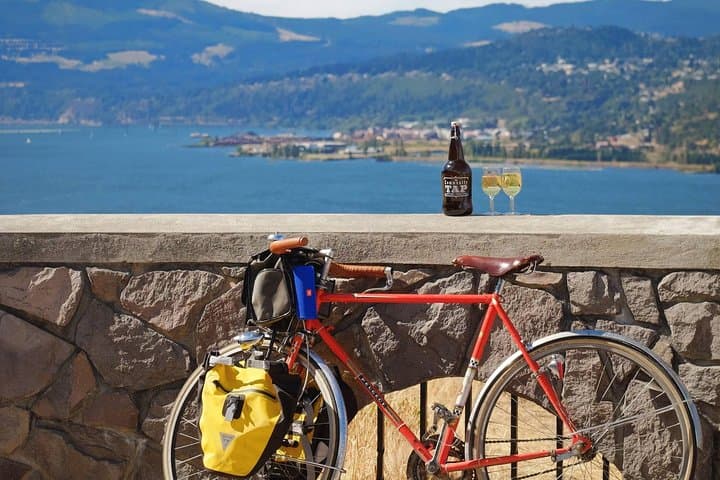
The Columbia River leans into the Gorge like a restless thought, its surface sparkling with dare—the current seems to whisper go on, push a little further. You answer back by turning the throttle of an electric bicycle and easing up a shoulder of road lined with gnarled oak, basalt outcrops and orchards taking their own slow breaths. The first sip comes midday: a tart cider that tastes of apple skins and sun. The second is a floral Pinot charged with basalt-mineral clarity. The ride stitches those moments together, and for four hours the Gorge feels less like a destination and more like a continuing conversation between landscape and palate.
This is not a rigid tasting crawl; it’s a rhythm of motion and pause. The ebike smooths the push of the climbs so you arrive at tasting rooms still present, not windblown and exhausted. You’ll zip along river-front lanes and roll through small farm roads. Wind coaxes clouds across the rim of the Gorge and the cliffs—the ancient, slashed faces of Columbia River basalt flows—stand watch. Geologically, you’re in a river-carved scar: millions of years of lava and Ice Age floods sculpt the steep walls that funnel weather and create the microclimates that make the Gorge remarkable for fruit, hops, and grapes.
History is underfoot and underwheel. Long before beers and tasting menus, the Columbia River Gorge was a corridor for Indigenous peoples whose trade routes and fishing sites formed the backbone of regional life. In modern times, steamboats, railways, and then highways opened the Gorge to visitors; in 1986 Congress designated much of the corridor the Columbia River Gorge National Scenic Area to preserve its scenery and cultural resources. Today, small producers—cider makers, craft breweries, family wineries—draw on that layered heritage, turning sun and basalt-rich soils into sharply flavored bottles.
A tasting-by-ebike tour packs a lot into a compact window: about four hours on the road with multiple stops for pours and small bites. Routes vary by operator, but expect roughly 25–30 miles of riding with modest climbs (combined elevation commonly in the 800–1,200-ft range), punctuated by flat riverfront stretches where the ebike hums and you can chat without shouting. The ride is social but not rushed: operators tend to run small groups or private tours so there’s time to learn about the producers’ approach—organic orchards, barrel aging decisions, and the interplay between river-effect and vine.
Practicalities: the tour lists a fixed 240-minute duration and starts from the Portland/Hood River corridor; many travelers base themselves in Hood River for an easy launch. Cost begins at about $150 per person; confirmation is manual and tours often include free cancellation windows—check the vendor’s exact policy. The bikes come equipped with batteries that handle rolling terrain easily; still, a pre-ride check of battery charge and tire pressure is smart. Bring a reusable water bottle, layered clothing, and some cash or card for any purchases at tasting rooms.
Why go? There’s a simple joy in arriving at a tasting room with warm hands and a cool drink, having earned it with a short climb that the ebike made friendly. The Gorge is a compact orchestra of flavors—apple, pear, hop resin, and Pinot’s bright acidity—and each stop yields context: this orchard gets afternoon wind that dries fruit earlier; that winery sits in a swale that traps cool air at night. Those details make every pour taste of place.
Timing matters. Late summer and early fall are when fruit and grape ripeness intensify and colors in the trees begin to smoke gold. Shoulder season rides, in spring, offer apple blossom perfume and quieter stops. Wind can dominate on some days; operators route accordingly, and afternoon headwinds are a practical concern.
Local etiquette for tasting rooms is straightforward: tip for pours, ask about flights rather than full pours if you want to sample more producers, and support small makers by purchasing a bottle or two if you liked something. Your choices ripple through the local economy: many of these producers are family operations that rely on direct sales.
The ebike tasting tour is an accessible way to experience the Gorge’s contrasts—fast water and still orchards, basalt cliffs and cultivated terraces—without the exertion or logistics of driving between small, often remote businesses. It’s scenic, social, and sensory in equal measure. For anyone who likes to be outside but also likes a good meal and a well-made cider, the ebike tour delivers. You’ll finish with a little salt on your skin, a bike seat imprint and the pleasant extra weight in your bag: a bottle or two that will remind you, back at home, of a river that dared you to explore it and the small, resilient producers who made room for you at their tables.
Trail wisdom
Small choices, better day.
Charge and check the battery
Confirm your ebike battery is fully charged before departing and ask the guide about expected range for the route.
Pace your pours
Order flights or share tastes to sample more producers without overconsumption during a 4‑hour ride.
Dress in layers
The Gorge can shift from sun to wind quickly—bring a light windbreaker and a breathable base layer.
Hydrate proactively
Carry a reusable water bottle and sip between tastings; alcohol plus wind and sun dehydrate faster than you think.
Local knowledge
Read the place, not just the route.
Watch for native species including Osprey, Columbian black-tailed deer.
Keep an eye out for wildlife during the transition between areas and habitats. Respect distance guidelines.
Support small producers, stay on paved routes, and pack out all trash—many growers practice sustainable agriculture and rely on responsible visitation.
Follow the guide's instructions on size limits, ethical handling, and leave-no-trace practices.
A roadside orchard stand that sells single-origin cider pressed on-site (seasonal). A small family-run tasting room off the main highway that focuses on low-intervention wines
Locally recommended viewpoints and quiet spots known best to local operators.
The Columbia River Gorge was designated a National Scenic Area by Congress in 1986 to protect its scenic, cultural, and natural resources.
Maritime roots and regional tradition shape the waterways and working coasts.
Seasonal guide
Four versions of the same landscape.
Spring
Best forApple blossoms · Fewer crowds · Mild riding temperatures
ChallengesVariable rain · Cool mornings · Some producers on limited hours
Spring offers floral notes and quieter tasting rooms; expect occasional rain and cool starts—pack a waterproof layer.
Summer
Best forWarm weather riding · Open patios · Long daylight
ChallengesStronger winds · Busier tasting rooms · Higher temperatures mid‑day
Summer brings long, sunlit rides and lively patios but also windier conditions—schedule morning departures to avoid peak gusts.
Fall
Best forHarvest season · Peak flavors · Autumn color
ChallengesShorter daylight · Cooler evenings · Variable weather
Fall is ideal for ripeness and color; days are crisp and flavors concentrated—plan for afternoons that cool quickly.
Winter
Best forOff‑season quiet · Lower prices at some vendors · Dramatic storm skies
ChallengesRain and cold · Short daylight · Some closures
Winter rides are quieter and more dramatic but wetter—check operator cancellations and bring warm, waterproof gear.
Operator details
What the booking data adds.
Included
- ✓Use of bicycle
Good to know
- ✓Service animals allowed
- ✓Public transportation options are available nearby
- ✓Specialized infant seats are available
- ✓Travelers should have at least a moderate level of physical fitness
- ✓Pedicab for Seniors or Accessibility Challenged
- ✓Cargo bike for families
- ✓Cargo bike for Adults
Pack with intention
What to bring.
Good to know
Common questions.
No—most tours offer a brief orientation and choose routes suited to first-time riders; basic comfort on a bike is helpful.
Plan the edges
The details that make the day easier.
The Columbia River Gorge National Scenic Area was created by Congress in 1986 to protect the Gorge’s scenic, cultural, and natural resources.
After the ride, head into downtown Hood River for farm-to-table plates and local pours—Pfriem Family Brewers and Full Sail Brewing both have tasting rooms nearby; pick up a bottle from a winery or cider maker to take home.
- Closest major airport
- Portland International Airport (PDX, ~60 miles
- 1.5 hours by car); Common base
- Hood River; Cell service: generally good but spotty in deeper canyon turns; Permits
- fees
- Tour operator handles access—check state park fees if you stop at public parks.
Support small producers by buying local bottles, pack out all trash, stay on designated roadways and avoid disturbing riparian habitats in the Gorge.
Explore by topic
Follow the threads.
Keep exploring
Make the story part of the trip.
Set out from Bass Harbor for a private, customizable day on Blue Hill Bay — lighthouses, puffins, seals, and the chance to feel Acadia from the water. Small groups, local captains, unforgettable views.
In four hours you can move from shaded canyon ferns to wind-scoured coastal ridgelines, guided by someone who knows where the light—and the hidden views—live. This private half-day hike on the Monterey Peninsula or Big Sur is compact, curated, and perfect for travelers who want depth without a multiday commitment.
 Related story
Beneath a sky of shifting light, Skaftafell’s ice reads like a map of time. This three-hour guided glacier hike mixes technical instruction with geology and culture: compact, safe, and unforgettable.