
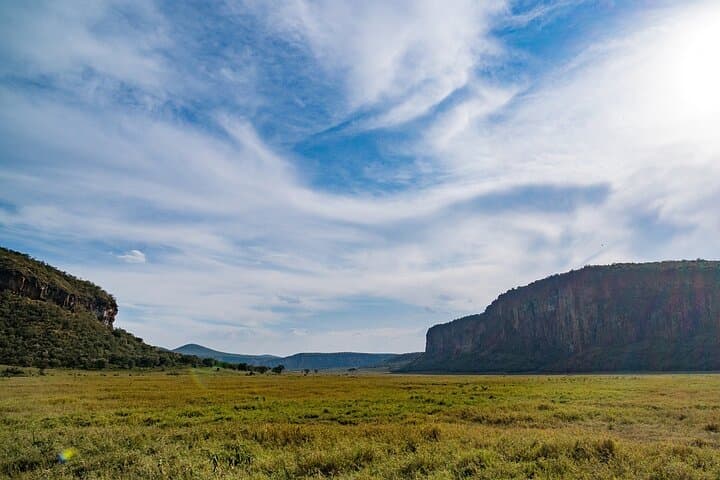
What the day feels like
You set off before the heat has fully risen, tires whispering over dusty tracks as the Rift Valley opens like a weathered map. Steam curls from distant fumaroles and the escarpment keeps its secrets in red ochre and shadow. The road slices past acacia and scrub, then the landscape drops away to reveal a green bowl: Hell’s Gate National Park, where wildlife moves with the casual confidence of creatures used to being on stage. Here, zebras and gazelle graze without a doubt that you belong on their itinerary. The day that follows blends easy endurance with geological theater—biking through the park’s wide valleys, a walk in its narrow gorges, and a final ritual of soaking in the warming mineral baths at Olkaria. It’s a day that gives you the Rift Valley at human scale: tactile, fragrant, and bluntly beautiful.
Hell’s Gate sits in the Great Rift Valley, where tectonic plates pull apart and volcanic plumbing shapes everything from steaming vents to the cliffs that frame the park. European settlers and local communities have long read these features like a ledger—this is land that gives, and sometimes takes. Olkaria’s geothermal wells are a modern chapter: the field was developed into Africa’s first geothermal power plant in the early 1980s, a reminder that the Rift still hums with energy beneath its surface. Culturally, Naivasha and the surrounding area are a crossroads—Maasai families maintain grazing land and traditional ties to the landscape even as tourism and geothermal development bring new livelihoods.
The park’s appeal is practical as well as cinematic. Its openness and lack of large predators mean you can explore on two wheels or on foot among free-roaming impala and buffalo. Many guidebooks nod to Hell’s Gate as one of the places that inspired the landscapes in pop culture’s Africa—what matters more to a traveler is the immediacy: the wind that presses against your chest as you crest a saddle, the sudden hush when a herd steps between you and a bluff, the smell of sulfur from a boiling pool.
The ride itself is uncomplicated but rewarding. Most guided tours cover a mix of sealed and gravel roads with short singletrack sections through scrub and beside cliffs. Distances range from gentle 10- to 25-kilometer loops depending on how many photo stops and walking detours you want. Elevation changes are modest—this is Rift Valley walking and riding, not alpine climbing—but the sun is relentless, and exposed sections can amplify fatigue. The gorge walks are where the geology becomes intimate: footpaths narrow, walls close in, and the wind finds edges to sing through. Guides will point out rock layers, hot springs, and the endemic plant species that eke out a living on those steep faces.
Transition to the spa is deliberately anticlimactic: from raw landscape to the civilized warmth of Olkaria’s geothermal pools, where mineral-rich water eases joints and washes grit from the day. The contrast makes the soak feel earned. Local operators bundle transport, bikes, lunch, and sometimes a guide versed in Maasai history and Rift geology, so the day is more about presence than logistics.
Practical edge: aim for early starts and an off-season mindset for weather. Long rains (roughly March–May and October–November) complicate dirt roads and can make gorges slick. The middle of the year—June to September—tends to offer the clearest skies and the most comfortable cycling temperatures. Bring layered clothing (it’s cool in the morning, warm by noon), a reliable bike helmet, and a handlebar-mounted bottle for easy hydration. Most operators provide helmets and basic bikes; if you’re particular about suspension and gearing, bring your own or confirm a high-quality option ahead of time.
Wildlife encounters here are uncomplicated, not voyeuristic. When you pass a grazing zebra or a line of eland, slow down and let them set the pace. Keep distance, don’t corner animals in narrow sections, and be quiet; the payoff is sustained sightings rather than startled sprints. Respect park rules—this is also working land, with ongoing geothermal operations nearby—so stick to roads and guidance from your driver or ranger.
Why go? Because Hell’s Gate offers a full-spectrum day: the kind of outdoor itinerary that balances modest physical effort with high sensory payoffs. You’ll leave with a handful of strong images—cliffs that look carved by a sculptor with a blunt chisel, a bike lane framed by grazing zebra, the mineral steam rising from the spa—and practical gratification: you moved under your own power, you learned a geological story, and you rewarded yourself in comfortably warm water.
Plan for a private or small-group tour if you prefer pacing that fits your legs and photo stops; a private option also provides flexibility on route choice and timing at the spa. Whether you’re a casual rider who wants an elevated day trip from Nairobi or a traveler stacking interesting natural energy sites into a broader Rift Valley tour, Hell’s Gate compresses geology, wildlife, and restorative ritual into a single memorable day.
Trail wisdom
Small choices, better day.
Start Early
Mornings are cooler and wildlife is more active; aim to be in the park by 7–8 a.m.
Hydrate On the Move
Carry at least 1–1.5 liters of water in an accessible bottle—there are limited refill options in the park.
Respect Wildlife Distance
Slow down and give grazing animals space; avoid sudden movements in narrow gorge sections.
Bring a Lightweight Layer
Temperatures shift quickly from cool mornings to hot midday sun—layering keeps you comfortable.
Local knowledge
Read the place, not just the route.
Watch for native species including Zebra, Buffalo.
Keep an eye out for wildlife during the transition between areas and habitats. Respect distance guidelines.
Tourism revenues support park management and local communities; stick to trails, avoid littering, and use licensed guides to minimize impact.
Follow the guide's instructions on size limits, ethical handling, and leave-no-trace practices.
Gorge-side picnic spots beneath carved cliffs. Early-morning viewpoints on the escarpment for Rift panoramas
Locally recommended viewpoints and quiet spots known best to local operators.
Hell’s Gate was designated a national park to protect its unique geothermal and wildlife landscapes, and nearby Olkaria became the site of Africa’s first geothermal power plant in the early 1980s.
Maritime roots and regional tradition shape the waterways and working coasts.
Seasonal guide
Four versions of the same landscape.
Spring
Best forLush scenery after rains · Fewer tourists
ChallengesUnpredictable rain showers · Mud on dirt tracks
March–May can green the landscape dramatically but expect afternoon rains and some slippery sections.
Summer
Best forClear skies · Cool cycling temperatures
ChallengesHigher tourist numbers in July–August · Busy parks on weekends
June–August is typically the most comfortable window for cycling and gorges—bring sun protection for exposed stretches.
Fall
Best forShort rains bring bird activity · Quieter weekdays
ChallengesIntermittent showers in Oct–Nov · Road softening after storms
September–November includes brief rain spells; early fall days can be beautiful and relatively uncrowded.
Winter
Best forDry roads · Crisp morning light
ChallengesChilly mornings · Strong midday sun
December–February offers dry conditions—perfect for biking, though mornings are cool and sunscreen is essential.
Operator details
What the booking data adds.
Included
- ✓Private transportation
- ✓Driver/Guide Allowance.
- ✓Bottled water
- ✓Lunch
Not included
- —Bike hire (can be arranged at an additional fee US$10.00 per bike.)
- —Park entrance (USD 26.00 per adult)
- —Geothermal spa access (USD 14.00 per adult)
Good to know
- ✓Infants and small children can ride in a pram or stroller
- ✓Public transportation options are available nearby
- ✓Infants are required to sit on an adult’s lap
- ✓Not recommended for travelers with spinal injuries
- ✓Not recommended for pregnant travelers
- ✓Not recommended for travelers with poor cardiovascular health
- ✓Travelers should have at least a moderate level of physical fitness
Pack with intention
What to bring.
Good to know
Common questions.
The private tour runs roughly 6–10 hours depending on pickup location and how long you spend at the gorge and spa.
Plan the edges
The details that make the day easier.
Olkaria’s geothermal field hosts Africa’s first large-scale geothermal power plant, first commissioned in the early 1980s.
After a day in the park, head into Naivasha for fresh grilled tilapia by the lakeside or try nyama choma (grilled meat) at a local eatery. Visit Elsamere on the lake for a relaxed café and a small museum about local conservation history.
- Closest airport
- Jomo Kenyatta International Airport (NBO) in Nairobi; Driving distance: ~90 km
- 1.5–2.5 hours depending on traffic; Trailhead
- Hell’s Gate main entrance near Naivasha town; Cell service: reliable near Naivasha and park entrance, patchy inside gorges; Permits
- Passes
- Park entry and bike hire fees usually included with tour—confirm in advance.
Stick to established paths, pack out waste, and choose operators who employ local guides and contribute to community funds to reduce tourism-related strain on the ecosystem.
Explore by topic
Follow the threads.
Keep exploring
Make the story part of the trip.
Set out from Bass Harbor for a private, customizable day on Blue Hill Bay — lighthouses, puffins, seals, and the chance to feel Acadia from the water. Small groups, local captains, unforgettable views.
In four hours you can move from shaded canyon ferns to wind-scoured coastal ridgelines, guided by someone who knows where the light—and the hidden views—live. This private half-day hike on the Monterey Peninsula or Big Sur is compact, curated, and perfect for travelers who want depth without a multiday commitment.
 Related story
Beneath a sky of shifting light, Skaftafell’s ice reads like a map of time. This three-hour guided glacier hike mixes technical instruction with geology and culture: compact, safe, and unforgettable.