
What the day feels like
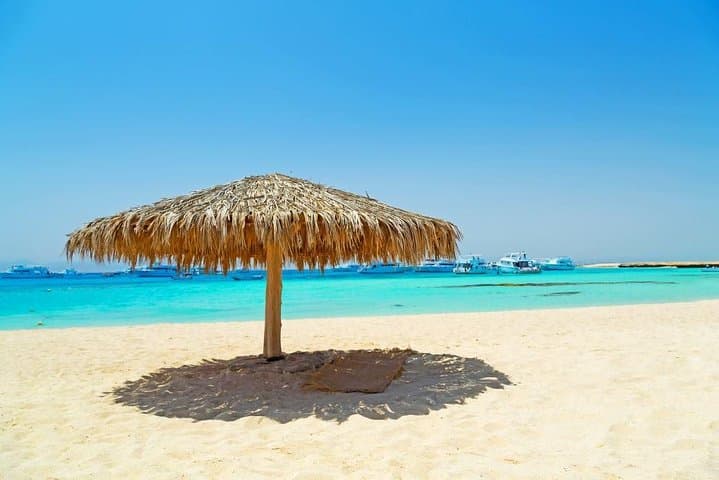
The boat slips free from Hurghada at dawn and the city recedes into a thin band of concrete and dust. Sea light broadens, an honest, fluorescent blue that seems to promise everything the Red Sea is famous for: visibility like a window, reefs like stacked mosaics, fish that flash like scattered coins. By mid-morning the motor's steady thrum and the gulls' interrogation have been replaced by a shallow hush—water so clear it feels like glass with a pulse. Paradise Island, one of the Giftun isles that dangle off Hurghada's coast, appears as a clean crescent of sand and low scrub, a place where coral gardens begin within a few strokes of your snorkel.
This is not a postcard description so much as an instruction: the island almost dares you to leave the sand. Tours—this one runs about seven hours, starting at 9 AM—make the reef the argument. Two snorkeling stops are standard on most operators' itineraries; each offers a different chapter. One reef is a riot of hard coral bommies and parrotfish choreography. The other slopes gently into blue, a corridor where hawksbill and green turtles sometimes crop up like clockwork. A moray eel will peer from a boulder crevice as if it were part of the furniture. The day's rhythm is unfussy: swim, return to the boat, take a dive, and then be rewarded with an open buffet on the beach where you can dry off and watch the sea varnish the horizon.
Giftun's geology is simple and decisive. The islands are limestone and carbonate outliers, their white sand beaches the result of millennia of coral breakdown and biogenic sediment. The reefs you see are living structures, built organism by organism, and their architecture determines where fish concentrate and where waves submit. That clarity of water—an almost clinical visibility—stems from low terrestrial runoff; the Red Sea is famously saline and nutrient-poor compared with other tropical seas, which helps keep visibility high but also means corals are finely balanced and vulnerable.
Culturally, the trip ties to Hurghada's recent history. Once a sleepy fishing town, Hurghada transformed into a seaside hub over the past forty years, oriented around tourism and diving. The Giftun islands have become an emblem of that shift: small-scale local fisheries gave way to tour operators who now ferry visitors out each day to see and sustain a living off of marine wonders rather than extract them wholesale. That shift brings money and stewardship challenges in equal measure; many operators now emphasize reef-safe practices because the product—healthy coral ecosystems—can't be outsourced.
Practical edge: the tour is about seven hours long (420 minutes on the schedule), priced from roughly $61 per person, and usually includes use of snorkeling gear, two reef stops, and an island buffet. Expect groups, and expect the boat to be social—it's a family-friendly day that blends shallow snorkeling with beach time. The classic itinerary gives non-swimmers space to enjoy the sand while confident snorkelers disappear into the reef trail. If you want privacy or a longer, quieter day under the water, consider booking an early boat or a smaller charter for more controlled timing.
What you should know before you go: water conditions are typically calm in spring and fall, and visibility peaks outside the hottest summer months. Currents can pick up along channels between islands; a guide's assessment governs whether a stop is suitable for novice snorkelers. Bring reef-safe sunscreen—chemical sunscreens damage corals—and avoid touching the reef. Respect the wildlife: turtles are not attractions to chase but wild animals with predictable feeding times; allow them space.
How to prepare: arrive hydrated and fed enough to enjoy the day—sea air sharpens appetites—wear quick-drying clothing and shoes that grip for getting on and off boats. Practice clearing your snorkel and equalizing if you tend to feel uneasy with masks; a quick pool session a few days before can change the day from tentative to effortless. Photographers: a small underwater camera or a housing is worth bringing; the shallower reefs and clear visibility make for bright, contrasty images without needing a huge strobe.
For who: this day works for families with older children, couples, and independent travelers who want a low-commitment marine immersion. It's not a technical dive; no certifications are required for snorkeling. Fitness demands are modest—swimming ability and comfortable mobility for boarding boats are enough—but expect to be active for most of the day.
If you leave wanting more, consider a multi-day liveaboard or a certified dive course to explore deeper walls and caverns. But for a concentrated taste of the Red Sea's best shallow reef encounters, Paradise Island is both efficient and intoxicating.
At its best, the trip is an uncomplicated education: you learn marine rhythm by moving through water that feels as much like a landscape as a medium. The reef will not perform on command, but it will reward curiosity and restraint. You come for the coral gardens and the chance of a turtle; you stay for the way the sea clarifies priorities—sunlight, fins, breath—and then returns you to a shore that feels, briefly, like paradise with a price tag that still feels reasonable.
Trail wisdom
Small choices, better day.
Bring Reef-Safe Sunscreen
Chemical sunscreens harm corals; opt for mineral-based sunscreen and reapply after swimming.
Practice Snorkel Skills
Brief mask-clearing and equalization drills the day before make the reef experience far more comfortable.
Watch for Currents
Follow the guide's instructions at drop sites—currents can be deceptive between islands.
Secure Valuables
Use a waterproof pouch or leave nonessentials on shore—boats can be bouncy and crowded.
Local knowledge
Read the place, not just the route.
Watch for native species including Green Turtle, Moray Eel.
Keep an eye out for wildlife during the transition between areas and habitats. Respect distance guidelines.
The Giftun reefs are sensitive; many operators promote reef-safe practices and contribute to local marine conservation efforts to protect coral and turtle habitats.
Follow the guide's instructions on size limits, ethical handling, and leave-no-trace practices.
Early-morning snorkeling near shallow bommies for dramatic fish activity. A quiet sandbar east of the main beach perfect for short barefoot walks
Locally recommended viewpoints and quiet spots known best to local operators.
Hurghada transformed from a small fishing port into an international dive hub over the last 40 years, with Giftun islands becoming emblematic of the Red Sea tourism boom.
Maritime roots and regional tradition shape the waterways and working coasts.
Seasonal guide
Four versions of the same landscape.
Spring
Best forCalm seas · Clear visibility · Moderate temperatures
ChallengesOccasional wind fronts · Tourist season ramps up
Spring offers steady water conditions and warm air without summer heat—great visibility and comfortable snorkeling.
Summer
Best forWarm water · Long daylight hours · Good for families
ChallengesHigh temperatures · Increased boat traffic · Stronger midday sun
Summer means hotter days and crowded excursions; morning trips are best to avoid heat and peak crowds.
Fall
Best forExcellent visibility · Milder weather · Less crowded beaches
ChallengesOccasional swells from autumn storms
Fall (September–November) is one of the best times—water is warm, visibility high, and crowds moderate.
Winter
Best forFewer tourists · Cooler water for active swimmers
ChallengesCooler air and water temperatures · Occasional strong winds
Winter brings cooler conditions; you'll still snorkel comfortably with a thin wetsuit and plan for windier days.
Operator details
What the booking data adds.
Included
- ✓Banana Boat
- ✓Soda/Pop
- ✓Snacks
- ✓Lunch
- ✓Use of Snorkelling equipment
- ✓Air-conditioned vehicle
- ✓Coffee and/or Tea
Not included
- —Alcoholic Beverages
- —Gratuities
Good to know
- ✓Not recommended for travelers with poor cardiovascular health
- ✓Public transportation options are available nearby
- ✓Infants and small children can ride in a pram or stroller
- ✓Transportation options are wheelchair accessible
- ✓Suitable for all physical fitness levels
- ✓Wheelchair accessible
Pack with intention
What to bring.
Good to know
Common questions.
No—basic swimming ability and comfort snorkeling are sufficient; guides assign safer shallow spots for less confident swimmers.
Plan the edges
The details that make the day easier.
The Giftun islands lie in a well-known Red Sea marine area valued for coral diversity and frequent turtle sightings—local guides often help monitor nesting and reef health.
After the trip, head back to Hurghada’s Marina for fresh seafood at a seaside restaurant or try local cafes in El Dahar for traditional Egyptian dishes; for a nightcap, waterfront bars along the Corniche offer relaxed views and sunset breezes.
- Closest airport
- Hurghada International Airport (HRG); Nearest marina
- trailhead
- Hurghada Marina, 20–45 minutes by road depending on hotel; Cell service: reliable in Hurghada, limited at sea; Permits: none typically required for commercial tours—check operator details.
Use reef-safe sunscreen, avoid touching or standing on corals, and dispose of all rubbish—operators and visitors play a direct role in preserving the reefs that sustain local livelihoods.
Explore by topic
Follow the threads.
Keep exploring
Make the story part of the trip.
Set out from Bass Harbor for a private, customizable day on Blue Hill Bay — lighthouses, puffins, seals, and the chance to feel Acadia from the water. Small groups, local captains, unforgettable views.
In four hours you can move from shaded canyon ferns to wind-scoured coastal ridgelines, guided by someone who knows where the light—and the hidden views—live. This private half-day hike on the Monterey Peninsula or Big Sur is compact, curated, and perfect for travelers who want depth without a multiday commitment.
 Related story
Beneath a sky of shifting light, Skaftafell’s ice reads like a map of time. This three-hour guided glacier hike mixes technical instruction with geology and culture: compact, safe, and unforgettable.