
What the day feels like
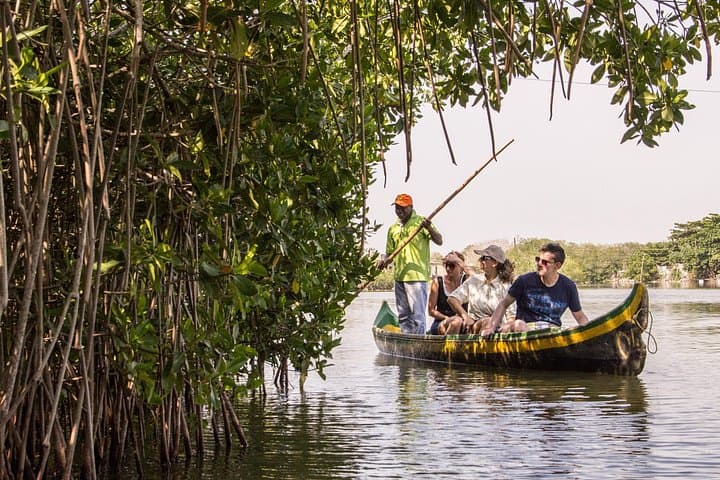
The canoe slips its way into a green cathedral. Roots braid overhead, dappling the light into slow-moving constellations; the water is brown with tannin and stubbornly alive. A fisherman at the stern—broad-shouldered, calm—guides the canoe with a practiced sweep of the paddle, and you feel the tunnel close around you like a page of coastline history being turned. This is La Boquilla, a working fishing village on the northern edge of Cartagena, and for three hours you move through the waterways its people have read like a map for generations.
On the surface this is a wildlife paddle—herons jabbing like punctuation, kingfishers flashing like thrown coins—but the deeper story is cultural and ecological. The mangroves here are not a backdrop so much as a livelihood: they are nurseries for fish, buffers against storms, and living proof of local stewardship. For decades La Boquilla's Afro-Colombian community fought to protect these channels from development and degradation; today, community-led tours are part environmental education, part economic lifeline. When you book the <a href="https://app.advcollective.com/local-experts/la-boquilla-mangrove-canoe-tour-with-local-fishermen-cartagena-eco-experience">La Boquilla mangrove canoe tour</a>, you’re paying to float through biology lessons and oral history simultaneously.
Geologically, Cartagena’s coastline is young—shelves of carbonate sediments and the interplay of tides and rivers have created a quilt of mangrove patches, lagoons and channels. The mangrove species here—red, black and white—anchor in the silty substrate, their aerial roots knitting a shallow labyrinth that slows the tide and captures organic matter. That detritus feeds shrimp and small fish, which in turn support the larger species that make their way into village nets. It’s a tightly coupled system: disturb the roots, and the food web frays.
Culturally, La Boquilla is part of Colombia’s palenque tradition—coastal, Afro-descendant communities born of runaway enslaved people who carved out autonomous settlements. That lineage shows in language, rhythms, and the menu after the paddle: fried fish, coconut rice and coconut water sold right on the sand by families who can tell you the tide schedule as easily as their own birthdays.
But the trip isn’t all contemplation. Expect an active, sensory three hours—the tour runs about 180 minutes—of paddling slow and listening closely. You’ll weave through narrow channels and emerge into open lagoons where wind and sun rearrange the experience. Local fishermen act as guides and storytellers; they point out birds and crabs and tell short, lucid histories about how the mangroves were reclaimed through grassroots effort. That voice—local, invested, immediate—turns the trip from a checklist tick to a small but meaningful exchange.
Practicalities: the route is gentle and appropriate for fit beginners and seasoned paddlers alike. Technical skills are minimal—basic paddling and balance—though you should be prepared for sitting, for low branches, and for hot sun. Wear quick-drying layers and reef shoes, bring water, and time your paddle for the cooler morning hours when insect activity is lower and the light makes the water glow. Book in advance—the tours are community-run and limited to keep group sizes small and the impact light. Reserve your place on the <a href="https://app.advcollective.com/local-experts/la-boquilla-mangrove-canoe-tour-with-local-fishermen-cartagena-eco-experience">La Boquilla canoe trip</a> to ensure the experience supports local livelihoods and conservation.
Why go? Because it’s intimate and instructive. Cartagena’s Old City is cinematic and necessary, but La Boquilla gives a different kind of souvenir: a clearer sense of the coast that feeds the city, and of people who fought for it. You’ll leave with birdsong in your ears, salt on your skin, and a better understanding of how small-scale, locally controlled tourism can be a tool for stewardship.
How to prepare: arrive hydrated, sun-safe, and ready to learn more than to race. Bring a camera with a polarization filter if you shoot, but keep it protected from splashes. Ask questions—the guides welcome them—and consider tipping or buying local snacks at the end of the trip as direct support. If you want to extend the morning, plan a swim or a late bite in La Boquilla, keeping an eye on tides and currents.
There’s a quiet economy to this tour. You don’t just watch the mangroves; you help make their protection financially viable. Small groups, local guides, and a route designed to minimize impact—those are the features that turn an easy paddle into meaningful, low-footprint travel. For three hours you’re offered a rare lesson in coastal resilience, narrated by the very people who live on its edge. Book a slot on the community-led <a href="https://app.advcollective.com/local-experts/la-boquilla-mangrove-canoe-tour-with-local-fishermen-cartagena-eco-experience">mangrove canoe tour</a>, and come ready to listen.
Trail wisdom
Small choices, better day.
Book Morning Slots
Mornings are cooler, less buggy, and better for bird activity—plan for an early departure.
Wear Reef Shoes
Silty channels and slippery roots make closed-toe water shoes a safer choice than sandals.
Bring a Refillable Bottle
Three hours of paddling under the sun means hydration matters—refill before you go.
Support Local Vendors
Buy snacks or tip guides directly to ensure revenue stays in the community.
Local knowledge
Read the place, not just the route.
Watch for native species including Great egret, Kingfisher.
Keep an eye out for wildlife during the transition between areas and habitats. Respect distance guidelines.
Community-led tours help fund mangrove restoration and keep development pressures low—visitors are asked to minimize impact and support local vendors.
Follow the guide's instructions on size limits, ethical handling, and leave-no-trace practices.
Early morning paddle into side channels where herons roost quietly. Small sandbar near the lagoon edge where local families sell fresh fried fish
Locally recommended viewpoints and quiet spots known best to local operators.
La Boquilla is an Afro-Colombian fishing village with roots in palenque communities; its residents have long combined fishing traditions with communal land stewardship.
Maritime roots and regional tradition shape the waterways and working coasts.
Seasonal guide
Four versions of the same landscape.
Spring
Best forMigratory birds · Warm mornings
ChallengesIntermittent rain showers · Higher humidity
March–May bridges dry and wet seasons—expect warm conditions and good birding, but pack a lightweight rain layer.
Summer
Best forLush mangrove foliage · Fewer tourists
ChallengesHeat and humidity · Increased mosquitos
June–August is verdant and vibrant; schedule early tours to avoid the hottest part of the day.
Fall
Best forDramatic skies · Good fish activity
ChallengesHeavier rains possible · Rougher coastal conditions
September–November sees more rain—trips run but may be wetter; check forecasts and operator updates.
Winter
Best forDry conditions · Calmer waters
ChallengesPeak visitor season in Cartagena · Warmer midday sun
December–February is the driest, making for comfortable paddling and clearer skies; mornings are ideal.
Operator details
What the booking data adds.
Included
- ✓Roundtrip transportation from Cartagena city center
- ✓Environmental and cultural education session on the mangrove ecosystem.
- ✓Guided canoe tour with local fishermen.
- ✓Expert bilingual guide (Spanish/English).
Not included
- —Additional Drinks.
- —Personal expenses or tips.
Good to know
- ✓Specialized infant seats are available
- ✓Not recommended for travelers with spinal injuries
- ✓Not recommended for pregnant travelers
- ✓Not recommended for travelers with poor cardiovascular health
- ✓Suitable for all physical fitness levels
- ✓This is a rain or shine experience—bring sun protection, a hat, and comfortable clothing and shoes suitable for water adventures.
- ✓Changes to the itinerary may occur due to external factors, but you’ll be notified in advance.
- ✓Packing List: Sunscreen, Wide-brimmed hat, Insect repellent, Comfortable sandals or walking shoes ,Light breathable clothing
Pack with intention
What to bring.
Good to know
Common questions.
The tour lasts approximately 3 hours and includes paddling through narrow channels and open lagoons, plus time to learn from local guides.
Plan the edges
The details that make the day easier.
La Boquilla’s residents are part of Cartagena’s Afro-Colombian palenque heritage, and community-led efforts have been central to restoring and protecting local mangrove stands.
After the paddle, walk the sand where local families sell freshly fried fish, coconut rice and cold fruit drinks—simple, direct food made by the people who live here. A slow walk on the beach and a snack from a vendor is the best way to close the experience and keep money in local hands.
- Closest airport
- Rafael Núñez International Airport (CTG)
- Driving from Cartagena Centro
- ~20–30 minutes
- Driving from Cartagena Old City
- ~25 minutes
- Cell service
- Patchy in dense channels
- Permits
- None, but tours are community-run—book directly.
Tours are designed to minimize impact and support local livelihoods—avoid single-use plastics, stay in marked canoe channels, and tip guides or purchase local food to help sustain community conservation efforts.
Explore by topic
Follow the threads.
Keep exploring
Make the story part of the trip.
Set out from Bass Harbor for a private, customizable day on Blue Hill Bay — lighthouses, puffins, seals, and the chance to feel Acadia from the water. Small groups, local captains, unforgettable views.
In four hours you can move from shaded canyon ferns to wind-scoured coastal ridgelines, guided by someone who knows where the light—and the hidden views—live. This private half-day hike on the Monterey Peninsula or Big Sur is compact, curated, and perfect for travelers who want depth without a multiday commitment.
 Related story
Beneath a sky of shifting light, Skaftafell’s ice reads like a map of time. This three-hour guided glacier hike mixes technical instruction with geology and culture: compact, safe, and unforgettable.