
What the day feels like
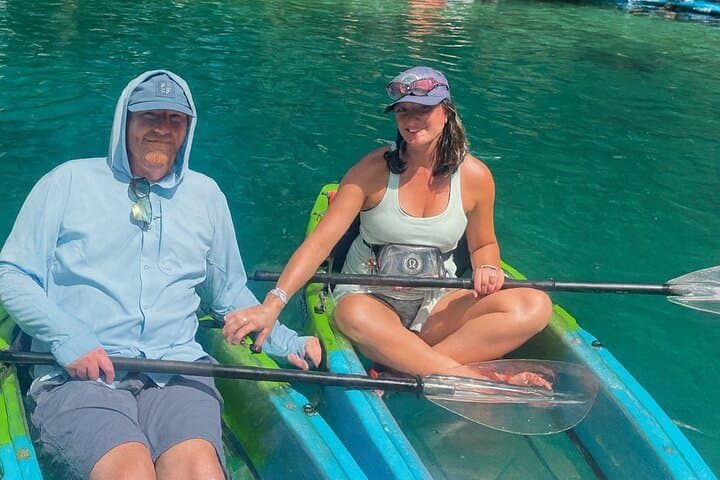
The water at Three Sisters Springs is the color of a coin freshly pulled from a pocket: pale, luminous, and carrying light down into its secret places. You push off from the dock at Waterfront Social and the world rearranges itself into a narrower focus — the gentle scrape of your paddle, the small wake that slides away from the clear-bottom hull, and the hush of palms that lean in like onlookers. Ahead, the springs breathe. Steamless and steady in winter, a steady 72°F, they invite creatures and people alike, and the promise of seeing a slow-bodied manatee turning under the glass-bottom boat becomes a real, hold-your-breath moment.
This is not a high-speed thrill; it is a close-reading of a place shaped by time. The tour, led by Captain Scotty and small groups keen on quiet observation, is paced to let wildlife decide the timetable. You drift in single clear kayaks that feel featherlight — design that matters when you want to study turtles rooting in submerged grass, not muscle through a stiff hull. The clear kayak is a small revelation: the water becomes a window and the window, for a few hours, becomes the story.
Three Sisters Springs and the surrounding waterways of Crystal River are a geological footnote that turned into an ecological headline. The springs are part of the Floridan Aquifer system: clear, karst-fed water rising through limestone, creating a chain of springs and channels that feed the Crystal River estuary. That groundwater has long been a refuge — for Indigenous peoples historically, for the fishing and boating communities that settled here, and, most spectacularly, for the West Indian manatee each winter. When winter chills the nearby Gulf, manatees migrate to the springs’ steady warmth, and the springs can hold dozens — sometimes hundreds — of these gentle giants.
Culturally, Crystal River reads as a town built on water commerce and coastal craft: a working waterfront, small marinas, and family-run operations like the one you’ll book through. The voice of Captain Scotty, who knows the tides, the eddies, and the likely haunts of wildlife, is practical and instructive, not performative: a reminder that familiarity breeds stewardship. The tour’s small-group ethos keeps the experience intimate and lowers the human footprint at the springs — an important consideration when you’re paddling in a manatee sanctuary.
Why people come here is obvious: the chance to float above living glass and watch the animals go about their slow business. But the appeal runs deeper. It’s a study in scale — the small mechanical heartbeats of minnows, the thoughtful turns of a manatee, the aerial punctuation of ospreys — and a lesson in how a single spring system supports an entire coastal ecology. If you want to see Florida’s wildlife without the crowds and the motor noise, this three-hour, relaxed-pace outing is one of the most honest ways to do it.
Practicalities matter. Tours run roughly 2–3 hours, and although snorkeling is offered, it’s optional; masks and snorkels are provided. The clear kayak is limited to 200 lbs per single kayak, so check weight and vessel options if you need a sit-on-top or a tandem. Peak manatee season is January–February; sightings are likeliest then, though the springs are beautiful year-round. The company works with Waterfront Social for a smooth launch and pickup, and their local knowledge typically produces better wildlife interactions than larger, industrialized tours.
When you plan the trip, think about timing and respect. Morning light is kinder for photos and wildlife is more active; late afternoons can also be lovely, with the sun lowering the glare. Dress for humidity and sun but bring a thermal layer in winter — the springs are warm, the air might be crisp. Keep a respectful distance from manatees (state and federal rules forbid approaching or touching them), follow your guide’s instructions, and store trash securely — the springs are a sensitive resource.
For gear, a good pair of water shoes, reef-safe sunscreen, a wide-brim hat, and a dry bag for your camera are the essentials. If snorkeling, a well-fitting mask makes a huge difference; if you’re prone to seasickness (unlikely in protected spring runs), take precautions before you board. Small-group tours like this one mean you’ll have time to ask questions: about oyster beds you pass, or about the old crabbing family who still haul traps in the estuary. Those local threads are part of the landscape.
Beyond the springs, Crystal River is a low-key launchpad: bring your curiosity about coastal landscapes, your patience for wildlife that sets its own schedule, and your willingness to move at a gentler pace. The result is the kind of day that’s both restorative and instructive — a reminder that some of the best travel comes down to paying attention.
If you’re ready to plan, learn more about booking options, vessel choices, and exact meeting details via this local operator’s booking page: <a href="https://app.advcollective.com/local-experts/explore-crystal-river-three-sisters-springs-by-clear-kayak-manatee-and-snorkeling-adventure">Three Sisters Clear Kayak and Snorkeling Adventure</a>. Whether it’s your first time paddling or your fifteenth wildlife float, the clarity of the water here alters how you read a place. The springs don’t shout; they invite you to kneel down and listen.
Trail wisdom
Small choices, better day.
Book morning slots
Wildlife is more active in the morning light and the water surface is calmer for clearer viewing.
Use reef-safe sunscreen
Protect your skin and the springs: choose mineral-based, biodegradable sun protection.
Respect manatee space
Never approach, touch, or block manatees; follow your guide’s instructions for safe viewing distances.
Secure electronics
Keep cameras and phones in a dry bag; a wrist leash for lightweight cameras helps capture underwater shots safely.
Local knowledge
Read the place, not just the route.
Watch for native species including West Indian manatee, Osprey.
Keep an eye out for wildlife during the transition between areas and habitats. Respect distance guidelines.
The springs are part of a fragile aquifer-fed ecosystem; minimize disturbance by following manatee viewing rules, using reef-safe products, and supporting local operators who limit group size.
Follow the guide's instructions on size limits, ethical handling, and leave-no-trace practices.
Paddling the quiet canals north of Three Sisters for birdwatching. Exploring nearby shellfish beds at low tide (with a guide)
Locally recommended viewpoints and quiet spots known best to local operators.
Crystal River’s waterways supported Indigenous communities and later became a hub for commercial fisheries; the springs have long been a local refuge and a focus of conservation efforts.
Maritime roots and regional tradition shape the waterways and working coasts.
Seasonal guide
Four versions of the same landscape.
Spring
Best forMilder crowds · Birdwatching
ChallengesIncreasing heat and humidity · More algae growth in shallow areas
Spring brings warmer days and active bird life; water clarity remains good but expect more vegetation as temperatures rise.
Summer
Best forSnorkeling in warm water · Seeing juvenile marine life
ChallengesHot sun and afternoon thunderstorms · Lower manatee numbers
Summer is excellent for snorkeling but plan around afternoon storms and bring sun protection; manatees are less concentrated.
Fall
Best forCalmer waters · Fewer crowds
ChallengesHurricane season carryover risk · Variable water temperatures
Fall reduces visitor traffic and can offer very calm water days, but keep an eye on tropical weather forecasts.
Winter
Best forManatee viewing · Crisp, clear conditions
ChallengesHigher visitor demand · Cooler air temperatures
Winter is prime manatee season when animals flock to the springs’ steady warmth; book early and layer up for cooler mornings.
Operator details
What the booking data adds.
Included
- ✓Paddle
- ✓Life Jacket
- ✓Professional Tour Guide
Not included
- —Gratuities for your guide are greatly appreciated but not required. If you enjoyed your adventure, tipping is a wonderful way to thank your guide for providing a safe and memorable experience.
- —King's Bay Park is City Government owned. There is a parking meter upon park entrance. Please pay $5 a vehicle. Your launch fee is included in your tour or rental price.
- —Towel, Dry Bag
Good to know
- ✓Service animals allowed
- ✓Public transportation options are available nearby
- ✓Infants are required to sit on an adult’s lap
- ✓Suitable for all physical fitness levels
Pack with intention
What to bring.
Good to know
Common questions.
No — sightings are most likely during peak manatee season (January–February), but wildlife is never guaranteed. Guides maximize chances by visiting known manatee routes and quiet springs.
Plan the edges
The details that make the day easier.
Three Sisters Springs consistently holds water at about 72°F year-round because it’s fed by the Floridan Aquifer, making it a winter refuge for manatees—one of the few places in North America where large aggregations of West Indian manatees gather.
Launch at Waterfront Social and afterward grab a cold drink on their patio; explore downtown Crystal River for waterfront views and casual seafood offerings at local eateries (support locally owned restaurants).
- Closest airport
- Tampa International Airport (TPA), ~1.5-hour drive; Driving distance from Crystal River town center: launch at Waterfront Social in downtown; Cell service: generally good in town, spotty on the springs; Permits: no permit required for tours, but strict manatee protection rules are enforced.
This area is a manatee refuge—do not touch or chase wildlife, use reef-safe sunscreen, and choose operators who run small-group, low-impact tours to protect underwater vegetation and animal behavior.
Explore by topic
Follow the threads.
Keep exploring
Make the story part of the trip.
Set out from Bass Harbor for a private, customizable day on Blue Hill Bay — lighthouses, puffins, seals, and the chance to feel Acadia from the water. Small groups, local captains, unforgettable views.
In four hours you can move from shaded canyon ferns to wind-scoured coastal ridgelines, guided by someone who knows where the light—and the hidden views—live. This private half-day hike on the Monterey Peninsula or Big Sur is compact, curated, and perfect for travelers who want depth without a multiday commitment.
 Related story
Beneath a sky of shifting light, Skaftafell’s ice reads like a map of time. This three-hour guided glacier hike mixes technical instruction with geology and culture: compact, safe, and unforgettable.