
What the day feels like
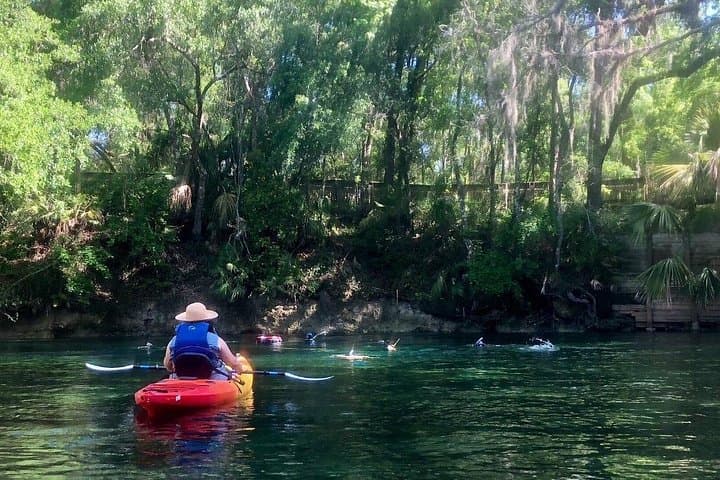
You push off from a narrow sandy bank and the river accepts you like a quiet host—cool, tannin-dark water slipping around the bow, palmettos leaning down like old friends. Cypress knees poke up like punctuation marks in the current; a great blue heron lifts and rearranges the light with a single wingbeat. For the next four hours, the Wekiva River rearranges your pace: you slow to listen, you drift to look, you paddle to pass a bend and find another scene.
A guided morning on the Wekiva doesn’t feel like a replay of the city you drove away from—it feels like entering a different calendar. The river is spring-fed, moving gently through sand-pine scrub, mesic hammocks, pine flatwoods and blackwater swamps. The landscape reads like a layered history in slow motion: pale sandbars, moss-glittering branches, and a sky that opens and closes as the canopy permits. Along the way a guide will point out the small things—fresh otter slides in muddy banks, the delicate nesting pattern of a limpkin, the telltale trough of an alligator’s path—and the large things: a bobbing manatee cresting where the channel deepens, or a black bear crossing far upriver at dusk.
This is a paddling trip for people who want an intimate, accessible way into Florida’s wild interior. It’s not a whitewater challenge or a race; it’s a natural-history primer played out on a moving classroom. The Wekiva River Guided Kayak Tour is a four-hour guided paddle that covers several miles of meandering water. The tour includes instruction, single or tandem kayaks, life jackets, and a riverside picnic-style lunch. It’s offered minutes from Orlando and runs year-round, with spring and fall bringing the most comfortable conditions for most paddlers. For more details or to book, check the guided trip page here: <a href="https://app.advcollective.com/local-experts/wekiva-river-guided-kayak-tour-clear-springs-wildlife-wilderness-paddling-near-orlando">Wekiva River Guided Kayak Tour</a>.
Geology and ecology are quiet protagonists here. The Wekiva system is fed by limestone springs; that underground geology keeps the water steady in temperature and clarity, even as surface weather swings through heat and rain. The river’s tannin-stained color is not pollution but the result of decaying vegetation filtered through the aquifer—meaning the water is clear enough to watch fish move below the surface but dark enough to feel mysterious. The surrounding habitat toggles between scrubby sand ridges and wetter hammocks where live oaks and cabbage palms anchor the soil. Migratory birds follow the channel like a highway, and you’ll see wood storks, osprey, and an array of herons and egrets.
The Wekiva’s human history runs deep, too. Indigenous peoples used these waterways for millennia; later, Spanish explorers and settlers used them as navigation corridors. Today, the river corridor is a patchwork of protected lands and private in-holdings, and tour operations are a balance of recreation and stewardship. Local guides are often stewards as well—trained to spot panther tracks or to recognize invasive plants—so you’ll learn how people here try to keep the river healthy even as visitors enjoy it.
Why go? This trip is compact and reliable: a half-day commitment that delivers wildlife viewing, light exercise, and a true sense of place without requiring technical skills or prior kayak experience. It’s family-friendly and well suited to solo travelers, couples, or small groups who want a live-plant-and-animal variety show with a guide reading the script.
Practical notes to plan your day: the tour is roughly four hours long, with a mix of paddling and short stops for birding and breaks. Expect a moderate physical demand—steady paddling interspersed with moments of drifting—and a low technical requirement beyond basic balance and following guide instruction. Bring sun protection, a dry bag for your phone, and dress for the possibility of getting splashed. The operator provides kayaks, paddles, life jackets, and a riverside picnic lunch.
Timing matters. Early morning launches are best for wildlife and cooler temperatures; late afternoon paddles can be luminous but bring more humidity and an increased chance of seeing active mammals. In summer, thunderstorms are frequent; guides will monitor weather and reschedule if necessary.
If you want to deepen the experience, arrive early to walk the springs headwaters or stick around afterward to explore local trails. For booking and local guide intel, visit the trip page here: <a href="https://app.advcollective.com/local-experts/wekiva-river-guided-kayak-tour-clear-springs-wildlife-wilderness-paddling-near-orlando">Wekiva River Guided Kayak Tour</a>. It’s a good resource for exact start times, seasonal notes, and what the outfitter provides.
This is a deceptively simple adventure: an easy, restorative day on water that rewards attention. The Wekiva asks only that you slow down and look. In return it gives back remarkable encounters and a clearer sense of why Florida’s interior is worth protecting.
Trail wisdom
Small choices, better day.
Start Early
Launch at first light to maximize wildlife sightings and avoid midday heat.
Use a Dry Bag
Protect phones, wallets, and cameras from splashes and unexpected submersion.
Leave Food in the Boat
Keep snacks sealed and stored to avoid attracting curious animals at breaks.
Listen to Your Guide
Guides know subtle currents, hidden channels, and the best wildlife windows—follow their safety instructions.
Local knowledge
Read the place, not just the route.
Watch for native species including American alligator, Great blue heron.
Keep an eye out for wildlife during the transition between areas and habitats. Respect distance guidelines.
Local outfitters operate under conservation-minded guidelines—stay in designated channels, do not feed wildlife, and pack out all trash to protect the spring-fed ecosystem.
Follow the guide's instructions on size limits, ethical handling, and leave-no-trace practices.
Paddle into small side channels at low flow to find private birding pockets. Early morning access to the springs headwater offers clearer water and more active wildlife
Locally recommended viewpoints and quiet spots known best to local operators.
Indigenous peoples and later early settlers used the Wekiva corridor for travel and resources; today the river is protected through a mix of state lands and conservation efforts.
Maritime roots and regional tradition shape the waterways and working coasts.
Seasonal guide
Four versions of the same landscape.
Spring
Best forbirding · comfortable paddling temps · wildflower displays
Challengeshigher visitor numbers · variable rain showers
Spring brings active birds and pleasant temperatures—expect more paddlers on weekends and occasional showers.
Summer
Best forlush vegetation · long daylight · reduced pollen for some
Challengesafternoon thunderstorms · high heat and humidity
Summer offers dense greenery but plan early launches to avoid storms and midday heat.
Fall
Best formigratory birds · crisper mornings · fewer crowds
Challengesstill-warm afternoons · sporadic hurricanes far offshore can influence weather
Fall is a comfortable window for bird migration and quieter waterways; mornings are especially good.
Winter
Best forcooler air · clear skies · chance of seeing manatees in deeper pools
Challengescooler water temps for prolonged immersion · shorter daylight hours
Winter paddles are brisk and clear; bring layers as mornings can be chilly while the water stays relatively warm.
Operator details
What the booking data adds.
Included
- ✓Bottled water
- ✓Lunch
- ✓Complimentary Pictures of Your Group
- ✓Professional Guide
- ✓Free Sticker
- ✓Kayak, Paddle, and Life Vest
Not included
- —Parking fee - $3
- —20% is customary per person
Good to know
- ✓Wheelchair accessible
- ✓All areas and surfaces are wheelchair accessible
- ✓Not recommended for travelers with spinal injuries
- ✓Not recommended for pregnant travelers
- ✓Not recommended for travelers with poor cardiovascular health
- ✓Travelers should have at least a moderate level of physical fitness
- ✓There is no minimum age, however all participants must know how to swim
- ✓It is recommended that you bring a swimsuit, towel, waterproof camera and wear clothes that can get wet and possibly dirty
- ✓Must be comfortable sitting in a kayak for multiple hours
Pack with intention
What to bring.
Good to know
Common questions.
No—guides provide instruction and will match you to a single or tandem kayak appropriate for your comfort level.
Plan the edges
The details that make the day easier.
The Wekiva River is spring-fed and maintains relatively steady temperatures—often around the low 70s°F—because it is sustained by underground limestone springs such as Wekiwa Springs.
After your paddle, head to nearby Apopka for local cafes and casual eateries; for a larger selection, drive 20–30 minutes to Winter Park’s Park Avenue for farm-to-table restaurants and craft breweries.
- Closest airport
- Orlando International Airport (MCO) ~30–40 minutes; Launch
- meeting area
- Wekiwa Springs State Park or outfitter’s private launch; Driving from Orlando: ~25–40 minutes depending on start point; Cell service: patchy beneath dense canopy; Permits
- passes
- Tour covers gear and launch—state park day-use fees may apply.
This river is spring-fed and ecologically sensitive—pack out trash, avoid feeding or disturbing wildlife, and stay in designated channels to minimize bank erosion and habitat disruption.
Explore by topic
Follow the threads.
Keep exploring
Make the story part of the trip.
Set out from Bass Harbor for a private, customizable day on Blue Hill Bay — lighthouses, puffins, seals, and the chance to feel Acadia from the water. Small groups, local captains, unforgettable views.
In four hours you can move from shaded canyon ferns to wind-scoured coastal ridgelines, guided by someone who knows where the light—and the hidden views—live. This private half-day hike on the Monterey Peninsula or Big Sur is compact, curated, and perfect for travelers who want depth without a multiday commitment.
 Related story
Beneath a sky of shifting light, Skaftafell’s ice reads like a map of time. This three-hour guided glacier hike mixes technical instruction with geology and culture: compact, safe, and unforgettable.