
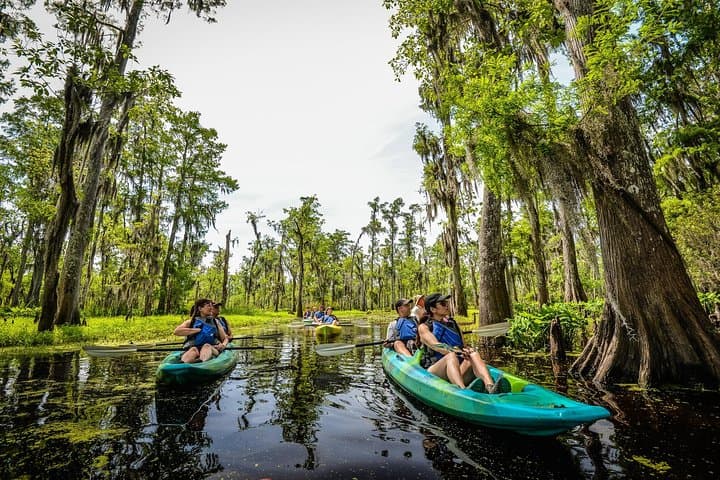
What the day feels like
The paddle slips with a soft, sucking sound as your blade parts a channel the color of brewed tea. Cypress knees puncture the water like the teeth of some patient creature. Spanish moss drapes the trees in shawls, and a hush falls—save for the occasional rasp of a kingfisher or the slow exhale of the swamp itself. You move slowly enough to notice the smell: wet wood, the mineral tang of tannins, the faint sweetness of marsh grass. For two to three hours, you exist inside a landscape that both resists hurry and rewards attention.
This is Manchac swamp—part swamp, part living museum—and the most honest way to meet it is from a kayak. On the Small-Group Manchac Swamp Kayak Tour with Local Guide, a Louisiana naturalist leads small parties through braided waterways, offering a measured blend of ecology, history, and local lore. The tour runs roughly 120–180 minutes and departs with pickups around 9AM and 12PM, which helps you time the light for birdlife and cooler paddling hours. The tours are intentionally small; that intimacy is what lets a quiet flock of egrets take off nearby without immediately vanishing into an online photo.
Geologically, the swamp is a child of the Mississippi River: slow-moving water laid down silt for millennia, and the result is a low-lying mosaic of cypress, tupelo, and thick marshes that buffer inland communities from storms. Historically this waterway has been a corridor—first for Indigenous peoples, later for French and Spanish traders, then for loggers and farmers. The living trees you paddle among may be decades, even centuries old; they bear witness to the changing economy of South Louisiana, where waterways once moved goods and now, increasingly, move people in search of quiet and wildlife.
Culture in this region is tactile: it’s in the cadence of local speech, in the recipes that rely on a catch pulled right out of the bayou, and in the guides who know the seasons by the birds that show up. A guide on a tour is more than a navigator. He or she is a storyteller, pointing out the differences between a bald cypress and a pond cypress, explaining why some channels narrow into tunnels of moss, and recounting tales of early settlers and the bayou’s stubborn capacity to reclaim land.
Why book a guided kayak trip instead of striking out on your own? For safety and context. The swamp’s channels can be fiddly—what looks like a through-route may dead-end into a tangle of roots. Guides also function as interpreters: they help you read the water, identify herons and warblers, and understand the human history layered into the landscape. This tour is ideal if you want a measured, education-forward experience rather than a purely athletic one.
Practical notes matter here. Wear quick-dry clothing, closed-toe water shoes, and a hat; bring a lightweight rain layer in shoulder seasons. Insect repellent is essential in warmer months. Expect limited cell service; the whole point is to disconnect. The tour begins with a short safety briefing and basic paddling instruction, so you don’t need to be an expert, but a reasonable level of mobility and comfort in a kayak will make the day more fun. You’ll be on the water for most of the trip, and the camera you bring should be secure and splash-resistant—this swamp rewards patient shooters.
The wildlife economy is real: alligators sun on logs, otters slip between lilies, and migratory birds use these trees like a continental layover. Sightings aren’t guaranteed—this is wild country—but the odds are excellent that you’ll see something unexpectedly marvelous. This is also a place to practice a quiet respect: don’t feed wildlife, keep voices low near roosting birds, and follow your guide’s instructions about safe distances from large animals.
Booking is straightforward and the tour generally runs at around $93 per person for the basic offering; small groups and the local guide format mean you’re getting more attention than you would on a generic bus-and-boat excursion. To secure a spot and get local insight on logistics and what to expect, check the tour page before you go. The tour’s pace—deliberate rather than frenetic—makes it perfect for a morning before heading back to New Orleans for an afternoon of gumbo and French Quarter sidewalks.
If you’re plotting the day, time your trip for early or late in the day when wildlife is active and light is soft. Spring and fall offer comfortable temperatures and good bird migration windows; summer is lush but buggy; winter is quieter and can yield clarity in the air and water. Regardless of season, the core experience stays the same: close encounters with a living ecosystem and the pleasure of moving through it silently by paddle.
Manchac isn’t a place you conquer; it’s a place that alters your rhythm for a morning and sends you away with a different sense of pace. A small-group kayak tour is one of the best introductions you can have—practical, intimate, and full of teachable moments. Whether you’re a casual day-tripper from New Orleans or a traveler chasing down Louisiana’s wild corners, a guided paddle through Manchac gives you a chance to slow down, look closely, and come home with a few stories and a better map of what the Gulf Coast’s inland waters really are: messy, musky, and alive.
Trail wisdom
Small choices, better day.
Go early for wildlife
Morning departures (pickup ~9AM) give you cooler temperatures and the best chance to see active birds and reptiles.
Bring insect protection
Topical repellent and a lightweight long-sleeve shirt reduce mosquito annoyance in warm months.
Secure electronics
Use a zippered dry bag or waterproof case for your phone and camera—splashes are frequent.
Listen to your guide
Guides know which channels are safe and where wildlife congregates—follow instructions for closer sightings.
Local knowledge
Read the place, not just the route.
Watch for native species including American alligator, Great blue heron.
Keep an eye out for wildlife during the transition between areas and habitats. Respect distance guidelines.
Guided small-group tours help concentrate foot traffic and minimize habitat disturbance—avoid feeding wildlife and stay on water routes to protect vegetation.
Follow the guide's instructions on size limits, ethical handling, and leave-no-trace practices.
Quiet side channels where herons roost—ask your guide for a detour. Nearby freshwater marsh patches that light up with dragonflies in late afternoon
Locally recommended viewpoints and quiet spots known best to local operators.
Manchac was historically part of local trade routes and once supported logging and small-scale agriculture that shaped local settlement patterns.
Maritime roots and regional tradition shape the waterways and working coasts.
Seasonal guide
Four versions of the same landscape.
Spring
Best forWildflower and marsh growth · Migratory birdwatching
ChallengesUnpredictable rain showers · Rising insect activity
Spring brings bright greenery and migration traffic—expect active birdlife but pack for sudden showers and bugs.
Summer
Best forLush plant life · Long daylight hours
ChallengesHigh heat and humidity · Heavy mosquito presence
Summer is richly green but hot; take early starts, lots of water, and strong repellant.
Fall
Best forComfortable temperatures · Fall migration
ChallengesVariable water levels · Cooler mornings
Fall offers pleasant paddling conditions and excellent birdwatching—layers are useful for morning chill.
Winter
Best forClear light for photography · Quieter waterways
ChallengesChilly winds on open water · Less vegetation cover
Winter brings crisp air and fewer insects; dress warmly and expect more open sightlines.
Operator details
What the booking data adds.
Included
- ✓Professional guide
- ✓Pickup and drop-off from designated meeting points
- ✓2-3 hour kayak swamp tour
Not included
- —Gratuities
Good to know
- ✓Infants and small children can ride in a pram or stroller
- ✓Service animals allowed
- ✓Public transportation options are available nearby
- ✓Infants are required to sit on an adult’s lap
- ✓Suitable for all physical fitness levels
- ✓Children must be accompanied by an adult
- ✓A maximum of 14 people per booking
- ✓For transportation Uber is ok but not recommended
Pack with intention
What to bring.
Good to know
Common questions.
The guided paddle is typically 2–3 hours long, including a safety briefing and basic paddling instruction.
Plan the edges
The details that make the day easier.
Many of the bald cypress trees in Manchac swamp can live for several hundred years; their knees help stabilize the trees and the muddy soils they grow in.
After a morning on the water, head back toward New Orleans for gumbo, po'boys, or a cold local beer—if you have time, stop in Mandeville or Covington on the north shore for seafood shacks and small-town cafes that reflect the bayou’s culinary roots.
- Closest airport
- Louis Armstrong New Orleans (MSY); Driving distance: ~45–60 minutes from New Orleans depending on launch point; Cell service: limited in swamp channels; Permits: none for tour participants—book through the operator and confirm pickup time (commonly 9AM or 12PM).
Stay on water routes, avoid feeding or disturbing wildlife, pack out all trash, and choose guided operators who emphasize low-impact practices to protect the swamp’s sensitive ecosystems.
Explore by topic
Follow the threads.
Keep exploring
Make the story part of the trip.
In four hours you can move from shaded canyon ferns to wind-scoured coastal ridgelines, guided by someone who knows where the light—and the hidden views—live. This private half-day hike on the Monterey Peninsula or Big Sur is compact, curated, and perfect for travelers who want depth without a multiday commitment.
 Related story
Beneath a sky of shifting light, Skaftafell’s ice reads like a map of time. This three-hour guided glacier hike mixes technical instruction with geology and culture: compact, safe, and unforgettable.
 Related story
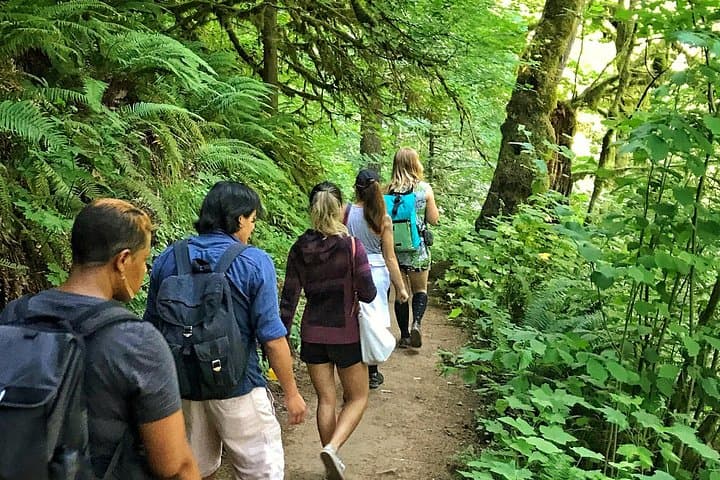
Lose the city for a few hours without leaving it: this 5-mile, 900-foot-gain Forest Park loop threads old-growth pockets, city viewpoints, and cultural landmarks for a compact taste of Portland’s wild side. Expect moss, roots, and stories.