
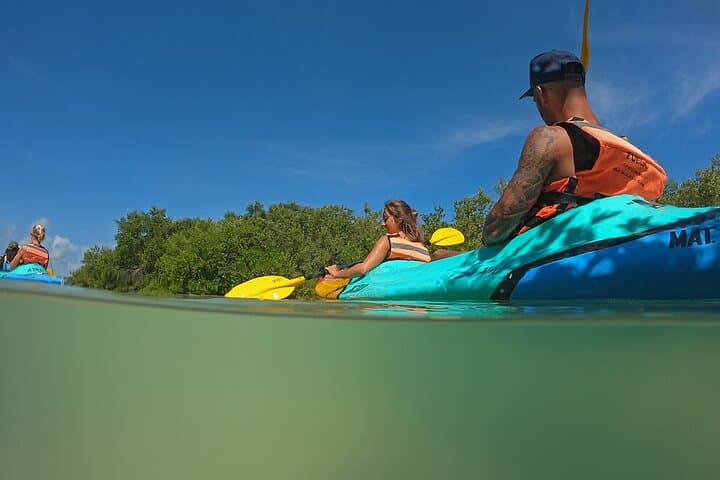
What the day feels like
The river doesn't rush here; it whispers. You push off from a sun-warmed sandbar and the kayak slides into a lattice of roots and reflection—mangrove trunks like columns in a cathedral of green. In early morning light, the channels are silver and still, the air dense with salt and bird calls. A heron steps deliberately in shallow water. Somewhere unseen, a crocodile bobs like a log and then slips away. For three hours you move through a world that feels half-marine, half-forest, entirely alive.
Isla Holbox's mangrove labyrinth sits at the edge of the Yucatán Peninsula, where freshwater meets the Gulf of Mexico in tidal sutures. The island itself is part of the Yum Balam Biosphere Reserve, a mosaic of dunes, lagoons, and mangrove channels that has sustained fishing communities for generations. Geologically, Holbox is young—sediment from river outflows built the island and its protective sandbanks over centuries—and the mangroves are the literal scaffolding that holds the coast together. They trap silt, reduce erosion, and create the sheltered, shallow waterways that make kayaking here intimate and immediate.
Culture is threaded through the experience. Holbox's town is small—colorful wooden houses, low-key seafood joints, and a rhythm set by tides and fishing boats. Local guides who lead the guided mangrove trips are often from the island; they read the channels by the color of the water and the pattern of the mangrove roots, and their knowledge makes the difference between a scenic paddle and a real encounter with wildlife. This particular trip—rated 4.72 from 72 reviews and available as an instant-confirmation, three-hour tour—keeps group sizes manageable so that the channels remain quiet and wildlife behavior undisturbed. For bookings and local-expert arrangements, the tour page is here: https://app.advcollective.com/local-experts/explore-isla-holbox-mangroves-guided-kayaking-adventure
A typical outing is deceptively simple: a short safety briefing, fitted life vests, and then you thread through mangrove corridors that alternate between wide lagoons and narrow, root-lined channels. Expect to cover 4–6 kilometers over three hours depending on tides and stops. There’s no elevation gain—this is sea-level travel—but tidal timing matters: going on a slack to rising tide usually makes paddling easier and brings more birds into sight. Guides point out roseate spoonbills in their candy-pink dress, osprey on lookout posts, and the occasional American crocodile sunning on a bank. Respect makes the sightings possible: the guides stress slow paddling, no sudden splashes, and giving space to animals.
Why consider this trip? It's compact—three hours is enough to feel transported without committing a full day—and it combines wildlife viewing, light exercise, and cultural contact. Kayaking through mangroves forces you to slow your pace and sharpen your senses. The experience is also suitable for confident beginners: you don't need technical skills, but you do need reasonable balance and stamina for intermittent paddling.
Practical notes that matter. Wear quick-dry clothing and a hat; the sun here is fierce even among the shade of trees. Use reef-safe sunscreen and insect repellent. Bring a dry bag for your phone and a water bottle; most operators provide kayaks, paddles, and life jackets. Timing your tour for early morning or late afternoon increases wildlife sightings and avoids the strongest sun. Keep your camera ready but hands controlled—your guide will often recommend brief, still moments to watch a bird rather than chasing the perfect shot.
Safety and conservation go hand in hand. The Yum Balam Reserve protects the mangroves and marine life, and responsible operators brief paddlers on rules: no feeding wildlife, no leaving trash, and no entering nesting areas. These tiny courtesies maintain the health of the ecosystem and keep wildlife wary of humans in a good way—curious but not dependent.
After the paddle, Holbox rewards you with simple pleasures. Walk back into town for ceviche or lobster tacos, a cold beer, and perhaps a sunset over the shallow sea that glows pink and gold. If you have more time, the island offers world-class snorkeling, seasonal whale-shark swims, and dune walks.
Logistics in practice: most travelers reach Holbox via Chiquilá, a three-hour drive north of Cancún followed by a 20-minute ferry to the island. Tours like this one run year-round but fill quickly in high season; free-cancellation and instant confirmation on booking pages make it easier to plan. Cell service in the mangroves is spotty—embrace the disconnection. And because the mangroves are a protected habitat, choosing a certified, local guide ensures your visit supports conservation and the island's economy.
For anyone who likes their adventures low-impact but high-delight, paddling Isla Holbox's mangroves is an excellent fit. It’s not about summit fever or grinding miles; it’s a measured, sensory journey that places you inside a living coastline. You come away with shorebirds on your mind, sticky salt on your skin, and a clearer sense of how fragile and essential these green corridors are—three hours that linger.
Ready to plan? See local guided options and detailed trip logistics at: https://app.advcollective.com/local-experts/explore-isla-holbox-mangroves-guided-kayaking-adventure
Trail wisdom
Small choices, better day.
Time your paddle
Book early morning or late afternoon for cooler temperatures and higher wildlife activity.
Use reef-safe sunscreen
Protect your skin and the ecosystem—many operators will refuse non-reef-safe products.
Bring a dry bag
Keep phones, cameras, and snacks dry and accessible during narrow-channel sections.
Listen to your guide
Guides know local channels, tides, and animal behavior—follow instructions for safety and better sightings.
Local knowledge
Read the place, not just the route.
Watch for native species including American crocodile, Roseate spoonbill.
Keep an eye out for wildlife during the transition between areas and habitats. Respect distance guidelines.
Tours operate under local reserve guidelines—support licensed guides, avoid single-use plastics, and maintain distance from wildlife to reduce disturbance.
Follow the guide's instructions on size limits, ethical handling, and leave-no-trace practices.
Punta Mosquito: a quiet dune spit for birding and tide pools. Holbox town pier at dusk for casual seafood and sunset views
Locally recommended viewpoints and quiet spots known best to local operators.
Holbox and nearby coasts have been fishing grounds for Maya and later communities; the Yum Balam Reserve was established to protect this culturally and ecologically important landscape.
Maritime roots and regional tradition shape the waterways and working coasts.
Seasonal guide
Four versions of the same landscape.
Spring
Best forBirdwatching · Mild temperatures · Calm seas
ChallengesOccasional winds · Migratory birds may be transient
Spring brings pleasant temperatures and active bird migration; tides remain favorable for paddling.
Summer
Best forLush mangroves · Long daylight · Warm water
ChallengesHigher humidity · Afternoon storms · More insects
Summer offers dense foliage and long days but plan for heat and the chance of brief showers.
Fall
Best forFewer crowds · Good visibility · Stable weather early in season
ChallengesHurricane season window (Aug–Oct) · Possible service disruptions
Fall can be quiet and rewarding outside of peak hurricane months—check forecasts before travel.
Winter
Best forClear skies · Cool mornings · Less humidity
ChallengesCooler water temperatures · Occasional north winds
Winter mornings are crisp with excellent light for photography, though winds can make channels choppier.
Operator details
What the booking data adds.
Included
- ✓Double kayaks
- ✓Bottled water
- ✓Hotel pick-up and return
- ✓Professional Guide
- ✓A protein bar is included for each guest
Not included
- —Gratuities
Good to know
- ✓Not recommended for travelers with spinal injuries
- ✓Travelers should have at least a moderate level of physical fitness
- ✓Children must be accompanied by an adult
- ✓Minimum age is 6 years
- ✓It is recommended that you bring a swimsuit, insect repellent, a hat, biodegradable sunscreen and a camera
Pack with intention
What to bring.
Good to know
Common questions.
The guided tour lasts approximately three hours and typically covers 4–6 kilometers depending on tides and stops.
Plan the edges
The details that make the day easier.
Isla Holbox is part of the Yum Balam Biosphere Reserve, established to protect the region's unique coastal, mangrove, and marine ecosystems.
After your paddle, head into Holbox town for fresh ceviche, lobster tacos, or 'pizza de langosta'—pair it with a local craft beer or agua fresca; try restaurants near the pier for sunset views and chat with your guide about local fishing traditions.
- Closest airport
- Cancún International Airport (CUN). Driving to Chiquilá: ~2.5–3 hours. Ferry to Holbox: ~20 minutes. Trailhead
- launch
- from Holbox beaches or designated docks. Cell service: patchy in mangroves. Permits: No special visitor permit for standard tours, but operate within Yum Balam Reserve regulations.
The mangroves are part of a protected biosphere—pack out all trash, use reef-safe sunscreen, avoid disturbing nesting areas, and choose local, licensed guides who follow conservation guidelines.
Explore by topic
Follow the threads.
Keep exploring
Make the story part of the trip.
In four hours you can move from shaded canyon ferns to wind-scoured coastal ridgelines, guided by someone who knows where the light—and the hidden views—live. This private half-day hike on the Monterey Peninsula or Big Sur is compact, curated, and perfect for travelers who want depth without a multiday commitment.
 Related story
Beneath a sky of shifting light, Skaftafell’s ice reads like a map of time. This three-hour guided glacier hike mixes technical instruction with geology and culture: compact, safe, and unforgettable.
 Related story
Lose the city for a few hours without leaving it: this 5-mile, 900-foot-gain Forest Park loop threads old-growth pockets, city viewpoints, and cultural landmarks for a compact taste of Portland’s wild side. Expect moss, roots, and stories.