
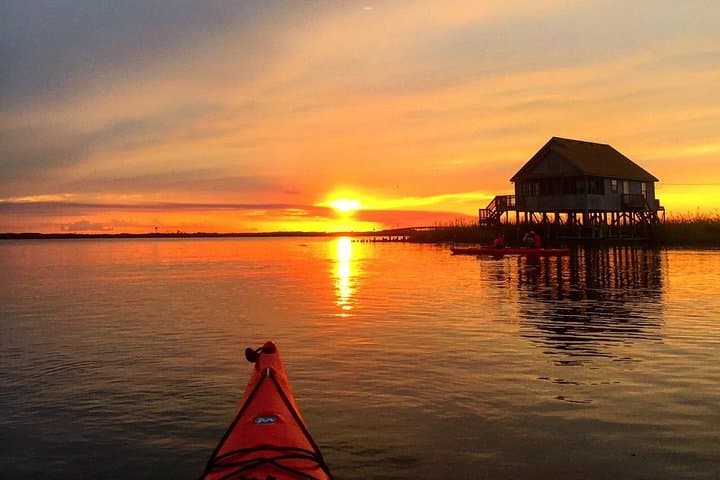
What the day feels like
The morning feels like it’s holding its breath. A low fog hovers over the marsh grass and the sound of surf is a distant drum; in its place, the marsh talks — a chorus of clucks, wind through spartina, the hush of water sliding around a hull. You push off from a narrow sandy inlet in a tandem sit-on-top kayak and the world compresses to paddle strokes, the rhythmic scraping of blades through brackish water, and the marsh’s small dramas: fiddler crabs scuttling at your bow, a heron folding its neck like a living letter.
This is the kind of place designed to humble and steady you. The guided Nags Head Kayak Tour navigates the tidal channels that lace the Outer Banks — an interface between barrier island, sound, and the Atlantic beyond. It’s part natural theater, part hands-on lesson in coastal ecology: the salt marsh here acts like a kidney for the sea, filtering runoff, feeding fish nurseries, and quietly reshaping the shoreline with each tide.
If you want the short version of why to sign up: in two hours you’ll move from the noisy immediacy of touristy Nags Head into a quiet that clarifies. You’ll glide past oyster beds, learn to read current lines and tide rips, and get close to wildlife that stays elusive from the road. If you want the long version: this guided paddle is an invitation to slow travel — up-close access to a living coastline and the small, essential rhythms that keep it alive.
History and geology are on every bend. The Outer Banks are a chain of barrier islands born of sand, waves, and storms. They’ve been shored up and redirected by hurricanes for centuries; the marshes you paddle through today are the calmer cousins of the surf-beaten beaches, absorbing storm surge and nourishing the wide sounds behind the islands. Culturally, these waters have sustained communities for generations — oystermen, watermen, and more recently, a growing eco-tourism economy that wants visitors to learn how fragile the balance is between human use and natural resilience.
Practical context matters here. This is a two-hour, guided tour that suits first-time paddlers and people who want an informative, low-effort taste of coastal exploration. The route runs at sea level; the real variables are wind and tide. On a calm day, the paddling is gentle and meditative. When the wind picks up, the marsh can turn kinetic, with small waves and stronger eddies. Guides on the tour supply equipment and safety briefings, and they’ll show you how to read the water — which is more useful than any map in these shifting places.
Why book a guided trip rather than renting a kayak alone? Local guides bring context: they point out seasonal bird concentrations, explain oyster reef structure, and show how to avoid sensitive shoreline vegetation. They also time launches to tides that make for safer, quieter paddling — and fewer mosquitoes in summer. If you’re interested in conservation or want to learn how the marsh supports offshore fisheries, the guides are practically a mobile classroom.
The experience is accessible. Expect steady, flat-water paddling with mileage that’s casual — think three to four miles over about two hours. You’ll wear a life jacket, get a quick skills rundown, and then follow the guide through a series of channels and shallow sounds. The rewards are cumulative rather than spectacular: slow reveals of great blue herons, ospreys streaking overhead, and the occasional curious seal or dolphin in the deeper channels if you’re lucky.
Timing matters. Early morning or late afternoon tours mean softer light, fewer boats, and more active wildlife. Midday in summer brings heat and more human activity on the water. Spring and fall are excellent for birding; summer is prime for warm-water comfort and worry-free wetsuit choices; winter tours are possible but require layering and a tolerance for raw air.
A couple of tips that make the trip smoother: wear quick-dry clothing and reef-safe sunscreen, bring a water bottle and a phone in a dry bag, and practice a few forward and sweep strokes at the briefing so you aren’t paddling inefficiently. Respect the marsh: stay in channels, avoid trampling the grass, and let birds lead the way — if they flush, you’ve come too close.
This is not an adrenaline itinerary; it’s restorative. It’s made for the person who likes to observe, to ask questions, and to leave with a clearer sense of place. For families, it’s a safe way to introduce kids to paddling and coastal ecology. For more experienced paddlers, it’s a reminder that not every outing needs to be about distance or speed — sometimes the goal is to learn to see.
If you’re sold on the idea and want to book, there’s a convenient guided option that handles logistics, safety, and local expertise: the Nags Head Kayak Tour takes care of the boats and starts you where the marsh life is concentrated. Reserve a slot early in the season and plan around tides for the best conditions. Want more detail? See the guided paddle offering here: <a href="https://app.advcollective.com/local-experts/nags-head-kayak-tour-paddle-through-outer-banks-salt-marshes">Nags Head Kayak Tour through the Outer Banks salt marshes</a>.
In the end, the memory that stays is a small one: a perfect, sideways light on water, a line of white feathers against the marsh grass, the honest sound of a paddle cleaving the tide. These salt marshes are quiet teachers — patient, resilient, and entirely necessary. A two-hour paddle here won’t fix the planet, but it will change the way you look at the coastline when you drive past it. You’ll notice the marsh again, and that recognition is the first, practical step toward caring for a shore that has always done more than take a beating — it has given back, quietly and insistently, for as long as people have been watching.
Trail wisdom
Small choices, better day.
Time it with the tide
Guides typically launch at tides that make channels navigable and wildlife more active; confirm launch time before you go.
Dress for splash
Wear quick-dry layers and a sun hat; bring a light wind shell for cooler mornings or breezy afternoons.
Protect electronics
Store phones and cameras in a waterproof case or dry bag to prevent saltwater damage.
Leave the marsh intact
Stay in channels and off the grass to protect juvenile fish nurseries and fragile vegetation.
Local knowledge
Read the place, not just the route.
Watch for native species including Great blue heron, Osprey.
Keep an eye out for wildlife during the transition between areas and habitats. Respect distance guidelines.
The marshes are ecologically sensitive — stay in channels, avoid disturbing nesting birds, and use reef-safe sunscreen to reduce chemical runoff.
Follow the guide's instructions on size limits, ethical handling, and leave-no-trace practices.
Oyster beds visible at low tide where you can watch birds and crabs forage. A narrow sound-side beach used by locals for quiet sunsets
Locally recommended viewpoints and quiet spots known best to local operators.
The Outer Banks are a dynamic barrier-island system; local waterways have supported fisheries and maritime communities for generations.
Maritime roots and regional tradition shape the waterways and working coasts.
Seasonal guide
Four versions of the same landscape.
Spring
Best forBirdwatching · Cool weather paddles · Migratory shorebirds
ChallengesUnpredictable winds · Cool water temperatures
Spring brings migrating birds and fewer crowds; wear layers and expect brisk mornings.
Summer
Best forWarm water · Family-friendly tours · Long daylight hours
ChallengesHeat and sun exposure · Mosquitoes at dawn/dusk
Summer offers the warmest water and easiest conditions for beginners, but bring sun protection and insect repellent.
Fall
Best forCalmer winds · Fall birding · Fewer tourists
ChallengesShortening daylight · Variable water temps
Fall can be ideal—crisper air, active wildlife, and quieter waterways; pack a midweight layer.
Winter
Best forStorm-watching from sheltered channels · Quiet, introspective paddles · Seabird concentrations
ChallengesCold air and water · Limited tour availability
Winter tours are possible with proper layering and a tolerance for colder conditions; expect fewer operators and shorter days.
Pack with intention
What to bring.
Good to know
Common questions.
No — guided tours provide a safety briefing and basic paddling instruction and are designed for beginners.
Plan the edges
The details that make the day easier.
The Outer Banks are a chain of barrier islands that formed over thousands of years; their marshes act as critical nurseries for many Atlantic fish species.
After the paddle, head to a local seafood shack for oysters and a cold beer—many spots in Nags Head celebrate the waterman tradition; try locally harvested oysters or a shrimp basket and stroll the boardwalk for sunset views.
- Closest airport
- Norfolk International Airport (ORF) ~1.5–2 hours drive; Launch area: near central Nags Head (exact spot given at booking); Driving distance from town center: typically under 15 minutes; Cell service: intermittent on the water; Permits: none required for guided tours.
These marshes host fragile nurseries—stay in marked channels, pack out all trash, use reef-safe sunscreen, and support operators that practice Leave No Trace and promote local conservation.
Explore by topic
Follow the threads.
Keep exploring
Make the story part of the trip.
Set out from Bass Harbor for a private, customizable day on Blue Hill Bay — lighthouses, puffins, seals, and the chance to feel Acadia from the water. Small groups, local captains, unforgettable views.
In four hours you can move from shaded canyon ferns to wind-scoured coastal ridgelines, guided by someone who knows where the light—and the hidden views—live. This private half-day hike on the Monterey Peninsula or Big Sur is compact, curated, and perfect for travelers who want depth without a multiday commitment.
 Related story
Beneath a sky of shifting light, Skaftafell’s ice reads like a map of time. This three-hour guided glacier hike mixes technical instruction with geology and culture: compact, safe, and unforgettable.