
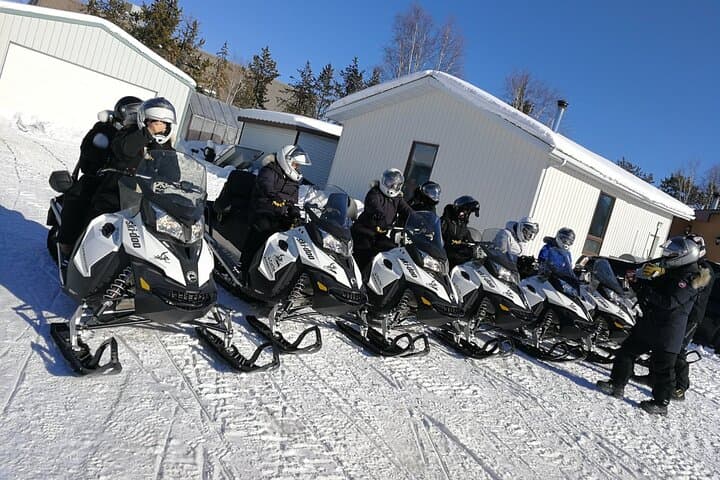
What the day feels like
The first breath of cold in Yellowknife has weight to it—clean, metallic, a little like the inside of a tin cup. You saddle up behind the guide and the machines rumble like small winter beasts, eager and low. For the next hour you’re moving through a landscape that reads as both intimate and endless: black spruce sagging with snow, the glassy expanse of Great Slave Lake, and the occasional ribbon of wind-swept tundra that dares you to lean in and go faster. Snowmobile handles press into your palms; the world opens in a sharp, bright way.
This is not a museum view of the North. It’s active, immediate, and—if you choose a one-hour route—fast enough to feel like a condensed version of a longer expedition. Local outfitters design these tours to give you a taste of the boreal and lake-ice riding that has been part transportation, part winter sport in the subarctic for decades. If you want the full deep-dive, you can, but there’s something magnetic about an hour that hits cleanly: a quick commitment that yields high returns in scenery and adrenaline.
Yellowknife’s history is braided with water and snow. The town grew around mining and the trading routes that threaded the Great Slave Lake, and later became the capital of the Northwest Territories. The geology here is ancient—part of the Canadian Shield—with bedrock rising from shallow soils and lake basins carved by ice. In winter the region becomes a network of trails that connect forest, shoreline, and frozen lake. Indigenous peoples have traveled these routes for millennia; snowmobiles are a modern layer atop longstanding winter knowledge.
Culture rides shotgun on these tours. Guides aren’t only machine handlers; they’re storytellers, pointing out places where the light falls a certain way at dusk, or where the ice thins in spring. They know where moose and foxes leave their prints and how the aurora can rearrange the night sky into a living ceiling. If you want to stretch the experience, many operators will pair a daytime run with evening aurora chases. For a convenient introduction, consider a short, focused outing to <a href='https://app.advcollective.com/local-experts/explore-yellowknifes-winter-trails-on-a-thrilling-snowmobile-tour'>explore Yellowknife's winter trails on a thrilling snowmobile tour</a>—it's a compact way to feel the speed and learn the rhythms of the North.
Practical bones: this listing is a roughly 60-minute guided ride priced from about US$118 per person. Routes vary by operator and conditions, but expect mixed terrain—groomed trails through spruce stands, hard-packed lake ice, and some rolling fields. Distance covered in an hour commonly falls in the 25–40 km range depending on group pace and safety briefings. Elevation change is modest; the landscape is largely flat to rolling, not mountainous. Guides provide helmets and instruction; riders should come prepared with warm layers and a willingness to follow directions.
Safety and etiquette are straightforward but non-negotiable. Stay on marked trails to protect fragile tundra and avoid thin ice; follow the guide’s lead on passing and speed; sign waivers and show a valid driver’s license if requested. Snowmobiles are loud and bright, but this is a quiet wilderness if you allow it—stop, and the world drops to soft sounds of wind and distant cracking ice.
Photographers will want to plan their shots: fast action needs faster shutter speeds, but the low winter sun is gorgeous for landscapes—bring lens cloths for snow glare and a small tripod for twilight aurora exposures. For aurora chases, operators will help you find a safe, dark tundra sweep a short drive from town where the sky can take center stage.
Where an hour leaves off, curiosity takes over. After your run, warm up in Yellowknife’s Old Town, sample smoked fish, and compare notes with other travelers over a local beer. If you have more time, combine a snowmobile excursion with ice fishing or a stay at a remote lodge—this region rewards layering experiences.
Booking basics: expect manual confirmation from operators; tours often depart from meeting points in Yellowknife and may adjust routes for safety. If you’re traveling during peak aurora season, reserve early—these short tours sell quickly to visitors wanting a practical way to feel the North.
One hour is enough to understand why people talk about Yellowknife in hushed, excited tones. It’s a concentrated dose of winter’s dynamics—speed, solitude, and a landscape that keeps surprising you. Whether you want an introduction to motorized winter travel or a high-energy detour between evening aurora hunts, a guided snowmobile tour here is an efficient, memorable way to meet the subarctic head-on. For more details and to see available departures, visit this guide to <a href='https://app.advcollective.com/local-experts/explore-yellowknifes-winter-trails-on-a-thrilling-snowmobile-tour'>explore Yellowknife's winter trails on a thrilling snowmobile tour</a> and pick the package that fits your schedule and appetite for speed.
Trail wisdom
Small choices, better day.
Layer for varied conditions
Wear moisture-wicking base layers and an insulated outer layer; temperatures and wind chill change quickly on exposed lake ice.
Book during daylight windows
Midday tours give the best visibility and safety for 1-hour rides; evening runs are great for aurora but require extra cold-weather gear.
Listen to your guide
Guides manage speed, passing, and route choice to protect riders and fragile ice—follow instructions for stops and spacing.
Protect electronics
Cold drains batteries fast—keep spare batteries inside a warm pocket and use weatherproof cases for cameras and phones.
Local knowledge
Read the place, not just the route.
Watch for native species including Moose, Snowshoe hare.
Keep an eye out for wildlife during the transition between areas and habitats. Respect distance guidelines.
Stay on marked trails to protect subarctic vegetation and lake ice habitats; minimize idling and follow operator guidelines for refueling and waste management.
Follow the guide's instructions on size limits, ethical handling, and leave-no-trace practices.
Old Town shoreline viewpoints for sunset and aurora. Short shore-access spots on Great Slave Lake where junctions of forest and ice create dramatic photo opportunities
Locally recommended viewpoints and quiet spots known best to local operators.
Yellowknife developed around Great Slave Lake as a mining and trading center and became the Northwest Territories capital in 1967; winter travel routes have long connected Indigenous communities and seasonal camp sites.
Maritime roots and regional tradition shape the waterways and working coasts.
Seasonal guide
Four versions of the same landscape.
Spring
Best forLonger daylight rides · Quieter trails
ChallengesThinning ice late season · Variable snowpack
Spring brings more daylight and calmer conditions early in the season, but always check ice advisories—tours typically wind down as thaw begins.
Summer
Best forOff-season planning · Scenic boat and hiking alternatives
ChallengesNo snowmobile tours · Different operator services
Summer is not snowmobile season; use this time to book winter trips, explore Old Town, or try canoeing on Great Slave Lake.
Fall
Best forAurora trip planning · Pre-winter logistics
ChallengesLimited snow cover · Variable trail openings
Fall is a shoulder season—book early and confirm when trails open; operators prepare equipment and routes for the coming winter.
Winter
Best forSnowmobiling · Aurora viewing
ChallengesExtreme cold days · Short daylight windows in deep winter
Winter is prime for snowmobile tours—expect crisp air, packed trails, and excellent visibility for one-hour outings, with options to extend into night aurora runs.
Operator details
What the booking data adds.
Included
- ✓Pick up & Drop off from Hotel Or BnB
- ✓Tax 5% GST
- ✓Snowmobile
Not included
- —Driver / Guide Gratuity
Good to know
- ✓Infants are required to sit on an adult’s lap
- ✓Not recommended for travelers with spinal injuries
- ✓Not recommended for pregnant travelers
- ✓Not recommended for travelers with poor cardiovascular health
- ✓Travelers should have at least a moderate level of physical fitness
- ✓Winter Clothing is not included.
- ✓Guests must dress warmly according to the weather to join this activity.
Pack with intention
What to bring.
Good to know
Common questions.
This offering is a roughly 60-minute guided snowmobile ride; exact time can vary slightly based on trail conditions and safety briefings.
Plan the edges
The details that make the day easier.
Yellowknife sits on the north shore of Great Slave Lake and is recognized as one of the best places in the world to view the Aurora Borealis.
After a ride, head to Yellowknife's Old Town for wood-smoked fish, northern game dishes, and locally brewed beers. Walk the waterfront near Pilot's Monument for sunset views and a sense of local life.
- Closest airport
- Yellowknife Airport (YZF). Typical meeting point: downtown Yellowknife with 10–30 minute drives to trailheads. Cell service: generally available near town, patchy on lake ice. Permits: usually none for guided tours; waivers and a valid ID often required.
Trails cross sensitive tundra and lake ecosystems—stay on marked routes, avoid spilling fuel, and pack out all waste to minimize impact.
Explore by topic
Follow the threads.
Keep exploring
Make the story part of the trip.
Set out from Bass Harbor for a private, customizable day on Blue Hill Bay — lighthouses, puffins, seals, and the chance to feel Acadia from the water. Small groups, local captains, unforgettable views.
In four hours you can move from shaded canyon ferns to wind-scoured coastal ridgelines, guided by someone who knows where the light—and the hidden views—live. This private half-day hike on the Monterey Peninsula or Big Sur is compact, curated, and perfect for travelers who want depth without a multiday commitment.
 Related story
Beneath a sky of shifting light, Skaftafell’s ice reads like a map of time. This three-hour guided glacier hike mixes technical instruction with geology and culture: compact, safe, and unforgettable.