
What the day feels like
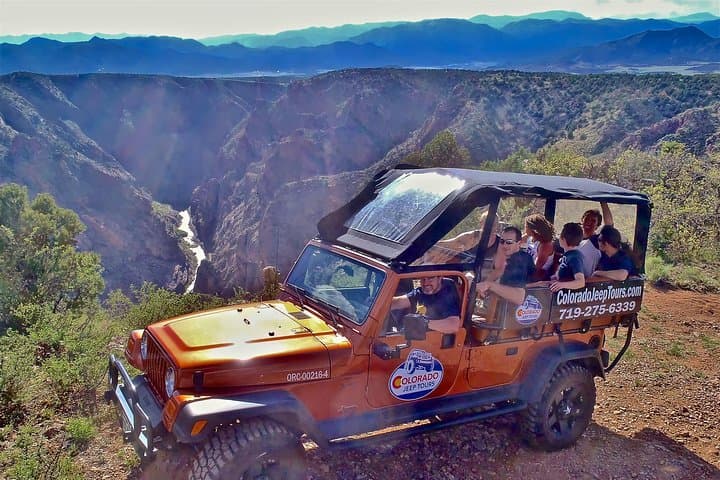
The jeep crunches to a stop at the lip of the gorge and for a moment the canyon steals your breath—then the bridge steals it again. The Royal Gorge Bridge arcs across a void that seems to drag the sky down toward the Arkansas River. Wind threads through the suspension cables and the canyon answers, a low, patient rumble as water and time keep carving. This is a tour built for that particular kind of vertiginous wonder: close enough to feel the drop in your chest, far enough to understand the scale.
You start in Cañon City—where scrub pines give way to red rock and the land begins to slope toward the Arkansas. The day moves like a well-paced hike, but better: someone else drives, someone else lays out lunch, and your time is spent watching Colorado rearrange itself. The jeep follows a loop that gives you access to the Royal Gorge Bridge and Park’s south entrance, climbs to the top of Fremont Peak for panorama-stretching views, and threads through Red Canyon where hoodoos and cliffs lean in as if eavesdropping.
Geologically, this place is a clear ledger of water and pressure. The Arkansas River dared to cut its way through the Rocky Mountain uplift over millions of years; the result is a narrow, steep-walled cleft where light and shadow run like a metronome down the canyon’s face. The bridge—originally completed in 1929—perched nearly 1,000 feet above the current river level, was conceived as both engineering statement and tourist lure. That contrast—raw geology and human ambition—gives the day its particular electricity.
But the loop is not just about a single viewpoint. The jeep slides along dirt tracks that open into overlooks, each one a new paragraph in the canyon’s story: rhyolite and granite, fossil-bearing shale, and talus slopes that remind you the Earth remains restless. Fremont Peak, reached via the south entrance, offers a 360-degree reward; you can pick out the town of Cañon City laid like a map and trace the river that keeps pushing the gorge’s walls. Red Canyon feels smaller and more intimate, its colors closer to the camera lens: burnt ochre, deep rust, and sandstone mottled with lichen.
Culturally, this is Colorado of another temperament than the ski-resort postcard. Cañon City has a practical, working-history air—railroads, early mining, and a Missouri-born entrepreneurial streak that turned natural wonder into weekend pilgrimage. The Royal Gorge Route Railroad still runs the river’s corridor, a reminder rail once stitched this valley together. Locals carry two languages: one of the land and one of the town—how to survive winter, where to get the best coffee, which trail goes quiet on a weekday.
This tour is engineered for access and for photos: ample stops, a provided lunch to eat with your knees dangling over a view, and a guide who knows the right angle for light and story. It’s seven hours on the clock—enough time to not feel rushed, not so long the day turns heavy. That middle ground makes it excellent for mixed groups: families, couples, or people who normally hike but are keen to see the high-exposure places without the vertigo of planning every step.
Practicalities matter here. The jeep terrain is uneven—expect dust, sudden drops, and short, steep walk-outs to viewpoints. Weather can flip; afternoons in summer bring convective clouds and a quick chance of thunder. Cell service is patchy along parts of the loop. Entrance fees to Royal Gorge Park and the bridge access may be included with the tour—confirm before you go. Cost reflects the guided format; at the time of booking the tour starts from $399 per person, a rate that bundles transport, access, guides, and lunch.
For planning: aim for morning departures to catch crisper air and cleaner light. Bring layered clothing, sturdy footwear, a hat and a sun shell, and a daypack for a bottle of water and camera gear. The guides are practical—expect a short interpretive talk at each stop—and they’ll help you position for photos and point out wildlife. Keep your camera ready: golden eagles and other raptors often cruise the thermals above the gorge, and bighorn sheep can appear on steep ledges in surprising silence.
Why do this tour instead of driving yourself? The value is in unlocked access and curated stops. The jeep routes include vantage points and short trails you might miss on your own. The south entrance access to Fremont Peak, in particular, opens a perspective most visitors don’t see. Beyond the panoramas, the day hangs together as a story: a canyon told in chapters, with the jeep as a comfortable, capable narrator.
If you’re the kind of traveler who wants adventure with logistics handled, who likes geology but also a good sandwich at the top of the world, this loop is a tidy, memorable package. It’s for photographers who want more than a postcard, for parents who want to impress the kids without long backcountry planning, and for anyone who wants an intimate, expertly guided tour of one of Colorado’s most dramatic slices of landscape.
On the drive back to Cañon City, the gorge recedes into a ribbon and the day compresses—photos get reviewed, stories are traded, and the wind finally goes quiet. You leave with an easy, stubborn sense of having met something older than you, and a practical understanding of how to re-enter ordinary life—sunscreen on, throat a little scratched by dust, and a head full of horizons.
Trail wisdom
Small choices, better day.
Layer for variable weather
Start with a light base, add an insulating midlayer, and bring a wind/rain shell—conditions can change quickly on exposed overlooks.
Hydrate and snack
Carry at least 1–2 liters of water and salty snacks; the jeep stops include a provided lunch but the sun and elevation dehydrate fast.
Sturdy shoes for short walks
Wear closed-toe hiking shoes or trail runners—the viewpoints often require footing over loose gravel and small rock scrambles.
Protect your gear from dust
Bring a zip-top bag or dry sack for electronics; the jeep trails kick up dust that can infiltrate cameras and phones.
Local knowledge
Read the place, not just the route.
Watch for native species including Golden eagle, Desert bighorn sheep.
Keep an eye out for wildlife during the transition between areas and habitats. Respect distance guidelines.
The canyon corridor is ecologically sensitive—stick to designated trails, pack out trash, and avoid disturbing nesting birds or shoreline habitats.
Follow the guide's instructions on size limits, ethical handling, and leave-no-trace practices.
Fremont Peak overlook for 360-degree panoramas away from the main bridge crowds. Short side detour on Phantom Canyon Road for narrow, scenic backcountry views
Locally recommended viewpoints and quiet spots known best to local operators.
The Royal Gorge Bridge, completed in 1929, was built as a tourist attraction to showcase the dramatic canyon; railroads and early mining shaped Cañon City’s growth.
Maritime roots and regional tradition shape the waterways and working coasts.
Seasonal guide
Four versions of the same landscape.
Spring
Best forWildflower bursts · Cooler hiking conditions · Fewer crowds
ChallengesUnpredictable snowmelt runoff · Mud on service tracks
Spring offers fresh greening and wildflowers; expect cooler temperatures and occasional muddy sections on dirt roads.
Summer
Best forLong daylight hours · Stable access to high overlooks · Birdwatching
ChallengesAfternoon thunderstorms · High sun and heat
Summer delivers the longest days and strong light—plan an early start to avoid storms and harsh midday sun.
Fall
Best forCrisp air and clearer views · Autumn color in cottonwoods · Pleasant daytime temps
ChallengesShortening daylight · Cooler mornings and evenings
Fall is often the sweetest time for clear vistas and milder temperatures—ideal for photography and comfort.
Winter
Best forSnow-dusted panoramas · Quieter park visits
ChallengesCold, icy sections on trails · Possible park access limitations
Winter can be spectacular with snow on the canyon walls but expect cold exposure and potential access changes—check with the operator.
Pack with intention
What to bring.
Good to know
Common questions.
Confirm at booking—the tour description often includes south entrance access to Royal Gorge Bridge & Park and associated viewpoints, but policies can change.
Plan the edges
The details that make the day easier.
When it opened in 1929, the Royal Gorge Bridge was the highest suspension bridge in the world, sitting nearly 1,000 feet above the Arkansas River.
After the tour, explore downtown Cañon City for local pubs and family-run diners; visit the Royal Gorge Regional Museum for regional history, and try Colorado staples like green chili or bison at community eateries to round out the day.
- Closest airport
- Colorado Springs Airport (COS); Driving distance from Cañon City: Royal Gorge Bridge ~10–20 minutes depending on route; Cell service: patchy on some overlooks; Permits
- fees
- Park entrance and bridge fees may apply—confirm with operator.
The Royal Gorge corridor supports sensitive bird and riparian habitats—stay on marked paths, pack out all trash, and avoid feeding wildlife to minimize human impact.
Explore by topic
Follow the threads.
Keep exploring
Make the story part of the trip.
Set out from Bass Harbor for a private, customizable day on Blue Hill Bay — lighthouses, puffins, seals, and the chance to feel Acadia from the water. Small groups, local captains, unforgettable views.
In four hours you can move from shaded canyon ferns to wind-scoured coastal ridgelines, guided by someone who knows where the light—and the hidden views—live. This private half-day hike on the Monterey Peninsula or Big Sur is compact, curated, and perfect for travelers who want depth without a multiday commitment.
 Related story
Beneath a sky of shifting light, Skaftafell’s ice reads like a map of time. This three-hour guided glacier hike mixes technical instruction with geology and culture: compact, safe, and unforgettable.