
What the day feels like
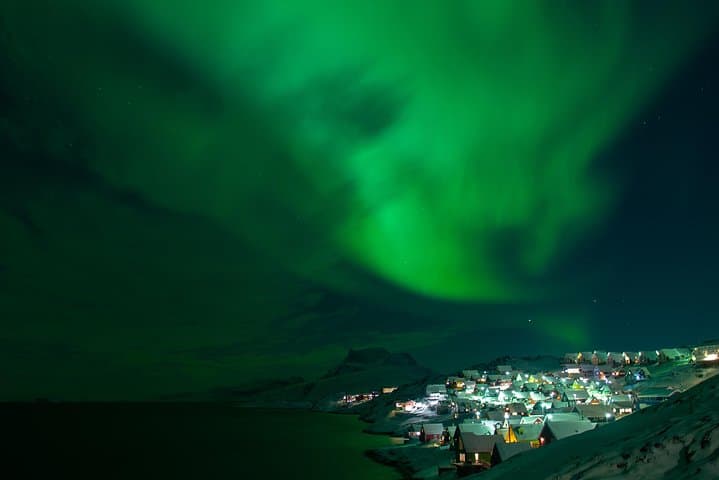
Night has a way of rewriting a city. In Nuuk, it arrives early in winter and unfurls across a fjord rimmed by colorful houses and the bulk of the Greenland Ice Sheet far on the horizon. When the aurora comes, it doesn’t merely hang in the sky — it moves, sweeps, and sometimes tears across the ceiling of night like an impatient painter. On a private, two-hour chase from the city center, you sit steady in a heated car while the lights play their slow, capricious game overhead; the driver becomes a literal and figurative headlights-off guide into darkness.
This tour is short and sharply focused: up to four people, a local guide, and a route that seeks out the darkest pockets of Nuuk for unobstructed sky. The vehicle’s warmth is a useful counterpoint to the Arctic air; the company is small enough that the guide can stop, restart, and reposition quickly when the aurora appears. Hot chocolate is handed around as much for the comfort as the ceremony — a small ritual that makes the cold feel less consequential and the city’s lights feel further away.
The setting matters. Nuuk sits at about 64.18°N on the southwestern edge of Greenland, where glaciers have carved deep fjords and the ocean pushes into rugged coves. The land here is honest and uncompromising: tundra, basalt outcrops, and the hulking presence of ice off to the north. The aurora is a product of that place — charged particles from the sun colliding with the upper atmosphere, translating invisible physics into color and motion. At this latitude, aurora displays are frequent enough to be a genuine draw, but they remain notoriously fickle: bright nights can slip by with nothing more than a pale glow, while others erupt into a full curtain of green and violet.
Nuuk’s human story folds into that geography. The settlement developed around colonial outposts (the Danish name Godthåb dates to the 18th century), and today it’s a blend of Greenlandic Inuit culture and contemporary Arctic urban life. Guides on this tour are local and pragmatic; they’ll point out the city’s cultural center, Katuaq, and note how Nuuk’s development — its colorful wooden houses, its harbor traffic, the modern municipal growth in neighborhoods like Qinngorput — sits alongside traditions of hunting and seasonal movement.
Practicality guides the experience. The tour is a two-hour private outing priced in the mid-range for Arctic-specialist activities (from USD 432.94 as listed), and it runs in the dark months when solar activity and long nights give you a shot at the sky show. Guides monitor both weather and space-weather forecasts and know the local microclimates that can make the difference between cloud-locked skies and a clear overhead. If the aurora doesn’t show, most operators (this one included) offer a free rebooking — a courteous reminder that nature calls the shots.
For travelers, the appeal is equal parts spectacle and simplicity. You don’t need expedition experience to go aurora-hunting in Nuuk; you need warm layers, patience, and a willingness to let the night unfold. There’s a satisfying choreography to the hunt: scan the northern sky, move to darker shoreline, click off headlights and let the guide point where the activity is strongest. If the aurora appears, take a moment to watch it move before diving for camera settings — the first minutes can be the most memorable.
Timing is everything. Winter, between late September and early April, is the season. Within that window, the darkest, crispest nights (often in late winter) offer the sharpest displays. Expect cold to be the main physical challenge: wind off the fjord bites through anything that’s not properly layered. But that challenge is manageable; the car is a refuge, and the tour’s short duration means you can enjoy long views without an overnight commitment.
Why go private? With a small group you get flexibility: more stops, quicker reaction to sky changes, and time to ask questions about local history and the science behind the aurora. In a place like Nuuk, where the line between town and wild is thin, that flexibility turns an ordinary night into something intimate and memorable.
If you go, think like someone preparing for both a night city walk and a mini Arctic outing: insulated outerwear, spare batteries, and a tripod that can be set up quickly if the lights come. Respect the environment — these are fragile coastal ecosystems and local culture that’s lived with the rhythm of the seasons for generations.
The tour’s brevity is deceptive: two hours can feel like a condensed Arctic essay, a chapter of geology, history, and skycraft. You leave with photographs if you’re lucky, and with memory if you’re not. Either way, you’ll have seen a capital that knows how to be small and enormous at once: small in population, enormous in light and landscape — and one of the best places in the North Atlantic to wait for the sky to begin its slow, storied dance.
Trail wisdom
Small choices, better day.
Dress for two climates
Pack insulating base and mid-layers plus a windproof, insulated outer shell — you’ll spend short stints outside and retreat to a heated car between stops.
Bring spare batteries
Cold drains camera and phone batteries fast; carry extras in an inside pocket to keep them warm.
Book early-night tours mid-week
Local traffic and light pollution are lowest after dark on weekdays, increasing chances of good viewing spots.
Respect rebooking policy
If the aurora doesn’t appear the guide offers a free rebook — keep your schedule flexible to take advantage.
Local knowledge
Read the place, not just the route.
Watch for native species including Arctic fox, Seabirds such as fulmars and kittiwakes.
Keep an eye out for wildlife during the transition between areas and habitats. Respect distance guidelines.
The coastal and fjord ecosystems are sensitive; minimize disturbance to shoreline habitats, pack out all waste, and follow your guide’s instructions to avoid trampling fragile tundra.
Follow the guide's instructions on size limits, ethical handling, and leave-no-trace practices.
Nuuk Fjord viewpoints reachable by short drive. Old Nuuk waterfront and small colony harbor areas for quiet evening walks
Locally recommended viewpoints and quiet spots known best to local operators.
Nuuk was founded in 1728 (then called Godthåb) and has grown from a colonial outpost into Greenland’s capital, blending Inuit traditions with modern development.
Maritime roots and regional tradition shape the waterways and working coasts.
Seasonal guide
Four versions of the same landscape.
Spring
Best forLate-season aurora · Fewer tourists · Longer twilight for combined sightseeing
ChallengesVariable weather · Increasing daylight reduces dark hours
Early spring still produces aurora activity, though nights shorten; warmer temperatures make waits more comfortable.
Summer
Best forMidnight sun experiences · Boat and fjord cruises · Cultural city events
ChallengesNo true darkness for aurora viewing · Some services seasonal
Summer is great for daytime exploration of Nuuk but unsuitable for aurora chases due to continuous daylight.
Fall
Best forOnset of long nights · Good aurora probability · Fewer crowds than peak winter
ChallengesUnstable weather · Early snow can change road conditions
Autumn offers increasing darkness and strong aurora chances, though coastal storms can bring clouds.
Winter
Best forPeak aurora season · Long, clear nights · Snow-draped landscapes
ChallengesExtreme cold · Potential road and visibility issues
Winter is the prime season for aurora hunting — plan for frigid temperatures and short daylight windows.
Pack with intention
What to bring.
Good to know
Common questions.
The tour runs about 2 hours and operates at night to maximize aurora-viewing opportunities.
Plan the edges
The details that make the day easier.
Nuuk’s Greenlandic name means 'cape'; the town was founded in 1728 and is Greenland’s largest population center.
After the tour, warm up by visiting Katuaq cultural center or seek a harbor-side eatery for fresh arctic seafood like char or snow crab; small local cafés and the National Museum of Greenland add cultural context to the night's spectacle.
- Closest airport
- Nuuk Airport (GOH). Typical pick-up: central Nuuk hotels or harbor. Driving: 10–30 minutes to prime viewpoints depending on conditions. Cell service: intermittent outside town; rely on guide. Permits: none required for this short tour.
Minimize light pollution by switching off vehicle lights during stops; follow local guidance to protect tundra and shoreline ecosystems and pack out all waste.
Explore by topic
Follow the threads.
Keep exploring
Make the story part of the trip.
In four hours you can move from shaded canyon ferns to wind-scoured coastal ridgelines, guided by someone who knows where the light—and the hidden views—live. This private half-day hike on the Monterey Peninsula or Big Sur is compact, curated, and perfect for travelers who want depth without a multiday commitment.
 Related story
Beneath a sky of shifting light, Skaftafell’s ice reads like a map of time. This three-hour guided glacier hike mixes technical instruction with geology and culture: compact, safe, and unforgettable.
 Related story
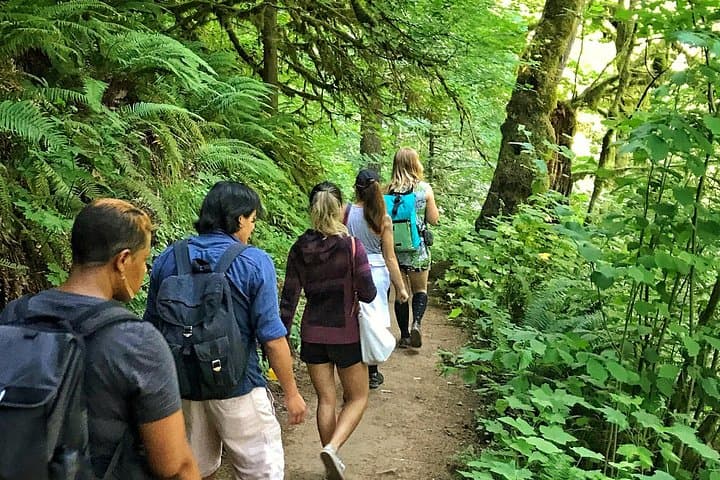
Lose the city for a few hours without leaving it: this 5-mile, 900-foot-gain Forest Park loop threads old-growth pockets, city viewpoints, and cultural landmarks for a compact taste of Portland’s wild side. Expect moss, roots, and stories.